


I’ve got half a dozen Substacks sitting in my drafts folder like abandoned Lego sets. Towers missing pieces, half-built spaceships, one good idea perched next to three piles of waffle. I quite like it. Ideas need to stew and I like wandering back to them when something clicks. Today something clicked.
Before I say anything else, I know I’m going to annoy a few people. I will await the Reddit pushback, the “this is AI”, “you’re a shill”, “this isn’t real”, “there’s no trans woman called Stevie Bennett”. I have heard all of this before!! You can’t please everybody, so I will speak the truth.
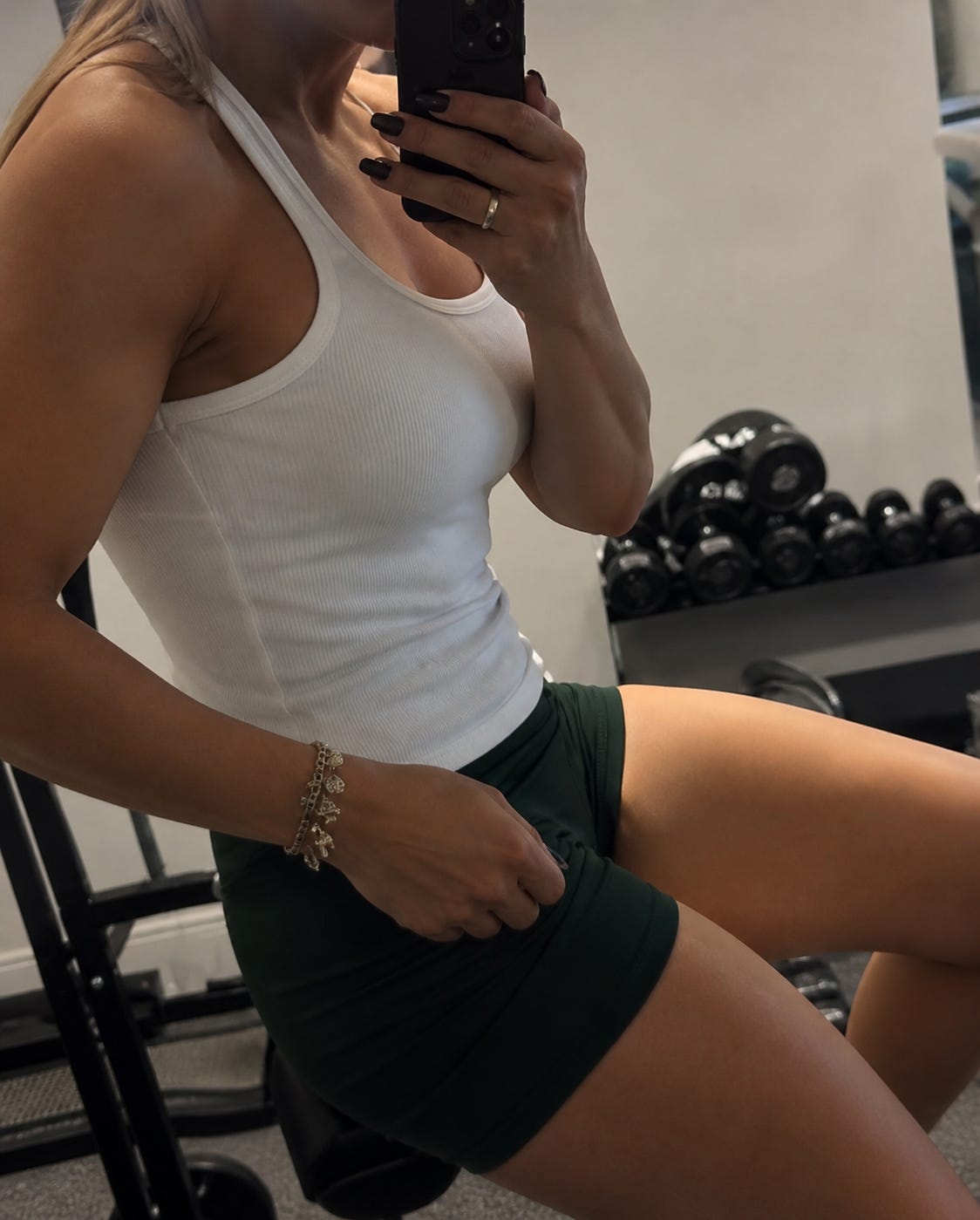
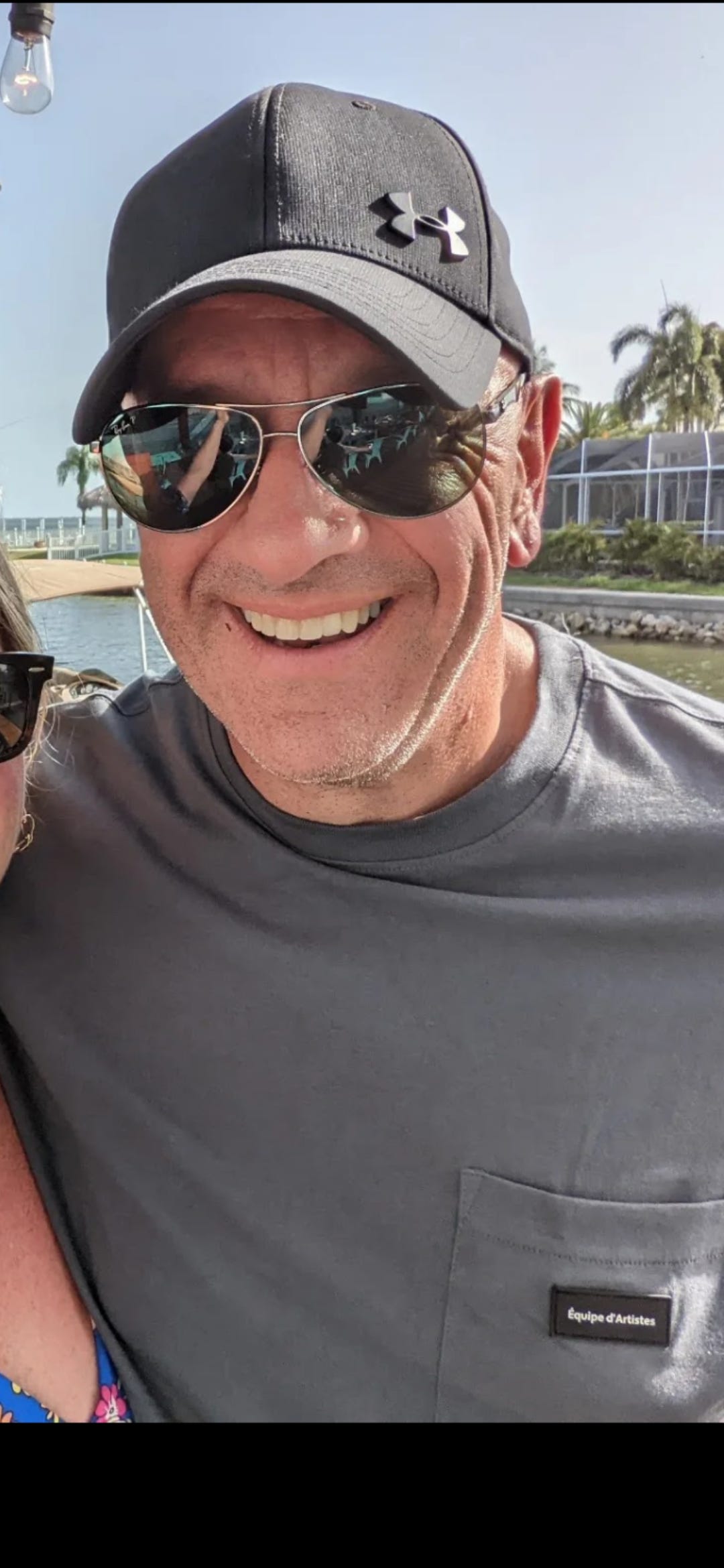
I’m going to show three photos.


One of me pre-transition, at my most muscular.
And two of me now.
And I’m not going to pretend: the body transformation is not pretty bloody good. I’m in my late fifties and I’ve achieved something quite rare. I sense, now and then, a flicker of resentment. The odd comment about money, surgery, luck. I get it. But the truth is that even before surgery I was 41, 33, 41. And once I got serious, I brought my waist to 28 and nudged my hips into the low forties. Surgery refined what was there. It didn’t conjure anything out of thin air.
You cannot get amazing surgical results unless the underlying structure is decent. That applies to cis women, trans women, everyone.
And here’s the thing: I didn’t start transition in peak condition. I’d drifted into an old dad bod. The injuries had piled up. A complex meniscus tear in my knee. Damaged vertebrae in my lower back from bad deadlift form. A minor cardiac issue from too much endurance training well into my forties. My triathlon days were done. My long-distance cycling days were done. That broke my heart, but the reality was my body had quietly changed shape and I had to deal with it.


But what I did still have was something vital: I’d done this before.
Years earlier, I’d taken myself from nearly 280 pounds to a lean endurance cyclist. I knew how to set goals, break them into pieces, track macros, build training cycles, decide KPIs. I knew how to make a body do something it wasn’t designed to do.

That skill, not genetics or money, is what saved me.
Losing Weight: The Unromantic Bit
When I started transitioning and went on estrogen, I did something very simple. I stopped looking at other trans women and started observing women my age. Real women. Women in their fifties who were slim, elegant, composed.
I watched how they ate.
At parties, they’d cut a slice of cake so tiny you’d think it was a misprint. Hours later they might take a single extra corner. To the casual observer it looks like “Oh, she’s been nibbling cake all afternoon.” In reality, it’s surgical precision. Moderation disguised as indulgence.
And it wasn’t just the cake. I’d watch their plates at meals. The portions were small. Deliberate. They’d take two potatoes, never three. They’d load up on vegetables, not as some performative health gesture, but because that was simply how they ate. Their plates were light. They didn’t build these enormous, heaped constructions the way men often do. They ate slowly, purposefully, like people who had long ago accepted that food is not a recreational sport.
To anyone who genuinely loves food, this is a sacrifice. A real one. There’s no point pretending otherwise. But the truth is this: this is how thin women eat. Not all of them, not every day, but often enough that the pattern is unmistakable. It’s not magic, and it’s not metabolism. It’s behaviour.
I realised I had to do the same.
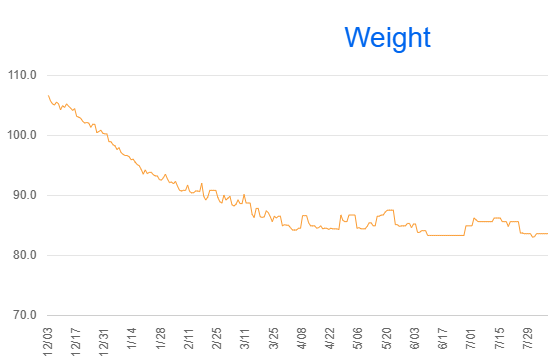
At the start of my transition, I was a whopping 108 kilos (238 lbs). I had gotten a bit fat!!
I needed to lose sixty lbs. So I created a narrow corridor of calories and walked through it. Fourteen hundred calories a day, then twelve hundred, for seven or eight months. Since then I’ve eased off but the weight still drifts down gently. I’m essentially the weight I want to be now, 78kg (170 lbs). A pound or two less would be nice, but that’s universal female vanity speaking.
What’s sad is how clearly I can see the mistakes others make.
Mistake one: eating like a man.
I’ve been around some trans women and I’ve watched this happen over and over again. Full-fat soft drinks. Going back for seconds and thirds. Full fried breakfasts. Huge portions. Fifteen hundred calories before lunchtime. And here’s the bit nobody seems to grasp.
Once you’re on oestrogen, your muscle mass drops. It’s normal. It’s part of the process. But when your muscle drops, the amount of calories your body burns just by existing drops with it. That number is called your maintenance calories. In scientific terms it’s TDEE, total daily energy expenditure, but all it really means is the amount of food you can eat without gaining or losing weight.
If your maintenance level was around 2,200 calories before transition, it might be only 1,600 afterwards. You simply can’t eat like you used to. The maths changes. Most people ignore the maths.
Mistake two: clinging to male gym culture.
Some trans women cannot stop chasing hypertrophy. They were gym rats for decades and they cannot let go of the pre-transition rhythm of volume, pump, shoulder caps, traps. They want to be women but they want to train like men.
A muscular cis woman can still look feminine. A muscular trans woman often can’t. Our margins are narrower. Big deltoids plus a trans frame reads very quickly as masculine. So you have to train wisely. Not starve your upper body, but train it down, soften it, shift the proportions so your silhouette reads correctly.
Momentum And Belief
My transition was fast. That helped. Momentum is real. People four or five years in who haven’t got the body they want often lose belief. It’s the same psychology as long-term weight gain, diet, relapse, diet, relapse, and eventually the belief drains away. When belief drains away, adherence collapses.
The trick is to build systems that don’t require belief.
How I Actually Did It
Diet, diet, diet - 90%
This is not a prescription. I’m not telling anyone what they “must” do. This is simply how I did it.
Ninety per cent of your eventual figure comes from diet. Movement matters, but diet is the keystone. Brisk walks and pink dumbbells won’t build a waist. Food will.
The second truth: motivation is useless. Everyone starts motivated. Motivation evaporates. It always does.
The solution
One: immersion
Years ago, when I quit smoking, I read the Allen Carr book ‘Easy way to stop smoking’ and I remember thinking it was the most repetitive, tedious, badly written thing I had ever endured. I couldn’t believe something that sounded as though it had been written by an eight-year-old could possibly work. But it did. And the reason it worked is because the repetition isn’t a flaw, it’s the method. It’s immersion. It bypasses willpower entirely.
That was the penny-drop moment for me. Willpower does not work. Not for long. Not for anything that requires months of consistent behaviour. You can walk up to a fridge and chant, “I’m not eating cake today,” but that kind of internal heroism lasts a couple of days at best. Then it dissolves. Willpower is a short, sharp burst of nitrous oxide. It’s what you use for the final half-mile of a bike race, or to squeeze out the last bit of effort in an emergency. It is not what carries you through seven months of caloric discipline or body re-composition.
Long-term consistency comes from the subconscious, not the conscious mind. And the subconscious only learns through saturation. The trick is to overwhelm the conscious mind the thinking mind with so much information, so much repetition, such a constant stream of the same message, that it leaks downward and rewires your deeper patterns. That’s where behaviour changes stick. That’s where belief forms. That’s where discipline comes from, even when you don’t feel particularly disciplined.
So I did exactly that with nutrition. I immersed myself. I read Peter Attia, Outlive, Huberman, metabolic studies, endocrinology papers, longevity research, everything. I soaked my brain in it until the ideas no longer felt like concepts I was trying to remember, but truths I instinctively acted upon. Once your subconscious buys in, you don’t need motivation. You simply behave differently.
And there’s another part to this that people often forget, which Robert Greene writes brilliantly about in Mastery. Every new skill begins with an apprentice phase where you know nothing and feel useless. Then, slowly, you move into the practising phase where you make progress but still feel clumsy and inconsistent. Eventually, if you keep going, you cross into mastery—the point where the behaviour is automatic and integrated, and you can do it without thinking about it at all.
Diet is exactly the same. You have to accept being the apprentice. Accept that you don’t yet know what you’re doing. Accept that you will be clumsy and frustrated. But if you immerse yourself long enough, the subconscious takes over. Then you don’t need willpower because you have something far more powerful: embodied, automatic belief. The behaviour simply becomes who you are.
Two: Remove decisions.
Most people have the same breakfast every day. They don’t consciously decide. They don’t wake up each morning thinking, “Hmm, what shall I have today? Perhaps I’ll roast some vegetables, assemble a little panini, whip up a feta salad, maybe a fruit compote while I’m at it.” No. They grab toast. They grab cereal. They autopilot it.
So extend that principle. Take that same autopilot into lunchtime as well.
I designed the most nutritious 180-calorie breakfast possible. I worked out the exact macros. Then I ate it every day without thinking.
Lunch was a giant mackerel salad. Mountains of spinach. A rainbow of vegetables. Exactly fifty grams of mackerel, no more. A splash of Korean sauce. Repeat, repeat, repeat. 380 calories.


And dinner? I kept that simple. I ate whatever my family were eating. Obviously this was back in the days when I actually had a family before they threw me out for being transgender a long story for another day but the principle still stands. I didn’t cook some separate, monkish little meal for myself. I sat with them, I ate with them, and I just adapted the portion.
The rule was: it had to fit on a side plate. Nothing bigger. I’d cut the carbs down, pile on whatever veg was going, and fit the rest around it. But the key thing was the plate. A side plate enforces the portion without turning dinner into a maths lesson.
And there was something else I learned the hard way: if you live with other people, you can’t shove your weird dietary habits onto them. They will get annoyed. Food is ritual. It’s social glue. People sit down together and share the same meal, and if you suddenly declare, “I only eat steak and eggs now, sorry,” and then repeat that every night like some carnivore evangelist, they will eventually want to throttle you.


I know this because I did it. I’d been on extreme keto diets, carnivore diets where I insisted on nothing but steak and eggs, bodybuilder diets where I limited myself to chicken, broccoli and rice, nights where I’d scrape half my plate aside because it wasn’t “allowed.” It doesn’t work. Your family will strangle you. Eating is communal. You need to be flexible. The diet has to fit around your life, not bulldoze through everyone else’s.
So that’s it. Dead simple. No tricks.
Two out of three meals on autopilot and designed to perfection. One meal a free-for-all, but portion controlled. And that’s it.
Seven days a week I lived inside that loop. On Fridays I allowed myself one packet of crisps, purchased as part of our weekly, almost ritualistic Friday treats after school. I’d pull up in the pickup truck, my daughter would jump out and run in to get ice creams, drinks and crisps for herself and her siblings. And every week she’d emerge with a single, solitary packet just for me. I would take it home, open it with the reverence of someone unwrapping a Willy Wonka chocolate bar in search of the golden ticket, and then eat those crisps as though they were Michelin-starred amuse-bouches. I practically salivated over them. Those little moments kept me sane.

Once the routine locked in, the weight came off predictably. Body fat moved. Shape altered. That was the real foundation for everything that came later.
Training: The Physique Architecture Bit — 10%
Strength matters. Although I’ve said that training only gives you about ten per cent of your feminine look, that figure is misleading if you think long-term. Yes, the visual return is small at the start. Strength work won’t give you curves or a waist or hips in the short run. But in the long run, it’s non-negotiable. Strength is what protects you in your fifties, sixties, seventies and beyond. If you don’t train strength, you decline faster. You lose independence earlier. And the future version of you will pay the price.
And let’s be honest, for those of us transitioning later in life, the longer we can remain hot chicks, the better. We didn’t get to be 22-year-old women. We’ve only got the years we’ve got left, and the fitter and stronger we can stay, the longer we get to enjoy being our actual selves.
Everyone starts from a different base. Some women begin transition with very little muscle. I began with far too much in the wrong places. My upper body was overly developed from years of sport. That silhouette read “male” from fifty yards away.
So in my case, I made a deliberate choice: for the first six months I didn’t lift anything with my upper body. I let it atrophy. Once the volume softened, then I reintroduced strength work at half my old loads but with similar volume.
I shifted my training downwards glutes, thighs, core. My strong cycling thighs helped, but I doubled down on glute work to pull my proportions lower and widen my visual base.
Everyone’s needs differ. Some need to build. Some need to shrink. But if you were athletic as a man, you’ll likely need to reduce upper-body training unless you want a deliberately muscular female look. Personally, I’d rather have Anne Hathaway’s arms than a docker’s.
Posture, Gait, Silhouette
One thing nobody tells you: posture is a feminiser.
Pelvic tilt.
Shoulder position.
Scapular glide.
Centre of gravity.
Gait.
When you strengthen glutes, loosen the chest, allow the shoulders to drop, and walk from the hips rather than the lats, everything changes. People obsess over hormones and dresses. They should obsess more over posture. It’s free and transformative.
Skin, Soft Tissue, Ageing
Body composition also includes skin.
Oestrogen helps, but collagen declines with age.
Rapid weight loss can slacken tissue.
So I kept protein high.
Hydration high.
Soft-tissue health supported.
Curves matter, but so does the surface they sit on.
Identity Friction
People don’t fail because they’re lazy. They fail because their identity is fighting them. If you still subconsciously see yourself as a man trying to lose weight, your behaviour will sabotage you.
The day your identity settles, “I am a woman building a woman’s body”, everything clicks. Behaviour aligns automatically.
Longevity: The Long Game
Everything I did, I did for the future.
Less mass = less joint stress.
Glute and core strength = fewer falls.
Better balance = more independence.
A tighter frame = easier ageing.
Final Thoughts
None of this is magic. None of it is luck. And none of it was some genetic blessing I secretly had tucked away. It was a system, one that anyone can build.
A diet you don’t have to think about.
A routine you can repeat.
A training plan that nudges your body into the proportions you want.
A mind shaped by immersion rather than unreliable willpower.
Bodies are systems. Systems can be steered.
Even at fifty-six.
Even with injuries.
Even with a rocky starting point and a whopping 108kg.
And if you’re trans, you already have the most important ingredient: courage. The courage to transition. The courage to face yourself. The courage to rebuild your life from the ground up. Compared to that, refining your diet and training is just another skill , one you can pick up exactly the way you picked up everything else.
I’m not special. I built a pattern. I stuck to it. You can build your own. It won’t look exactly like mine. It doesn’t need to. But if you build the system, the system will carry you. And one day, not instantly, not magically, but inevitably, you will look in the mirror and see a woman who feels like the truest version of you.
The version you’ve always hoped would appear.
This is a very useful post, I’m not fat but my belly is, not healthy. I’m currently trying to figure out how to develop a figure that’s more inline with a feminine one, though I’m not transitioning yet. Currently my general health needs some work, diet is actually good but having read this, I could do better. Eating differently has got me thinking.