



I really loved her. That’s the only place to begin. For all the chaos of now, for all the wreckage we’re standing in, I really loved her.
When we met, I was thirty-six and she was twenty-four. An age gap, yes, but it never felt like one. From the first night in Dublin, meeting her in the pub, with her wit, her spark, her ease of laughter, I was caught. A toothbrush appeared at my place almost immediately, and soon we were stitched together in ways that felt effortless.
Almost half her life has been with me. That’s staggering. For her, I became the frame around her twenties and thirties. That’s why this collapse feels so brutal: because we weren’t just a marriage. We were an era.
Dog Kennel Hill and the Good Years
We married at Belair House, a secular ceremony despite her family’s discomfort, and made our life first in East Dulwich. Twelve years at Dog Kennel Hill, that was our foundation.
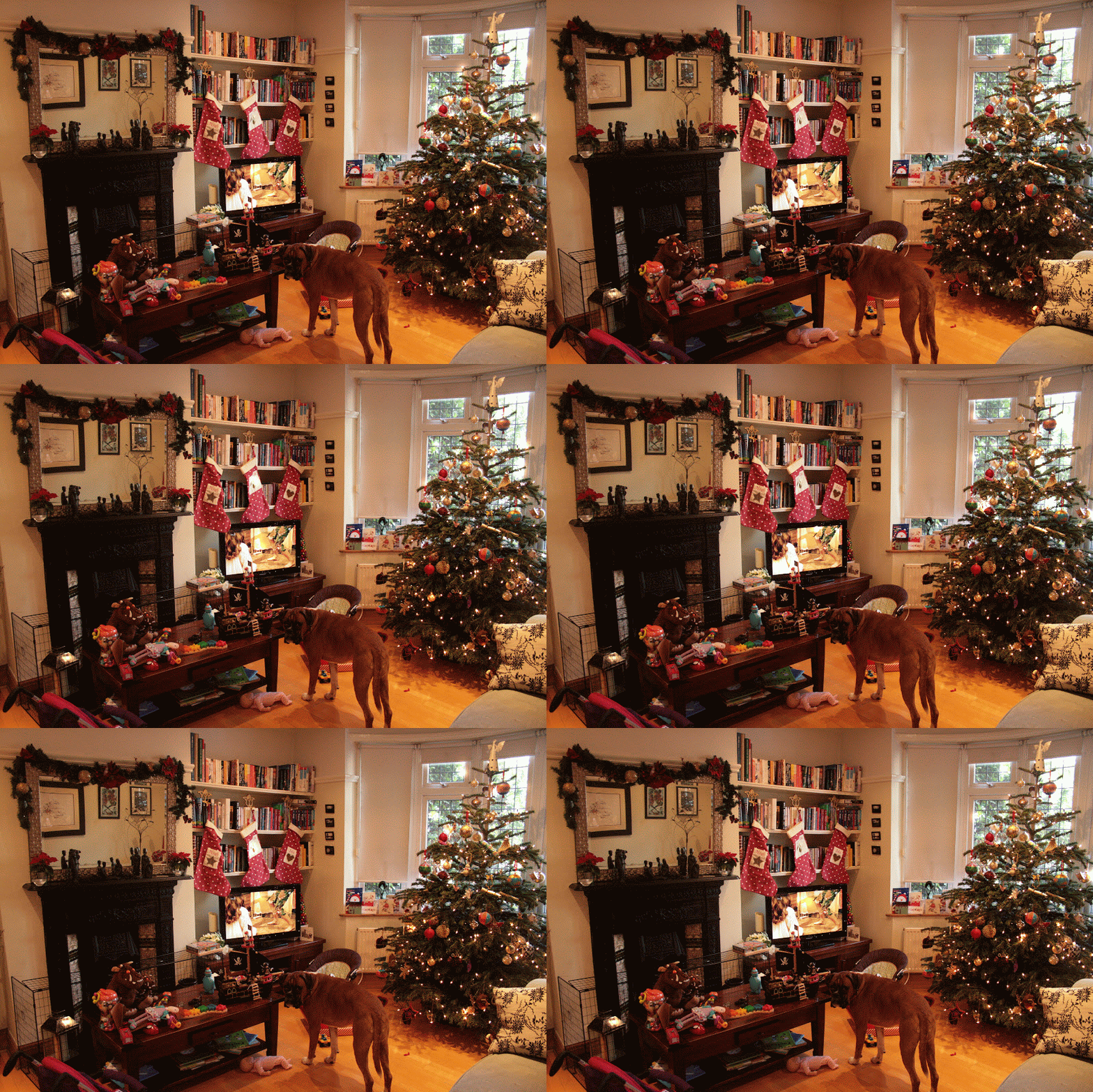
She cooked with astonishing skill, filling the house with smells of roasts and warm soda bread. I over-decorated Christmas trees so enormous they scraped the ceiling, while she rolled her eyes and then quietly loved it. We had Monty, our boxer dog, bounding through the rooms, knocking over lamps and toddlers with equal enthusiasm.
The children came fast: three babies in under three years, each born in a birthing pool at home. Highchairs and nappies, sleepless nights, birthday cakes balanced on tiny fingers. Our evenings often dissolved into “shared happy silence” two people too exhausted to speak, but entirely together in the stillness.
They were the good years. The years when we felt like a proper family, even in the chaos.
Ireland and Divergence
Moving to rural Ireland changed everything. She thrived. Became a school principal. Ran football teams. Built networks of friends so wide she seemed to know everyone in the county.
And me? I retreated into screens. Trading crypto. Obsessing over Austrian economics. Glued to liquidity charts and code. While she was out in the world, rooted in community, I was hidden, convinced the world was going to hell in a handcart and only I could see it.
She was visible. I was invisible. She was thriving. I was unravelling.
Suppression and Cracks
And all the while, I was suppressing. Pretending to find trans a ridiculous concept. Sometimes performing hostility, dismissing the idea of trans people to throw suspicion off myself. It was an act of overcompensation.
She saw it, I think. She once half-joked, “You’re obsessed with trans people… are you secretly trans?” I laughed, too hard. Blushed, turned away, panicked inside. That joke cut so close to the bone it nearly exposed me. I remember once, and I don’t remember the context of it, but she said to me, oh my god, the idea of you as a woman, you would make a fucking ugly woman. And I remember being really, really hurt by that. But also at the same time thinking, well, at least my cover is intact.
Looking back, those cracks were already showing. The truth was always there, seeping out at the edges.
Holidays
We had jewels too, holidays and trips that shine in memory. Our tenth anniversary in Italy, where we walked hand in hand, convinced we were forever. The trip to New York, upper class seats side by side, her drinking champagne as we laughed at the absurdity and took snapshots of the seats.
And Adare Manor. She was radiant at dinner, looking beautiful. I felt pride to be next to her, but also that tiny flicker of envy, wishing I could look beautiful too. I accepted the deal: I was the man, she was the woman. But even then, I felt the shadow of longing.
I can still remember leaving Adare, stopping to fill the truck with petrol, and the weird shock of doing something so ordinary after being treated like royalty. That was us: royalty one night, back to petrol pumps the next.
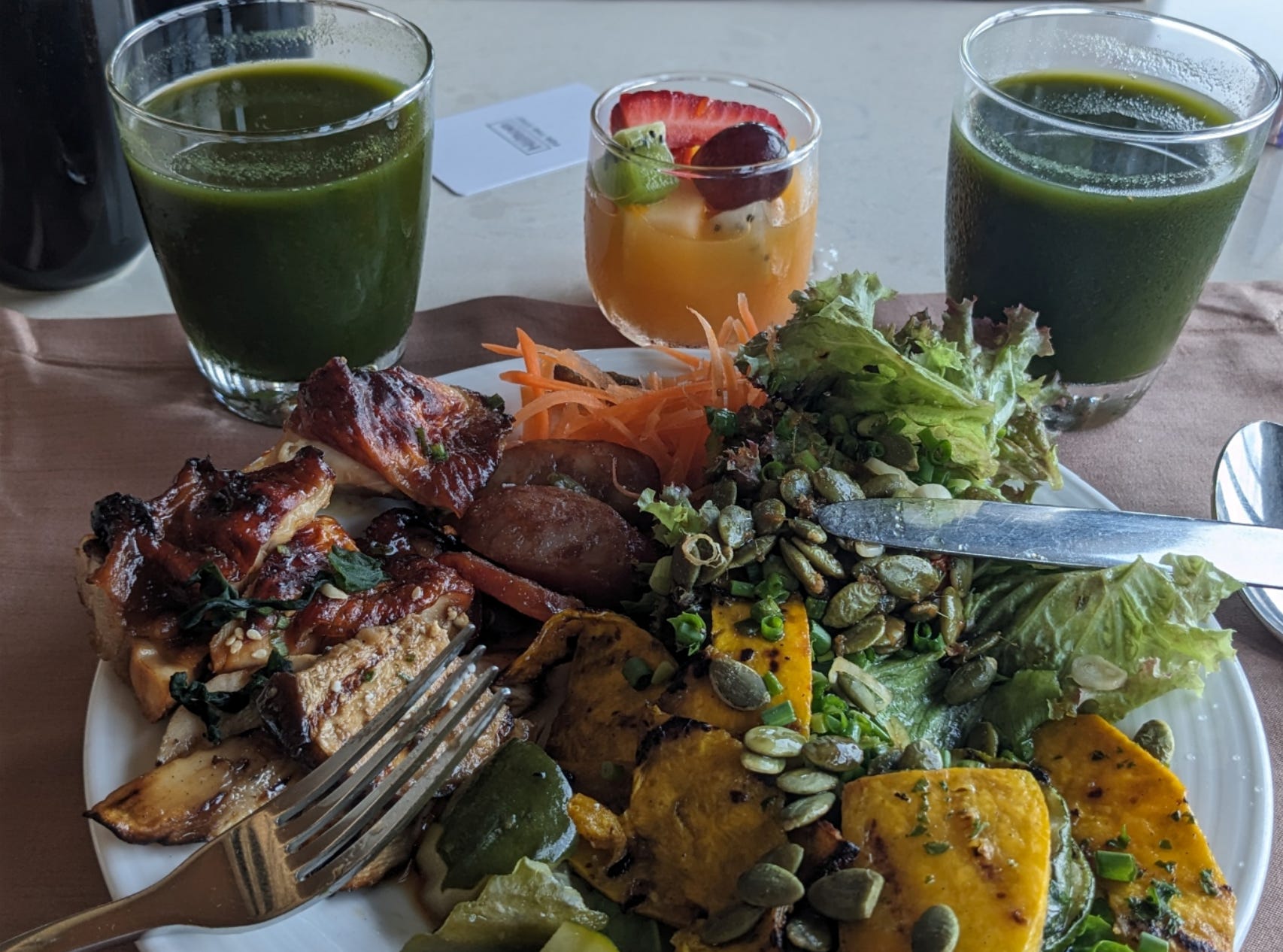
Now, I’m sat alone at breakfast in a Pattaya resort. A spread of fruit and salad and coffee laid out in front of me. Once, these mornings were ours her across the table, sometimes the kids, chatter and plans for the day ahead. Now it’s just me, watching families at other tables, hearing the clatter of cutlery, remembering. It’s not the same. It will never be the same.
The Abrupt Ending
That’s why the end felt so cruel. We’d had tough patches, yes, but never once did I believe we’d divorce. We were a forever couple. It wasn’t even up for debate.
And then it happened. So fast.
One evening, after a hard day at her mother’s house, we came home, hugged in the kitchen, all of us together, warm, tired, still a family. She instigated that. She is a good woman. She knew my pain that night. And she was and is lovely. Just weeks later, we were barely speaking. Another few weeks, and she wanted me gone.
It collapsed like a building imploding. I never got the chance to say everything. I never got the chance to tell her, properly, how much I loved her. I was left with sending desperate WhatsApp messages, some angry, some apologising, some just pleading: I really loved you, I really loved you, I really loved you. I am so sorry.
The Faustian Bargain
By the time I met her, I think I must have made a subconscious deal with myself: if I made myself unattractive enough as a man, then I could never become a woman. I kind of fatness buffer. A kind of Faustian bargain. And it worked. The longing went into remission, like a cancer suppressed but never gone.
Then she came along. She loved me, really loved me. Maybe the first woman who ever did to that level anyway. That love made me fit, slim, healthy. And in deep remission.
With her, I didn’t obsess. I wasn’t constantly thinking about being a girl. There were flickers, when I looked at women, it was never lust. It was technical. Hair, style, posture: would I want that, would I like that? Would I wear those shoes with that dress. But it was mild. 5 second flickers. Not consuming.
Then my body rebelled. All sorts went wrong and then Graves’ disease. My hormones went crazy. The dam broke. The longing came back not gently, but with force twenty-five. I couldn’t hold it back.
The Life We Built
I hustled too much. Left too much on her. Put too much weight on money.
But I did build us a life. Not the fantasy of the three-storey Victorian with bifolds, but a good life. A home. Three children. Holidays. Comfort. Enough for her to take time out. Enough to live well. We had a very high standard of living if I am being honest.
I carried the stress of where the next dollar would come from, hustled in trading and contracts, so we could have that. It wasn’t always fulfilling. For her, it probably wasn’t always fair. But I did try.
The Children
This is the deepest cut. My son especially. He’s at that age when a father matters most, and I’m absent. Just like mine was. My father was mad, then dead. And I fear I’m repeating the same script.
I want to guide him, even if I couldn’t model it myself. I know what men are supposed to do, even if I couldn’t do it. I want to help him through. I hope school isn’t cruel. I know it might be. And I’m sorry.
I dream of a normal divorced rhythm: kids mostly with her, sometimes with me, but both of us present. Sunday lunches where we can sit at the same table, even with new partners, and talk.
The guilt I feel about the damage — especially to him — is enormous. Off the scale.
The Reverse Lottery
I know what she must feel. Sitting at family gatherings, seeing her sisters’ husbands — steady men, dependable men, normal men. And then there’s me.
A transsexual. An actual fucking transsexual. She must feel like she won the reverse lottery.
And I can’t argue with her.
The Seesaw
So here I am, living on a seesaw.
On one side: joy. Joy at finally being me. Joy at looking in the mirror and seeing Stevie, not the mask.
On the other: brutal pain. Loss. Guilt. Grief.
If I could have one thing, it would be kindness between us. Respect for the history. And maybe, someday, the ability to laugh about the life we shared.
Because for nearly twenty years, we really did love each other. And I really did love her.
Sounds to be that she did the best thing she could for her.
Sad story, with some elements familiar to me. I was close to coming out before I met my wife, but once met everything was secondary. She was my world. For 12 years nothing else mattered. I buried my true self deep. I'd always be dreaming of it, but she came first. We adopted 3 girls, then after years of trying she got pregnant. Sadly that was the end of her story as she died after giving birth (internal bleeding the bloody Dr shouldve caught but didnt). For the next 12 years I raised the kids focused 100% on them but got depressed. Tried dating, it flopped. Then hit 268 lbs and knew I was killing myself. Went to therapy an ot all flowed out. My weight started dropping then I came out in February. And I finally came to life. My children 100% supportive, family and friends supporting me to different degrees. Down over40 lbs from my peak and feeling like life is good. I'm damn lucky and I know it. I had the horror of seeing my wife die, but today I am living and have the people who matter most on my side. I hope someday your children recognize you are now your best self and that you love them still and always.