

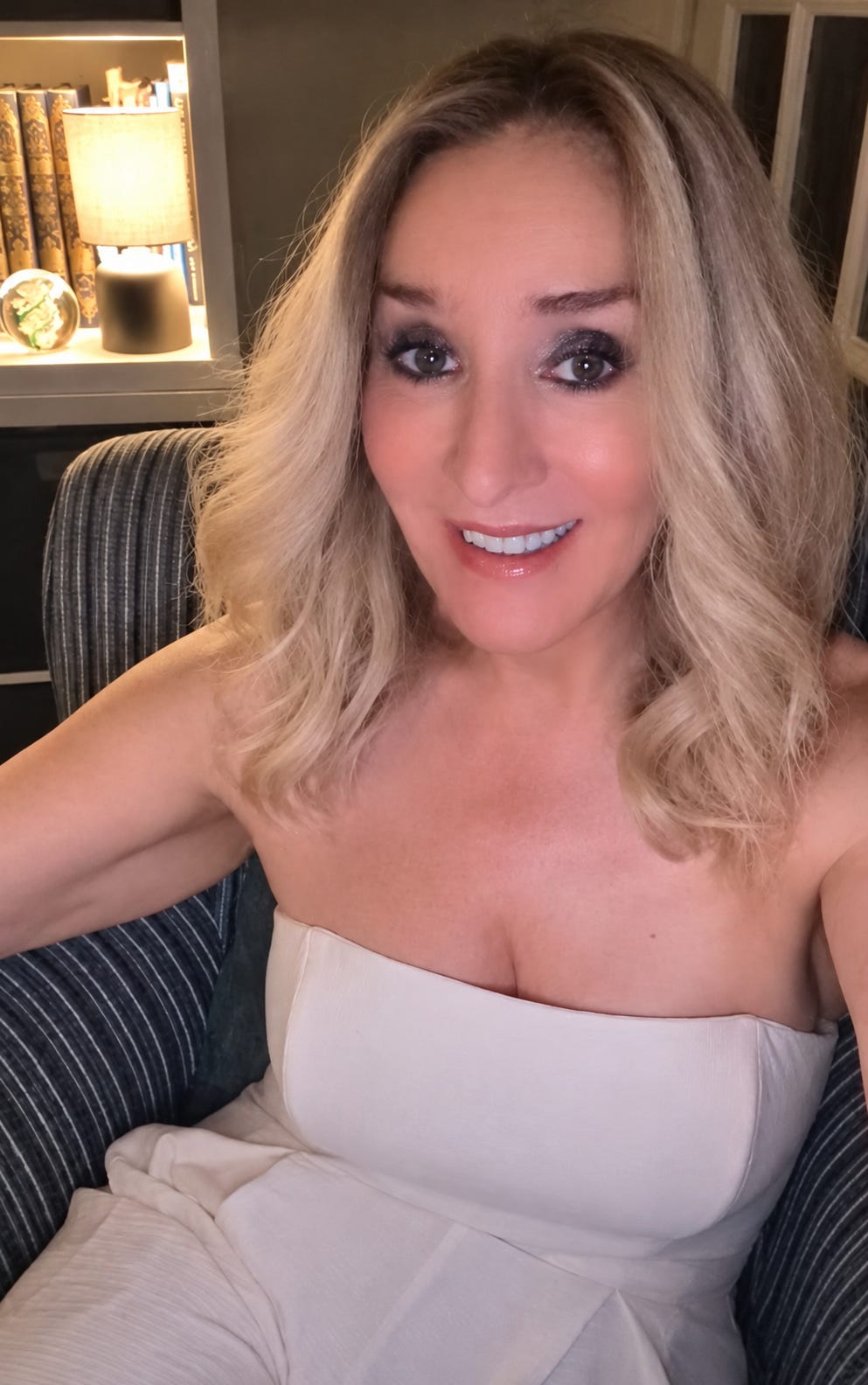
My children live a short drive from my house.
I haven't seen them for more than a year.
When I go shopping, I sometimes choose a route that avoids their school. I've learnt to avoid certain places at certain times because there's always the possibility of seeing them. And, worse still, the possibility of them seeing me and walking straight past.
That's how I've been living.
Last weekend, I flew into Manchester, and something happened that I hadn't experienced in a very long time.
I felt alive.
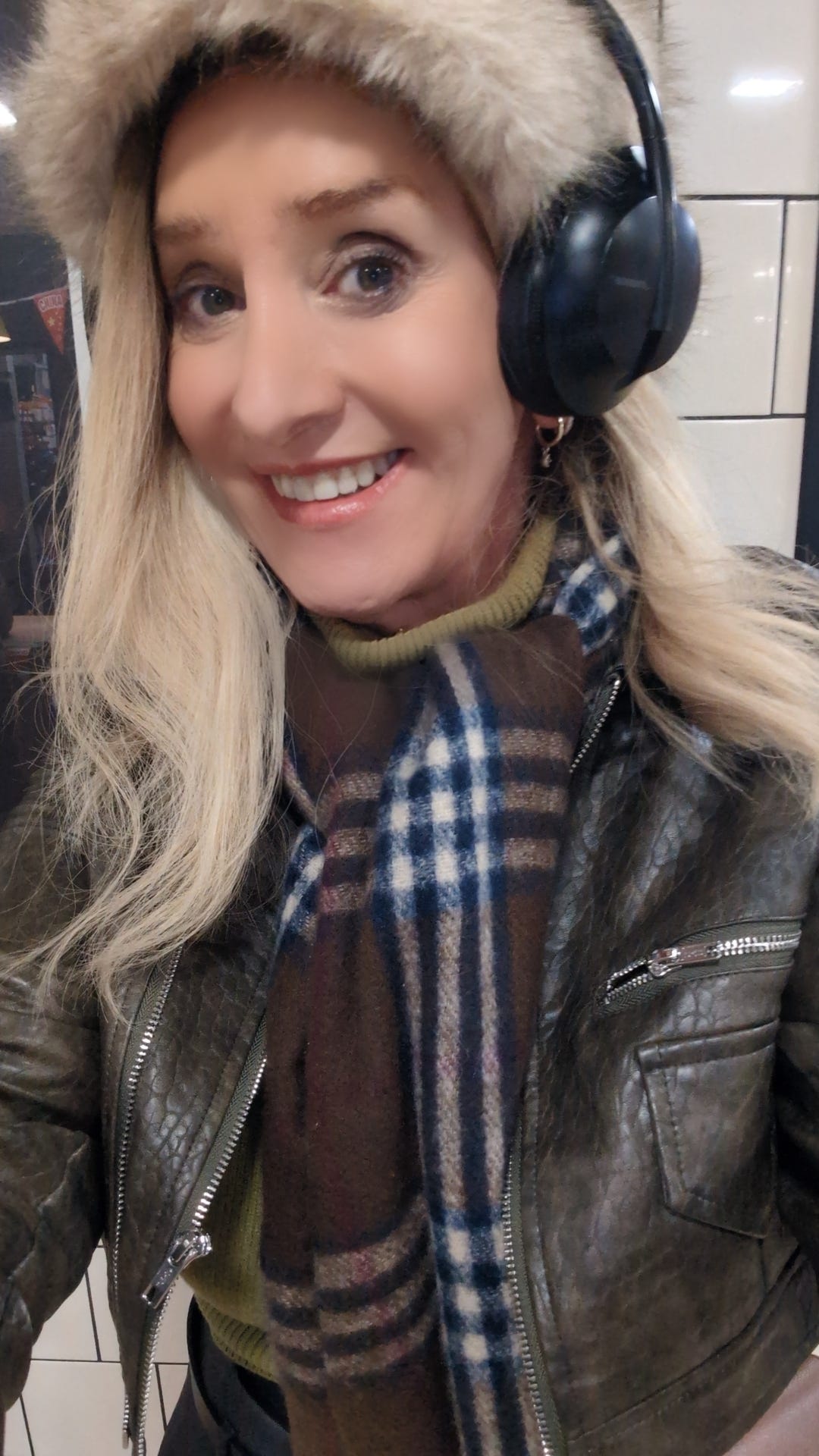
And I've made a decision.
I'm leaving Cork. I'm moving to Manchester.
Now, for anybody who knows where I grew up, this is going to require some explaining.
Behind the Iron Curtain
Let's go back to 1986.
I'm 17 years old, doing my A-levels, living in Skelmersdale, and heavily into alternative music. I've got a little quiff, some spectacularly questionable fashion choices, and an almost religious devotion to The Smiths.
For those unfamiliar with Skelmersdale, it's a Lancashire new town between Liverpool and Manchester. Geographically, we're caught between the two cities, although culturally we're very firmly on the Scouse side.
This matters.
When I later lived in London, people seemed to assume that everybody from the northwest of England got along famously.
"Oh, no, no, no," I'd explain. "You don't understand. The northwest of England is basically the Cold War."
The M6 motorway was our Iron Curtain.
To the east, you had Mother Russia: Manchester, the Soviet Union itself, surrounded by its loyal satellite states of Bolton, Rochdale, Stockport and Oldham.
To the west, you had the United States of Liverpool, with its own collection of allied nations: Kirkby, St Helens, and the glorious independent republic of Skelmersdale.
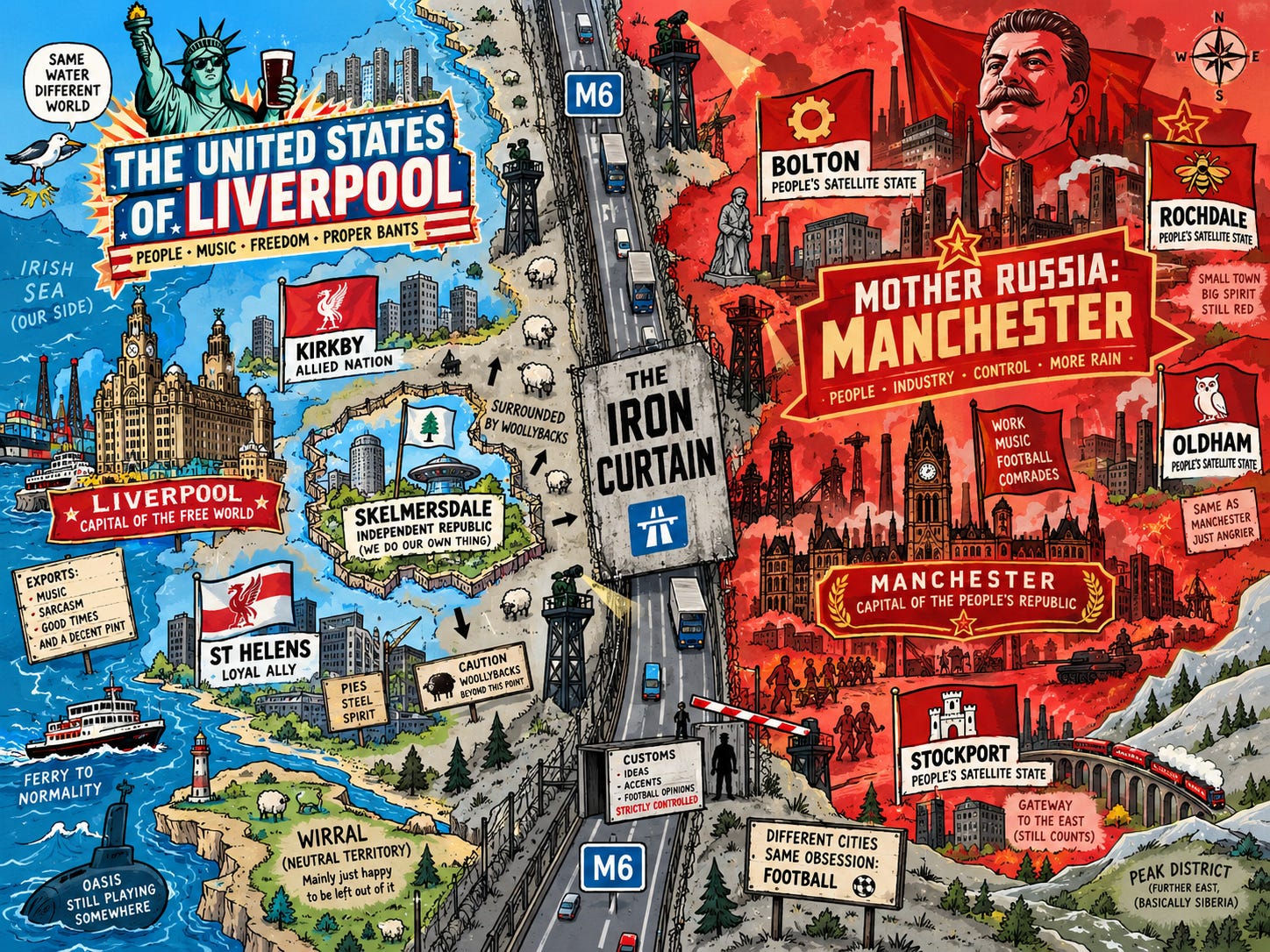
We were practically West Berlin. A little outpost of Western civilisation, uncomfortably close to Soviet territory.
Although admittedly with considerably more roundabouts and fewer Soviet spies.
Crossing the M6 was no small matter. You were entering enemy territory.
And yet, at 17, I was regularly making the journey.
Manchester was our Mecca.
Getting there, however, was a complete bloody expedition.
Skelmersdale, in one of the great triumphs of British town planning, had been built without anybody having the brains to put a railway station in it.
So my friends Jamie, Justin and I would walk miles to the nearest station, catch a train to Wigan, and then another into Manchester.
We'd travel through Salford, home of the famous photograph of The Smiths standing outside Salford Lads Club.
That photograph, used on the inside sleeve of The Queen Is Dead, was iconic to us.
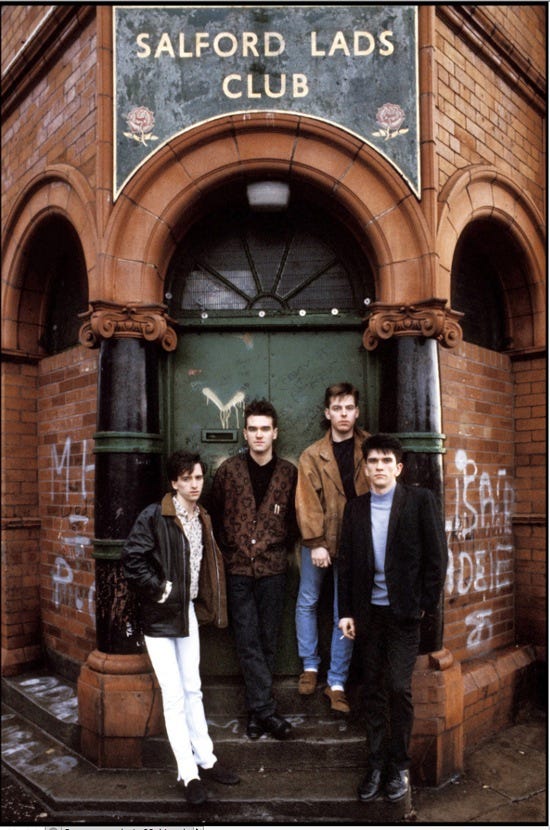
Forty years later, it still hangs, framed, on the wall of my office.
Funny how some things never leave you.
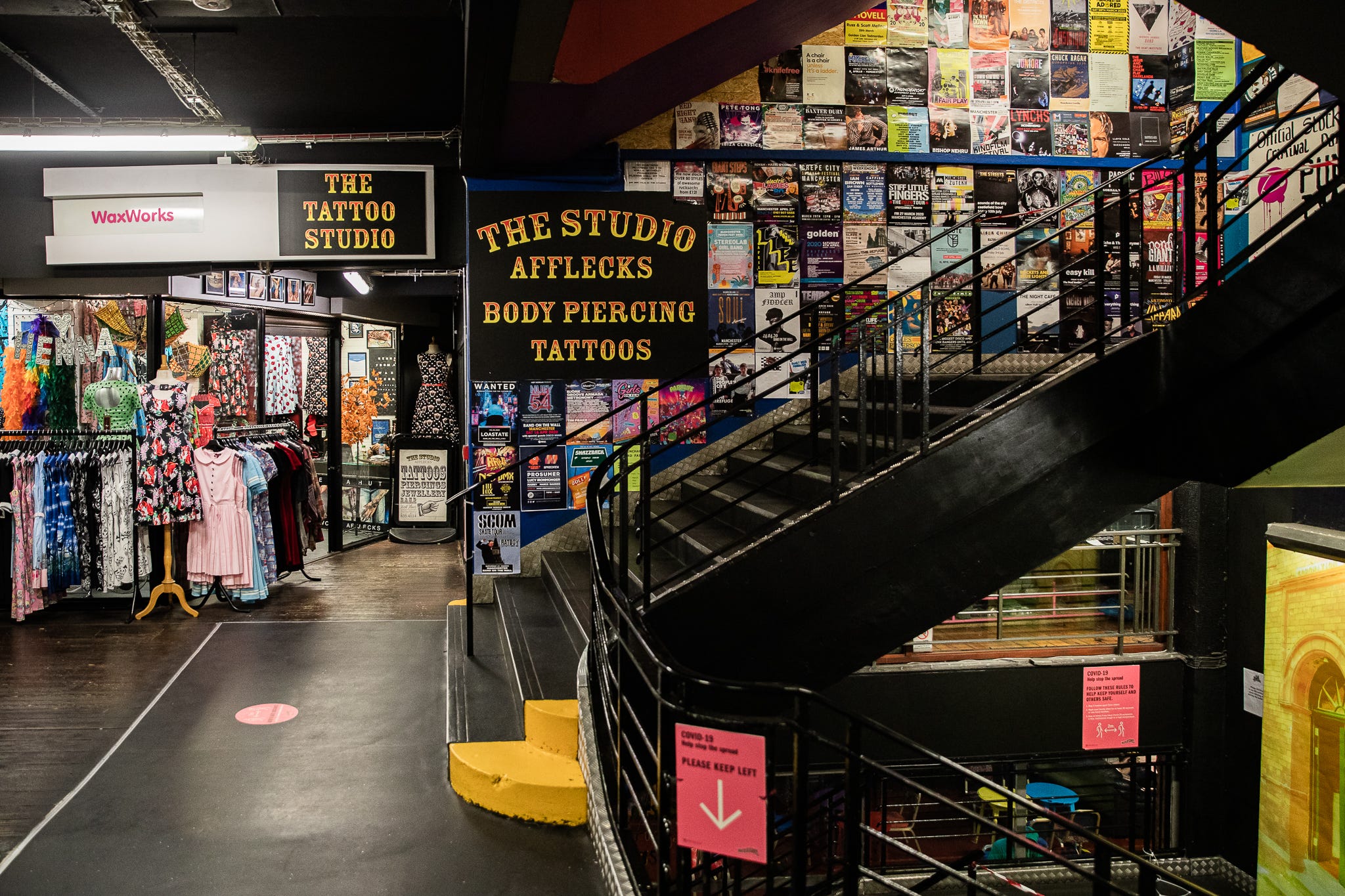
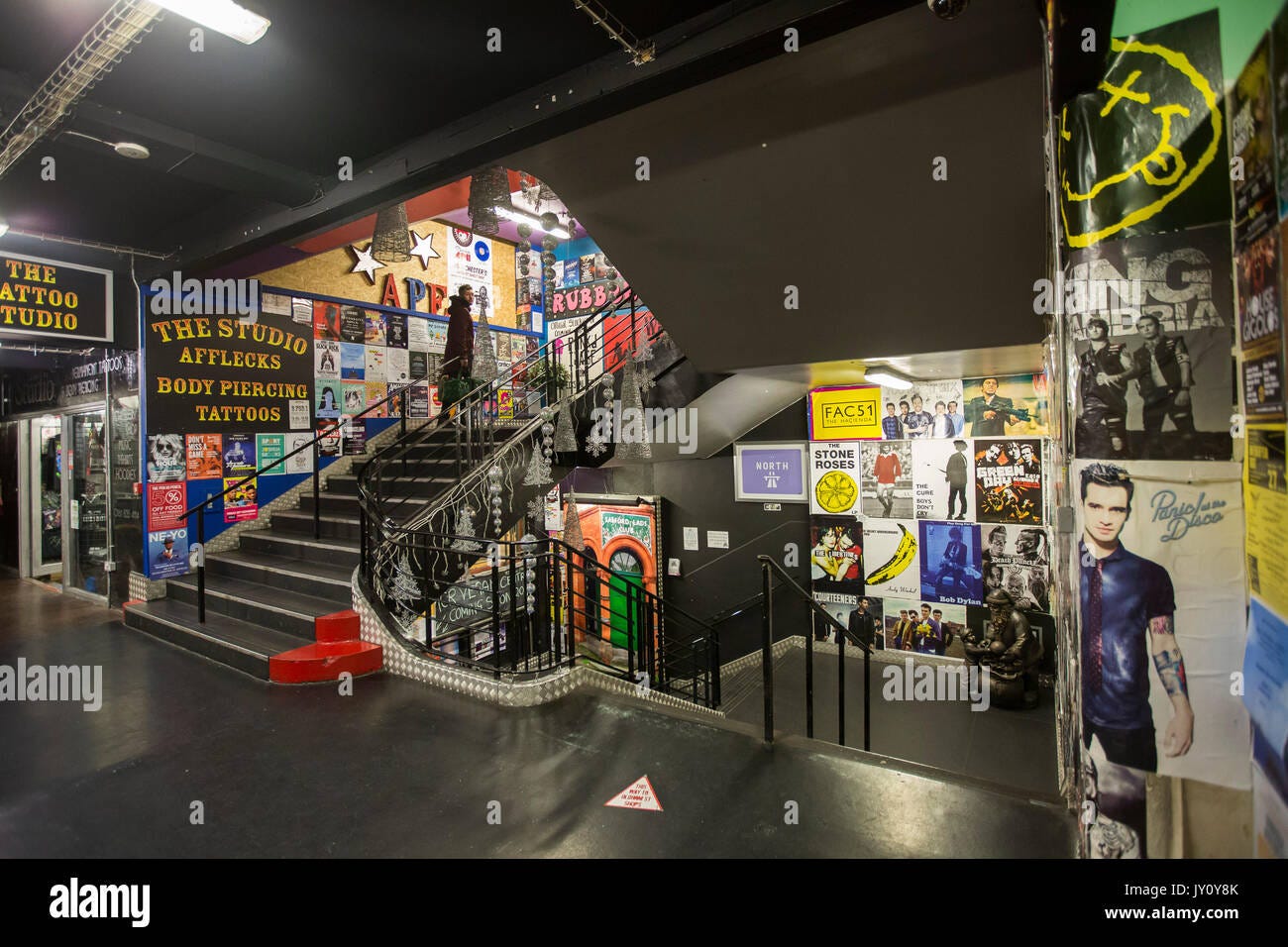
We'd eventually arrive in Manchester and make our way to Afflecks Palace, a wonderful collection of independent stalls selling vintage clothes, records, jewellery and all sorts of peculiar shit.
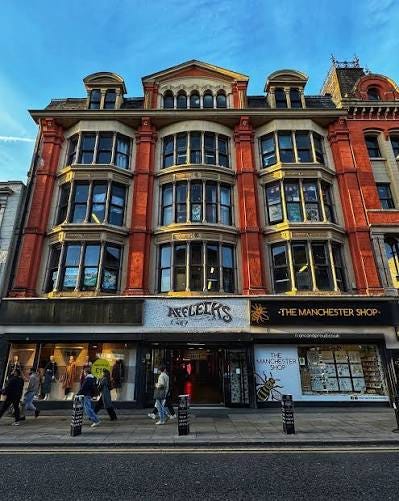
We'd spend hours agonising over genuine vintage Levi's 501s, suede jackets and whatever else we could find.
I was desperately trying to look like James Dean crossed with some sort of tortured poet, while my friend Justin looked suspiciously as though he was about to burst into a rendition of All Right Now and join Free.
Between us, we thought we were the coolest bastards in Manchester.
In reality, we were three lads from Skelmersdale who'd walked four miles to buy someone else's trousers.
But I loved Manchester. Despite being raised firmly on the American side of the Iron Curtain, I was probably already under suspicion of Soviet sympathies.
And forty years later, it appears I'm about to become a full-blown defector.
How I ended up in Cork
Before all of that, however, there's the small matter of how I ended up in Ireland.
My then wife and I had spent roughly fourteen years living in East Dulwich, a rather lovely, rather poncy corner of South London where every Victorian house had acquired identical bifold doors, a Scandinavian kitchen and an enormous mortgage.
Everybody smiled enthusiastically about how wonderful life was while privately shitting themselves that their City bonus might not arrive.
I rather liked it, actually.
But in 2020, we decided to move to Ireland.
My wife was Irish, and she'd been increasingly encouraged towards leadership positions in teaching. She wasn't particularly enthusiastic about becoming a headteacher in England, where the job seemed to involve being relentlessly battered by inspections, government targets and an endless succession of educational initiatives.
Ireland offered a different opportunity.
We'd spent fourteen years in my country. It seemed fair enough to spend the next chapter in hers.
Dublin was out. The housing market was completely bonkers, and I had no desire to spend a London-sized fortune on a powder-blue pebble-dashed house with electrical cables dangling down the side.
So we chose Cork.
A smaller city, more affordable housing, and what seemed like a lovely place to raise our family.
And for a while, it was.
We arrived in 2020, just as COVID was turning the world upside down.
There were financial setbacks, the usual complications of family life, and eventually the biggest change of my entire existence.
I came out as transgender.
I began transitioning.
And my old life fell apart.
Living like a ghost
I've written extensively about my transition elsewhere, so I'm not going to tell the entire story again.
But the consequences were catastrophic.
My marriage ended. I lost my family home. My relationships with my children broke down. My siblings stopped speaking to me. My nieces and nephews disappeared from my life, and almost every friend I'd ever had vanished.
Only my mother remained, along with two friends.
I found myself living alone in Cork, in a city I'd moved to for a family life that no longer existed.
And I stayed.
I stayed because of hope.
Hope that things would improve. Hope that my children would eventually want to see me. Hope that time might soften whatever anger or hurt had driven everybody away.
Hope that, eventually, something resembling normality might return.
People encouraged me.
"Don't give up, Stevie."
"Keep trying."
"Give them time."
All perfectly reasonable advice, of course. Nobody wants to tell somebody who's estranged from their children to stop hoping.
But I've discovered something over the last year.
Hope can become a prison.
It's difficult to describe the agony of living so close to your children and having absolutely no relationship with them.
They're getting older. Having birthdays. Making friends. Going to school. Experiencing all the ordinary things that make up childhood.
And I'm not part of any of it.
I'm not even somebody who occasionally drops in.
I'm a ghost.
And the worst part isn't some enormous dramatic event. It's the accumulation of tiny, ordinary moments.
Deciding which way to drive to Tesco.
Wondering whether you'll accidentally encounter somebody from your old life.
Knowing that your children are somewhere nearby, getting on with their lives, and that you're effectively invisible to them.
Then you go home, wake up the next morning and do it all again.
I've spent more than a year living like that.
And the really terrible thing is that nothing changes.
You can wait another week, another month, another Christmas, another birthday, and there's absolutely no guarantee that anything will be different.
You just get a little older.
And a little sadder.
I watched Will & Harper, the documentary about Will Ferrell and his transgender friend Harper Steele, and saw the warmth and acceptance surrounding her. I've encountered plenty of other stories where relationships have survived transitions, even if marriages haven't.
I never imagined I'd end up at the opposite extreme.
Scorched earth.
Almost everybody gone.
I sometimes wonder whether being so public about my transition made matters worse.
I didn't quietly disappear, transition in private, and emerge somewhere else hoping nobody would notice.
Quite the opposite.
I started writing Fast Track Femme. I went onto Instagram. I posted on Reddit. I talked openly about my experiences, my surgeries, my mistakes, my happiness and the occasional spectacular bit of stupidity.
Perhaps some people from my old life would have preferred me to disappear quietly.
Perhaps a less visible Stevie would have been easier to accept.
I genuinely don't know.
But I do know that I'm not ashamed of who I am.
I'm actually rather proud of her.
And I'm not going to apologise for building a life that I'm beginning to enjoy.
The decision
Recently, I asked my children what they thought about me moving away.
One replied that I should go.
The other two didn't reply.
And that, I think, was when something finally shifted.
I realised that I'd been organising my entire existence around the possibility of reconciliation.
I'd stayed in Cork because I thought that, somehow, remaining geographically close would make a difference.
That if I were just patient enough, understanding enough, persistent enough, eventually something would change.
But nobody had promised me that.
Nobody had said that another six months, another year, or another five years would make any difference whatsoever.
I was simply waiting.
And waiting was becoming my entire life.
I've had people tell me that moving away means giving up. That I should keep trying, keep hoping, keep myself available.
But there's a distinction I've finally come to understand.
Accepting something isn't the same as approving of it.
I don't approve of being estranged from my children. I don't think it's fair, and I would change it tomorrow if I could.
But I can't.
I cannot make people want a relationship with me, however desperately I might want one with them.
That's the reality.
And accepting that reality has been extraordinarily painful.
Because what do you do when the thing you want more than anything else in the world is something you have absolutely no power to bring about?
For a long time, my answer was to wait.
And it was killing me.
Not dramatically. Not all at once. Just slowly, through the endless repetition of ordinary days in which nothing changed.
But something has changed now.
Me.
I've realised that I can love my children, leave the door open, and still get on with my life.
Those things aren't mutually exclusive.
I don't have to stand in the doorway for the rest of my life waiting for somebody to walk through it.
And at 58, I'm becoming increasingly conscious that I don't have an infinite number of years left to spend doing precisely that.
That isn't bitterness.
It's arithmetic.
Manchester, forty years later
Which brings me back to Manchester.
The weekend before visiting my mother, I'd flown into Manchester on my way to Leeds for a night out.
I spent time wandering around the city, looking at how much it had changed since those teenage trips to Afflecks Palace.
Christ, what a transformation.
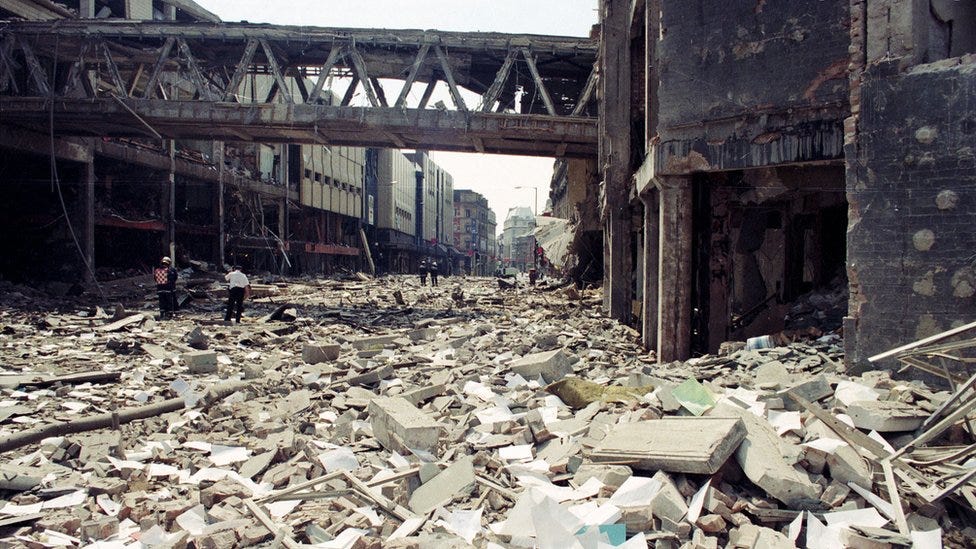
The old industrial buildings, the redeveloped waterfronts, the restaurants, the bars, the apartments. The sheer energy of the place.
It felt exciting.
And something else happened.
During my time in Leeds, six people came up to me and recognised me.
"You're Stevie, aren't you?"
"I follow you on Instagram!"
"I read Fast Track Femme!"
Six people.
It was surreal.
Here was a woman who'd spent much of the previous year feeling completely invisible in Cork, suddenly being recognised by strangers in northern England.
And the wonderful thing was that these people didn't know me as somebody's former husband, an estranged parent, or the person whose transition had caused an enormous family upheaval.
They knew me as Stevie.
Just Stevie.
And they seemed genuinely pleased to meet her.
Then there were the dating apps.
Oh, my God.
Within moments of arriving in Manchester, my phone started pinging.
Like. Like. Like. Like.
Attractive women. Interesting women. Women who seemed perfectly happy with the fact that I was transgender.
And I found myself thinking, What the actual fuck am I still doing in Cork?
Now, I'm not suggesting that the solution to profound family estrangement is a few attractive women on a dating app.
Although, frankly, it doesn't hurt.
But it reminded me of something I'd almost forgotten.
There's an entire world out there.
People I've never met. Friends I haven't made. Women I haven't dated. Places I haven't visited. Experiences I haven't had.
And I've spent so long mourning the people who've left my life that I've barely allowed myself to think about the people who might yet enter it.
Manchester made me remember what it felt like to look forward to something.
Not another attempt at reconciliation. Not another message that might go unanswered.
Something for me.
And I liked that feeling.
A lot.
A three-bedroom apartment and a very small dog
So I've been looking at apartments in Manchester.
And, good grief, the difference between what I can find there and what I've been looking at in Cork is astonishing.
I've been eyeing up some gorgeous three-bedroom riverside apartments, with enormous balconies, lovely views and enough space for all my ridiculous possessions.
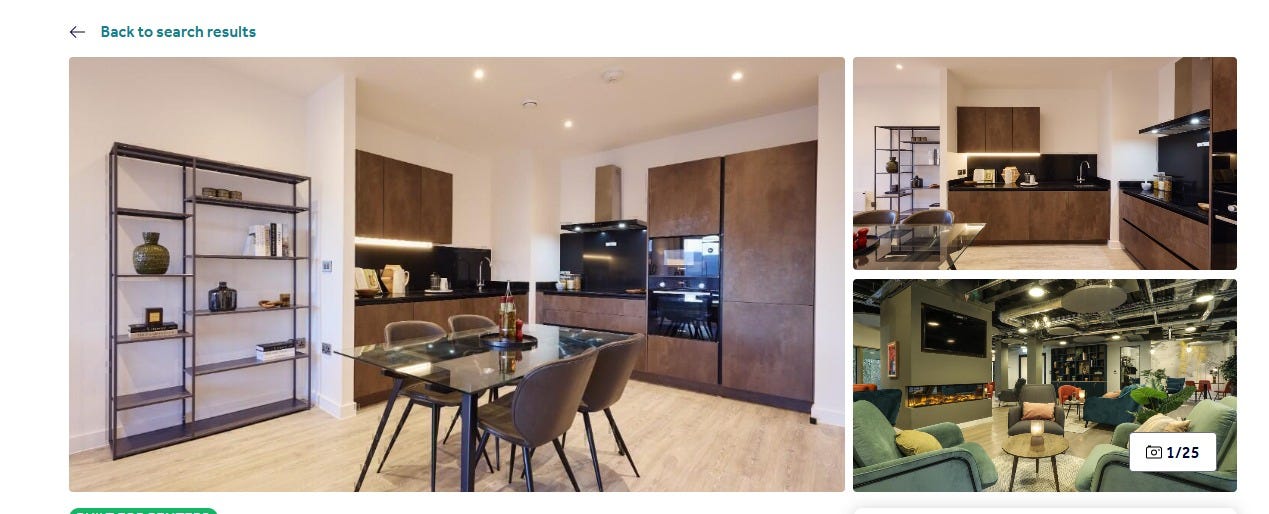
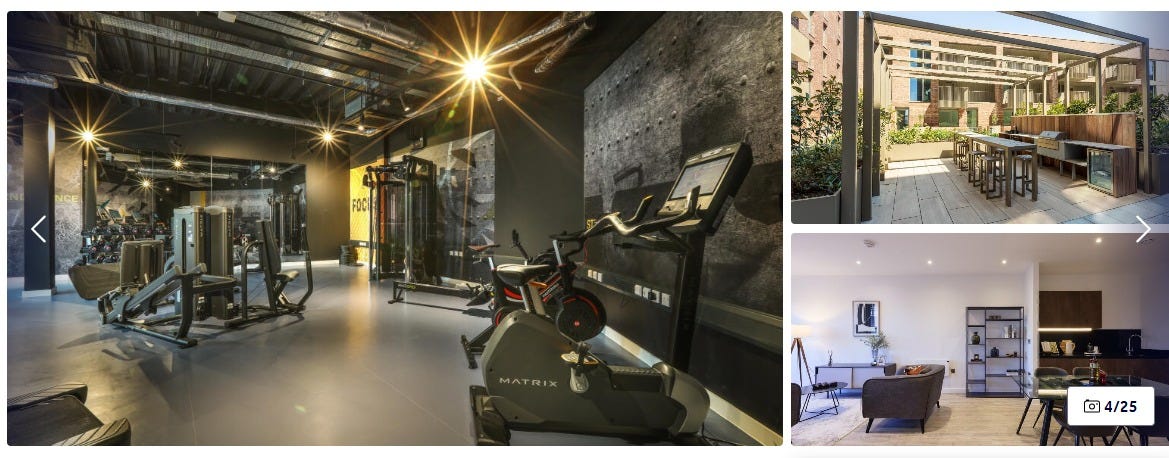
A proper office. A home gym. All the artwork I've spent years collecting.
And, naturally, suitable accommodation for Colonel Chesterton, who will undoubtedly regard the whole place as his personal estate.
I can picture it.
My music playing. Friends coming round. Going out for dinner. Meeting people. Building a social life.
Perhaps even falling in love again.
It's a lovely thing to be able to imagine.
So, forty years after those teenage expeditions, I'm crossing the Iron Curtain again.
I'm moving to Manchester.
Sounds very much like the right decision. All the very best to you! :)
It seems a strange choice when every single transgender person I know, including myself, is either moving out of the UK,would like to move out of the UK, or has put together a 'go bag' for the eventuality that they cancel our passports.
And of course as of 2 days ago the NHS has all but closed its doors to transgender people.
You know what you said about the USSR, welcome to Airstrip 1.