


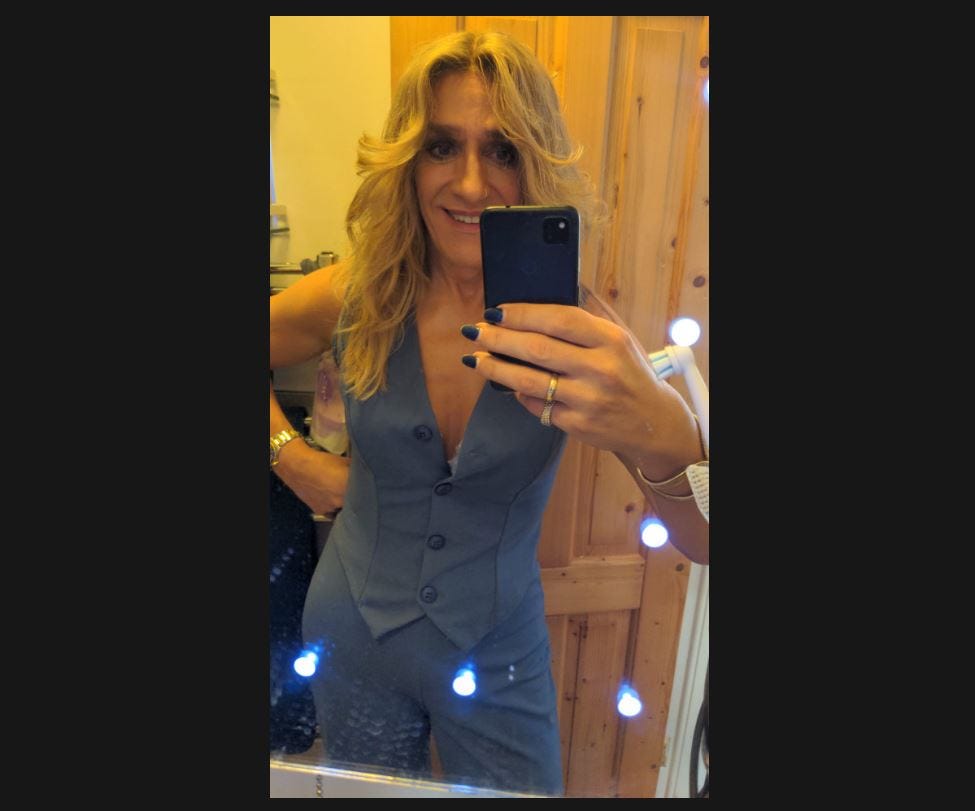
Transition isn’t just about changing your body, your wardrobe, or the name on your passport. It’s a controlled demolition of your social life. Or sometimes not so controlled. One day you think you know who your people are, and the next they’re gone, vanished without a word, like you never mattered.
That’s the burndown. And then comes the rebuild.
What nobody tells you is that when you transition, you don’t just swap clothes or hormones, you swap people. You lose vast numbers of them, and then you gain new ones. The cast of your life is replaced, almost wholesale. It’s not a gentle reshuffle. It’s a complete swap-out.
The Burndown
The first people I lost weren’t the ones I expected. They weren’t enemies or people with strong opinions about trans issues. They were friends I spoke to every single day. People I’d known for decades. And then… bam. Gone. No explanation. Just radio silence.
One friend, who used to tell me all about his two gay mates who came round all the time, ghosted me the second I sent him a picture of myself. Another, a deeply conservative bloke with no sense of humour but a lot of loyalty, dropped me without hesitation. That shocked me.
Then it got more complicated.
My wife at first tried to adjust. She imagined a part-time Stevie she could live with. But when she realised I was all in , that I wasn’t just cross-dressing at the weekends but was becoming a woman, she hardened. Slowly, then quickly. From “we’ll manage this as a family” to “I don’t want you in the house, I don’t want to speak to you, and I want to be divorced as fast as possible.”
Her friends went first. Every single one. To them, I had betrayed her, ruined her life. No nuance. Just gone. Our joint friends mostly followed. A few tried at first, but after a chat with Liz, they chose her. Ninety-five percent of them vanished.
Some losses didn’t hurt. Her family? Blessed relief. I could not care less. A few of her friends? A disappointment, but survivable. My own extended family was trickier. My mother uncomfortable, my brother baffling, my sister blunt but surprising in her support.
But then we get to the epicentre. My children.
That’s the one I can’t rationalise. That’s the one that breaks me. At the most visceral level. I don’t know how to live with it. I’m not religious, but I pray they’ll come around, because without them, I don’t know how to carry on. Everything else I can let burn to the ground. But them — I can’t.
The Rebuild
Here’s the other side of the fire.
Pre-transition, I was insular. I worked, I kept to myself, I barely spoke to anyone outside the family. I was guarded, always acting a role, trying and failing to be “the man.”
Now? I’m chatty, relaxed, open. I want to be out in the world, meeting people, talking, having fun. And because of that, my social life has exploded. My WhatsApp went from maybe four or five people to twenty. Most of them are new, most of them still light, but it’s a start.
Online, especially, I’ve found kindness. Old colleagues from years ago, software engineers mostly, popped back up with total support. People I hadn’t spoken to in a decade suddenly cheering me on, liking my posts, sending encouragement. That blew me away.
Even among the joint friends I thought were gone, one or two have surprised me with deep, moving loyalty. That keeps me going.
Locally in Cork, it’s been harder. I’ve got a couple of people I’d call friends, but not yet the full circle I crave. The rebuild is still in its scaffolding phase.
The Swap
If I had to put numbers on it: 10% of my old life remains. Ninety percent is gone. But here’s the twist, my network now is bigger than before. Pre-transition, I was isolated. Now I’m expanding.
The quality is different too. These new people know me as I really am. I’m not performing masculinity for them, not hiding. The relationships might be fresh, but they’re built on something more real than the old ones ever were.
The Wound That Remains
I can live with losing in-laws. I can live with old mates ghosting me. I can live with a smaller family circle and fewer joint friends. I can even live with strangers online being cruel.
What I can’t live with is my kids not speaking to me. That’s the one thing I can’t swap out, can’t rebuild, can’t replace.
So yes, transition is a social burndown and a social rebuild. And in some ways, the rebuild is better. Freer. Fuller. More authentic. But let’s not kid ourselves. Some fires leave craters that nothing else can fill.
And there we have it, right on cue. Last night I finally ventured out to the local LGBT nightclub. I’ll admit, I was a bit nervous at first, imagining it would be full of 22-year-olds but it wasn’t like that at all. There was a massive mix of ages, all sorts of people, everyone just being themselves. I’d never experienced anything like it.
I danced my ass off all night, chatted to what felt like a million people, and even ended up on stage with the drag queens in a dance-off against some girl (she beat me, she was about 25, but I gave it a bloody good go!). And because they shouted my name on stage, suddenly everyone in the club knew who I was for the rest of the night. It was amazing.
I will be back. What a social rebirth right on cue.
Thank you for sharing this, Stevie! I am in the process of coming out as a trans woman. I'm very glad to say my inner circle of family have been very supportive, but I haven't yet come out to old friends and friend groups. But whatever happens, I couldn't be happier with myself, with life, with the world (broken as it is).