


It’s a Friday afternoon in Cork and my Relay system seems to be ticking over nicely. Code is coming out, workers are working, everyone seems happy, so I thought I’d turn my attention to this.

This is a subject I’ve been asked about quite a lot. I’ve described, in frankly immense amounts of detail, exactly how I transitioned, what surgery I had done, what worked, what didn’t and all the rest of it. But I haven’t really talked very much about what I’ve done to my face apart from the surgery.
And there has been quite a lot.
This isn’t going to be War and Peace. I’m not attempting to write the definitive guide to aesthetic medicine. I’m simply going to tell you what I did, why I did it and roughly what order I did it in.
Because if you walk into almost any skin clinic, for want of a better term, you will be confronted by a gazillion different treatments: microneedling, RF microneedling, fractional lasers, CO2 lasers, Erbium lasers, IPL, BBL, chemical peels, radiofrequency tightening, ultrasound tightening, PRP, skin boosters, fillers, Sculptra, Radiesse, and an endless parade of machines with names like Morpheus8, Potenza, Ultherapy, Thermage and God knows what else.
Half of them sound as though they should either be attacking a small country or appearing in a Marvel film.

Some of these things are genuinely very good. Some might be very good for you, but completely pointless for me.
That is the important bit.
Before spending any money, I think you need to work out what problem you are actually trying to solve.
Three different problems
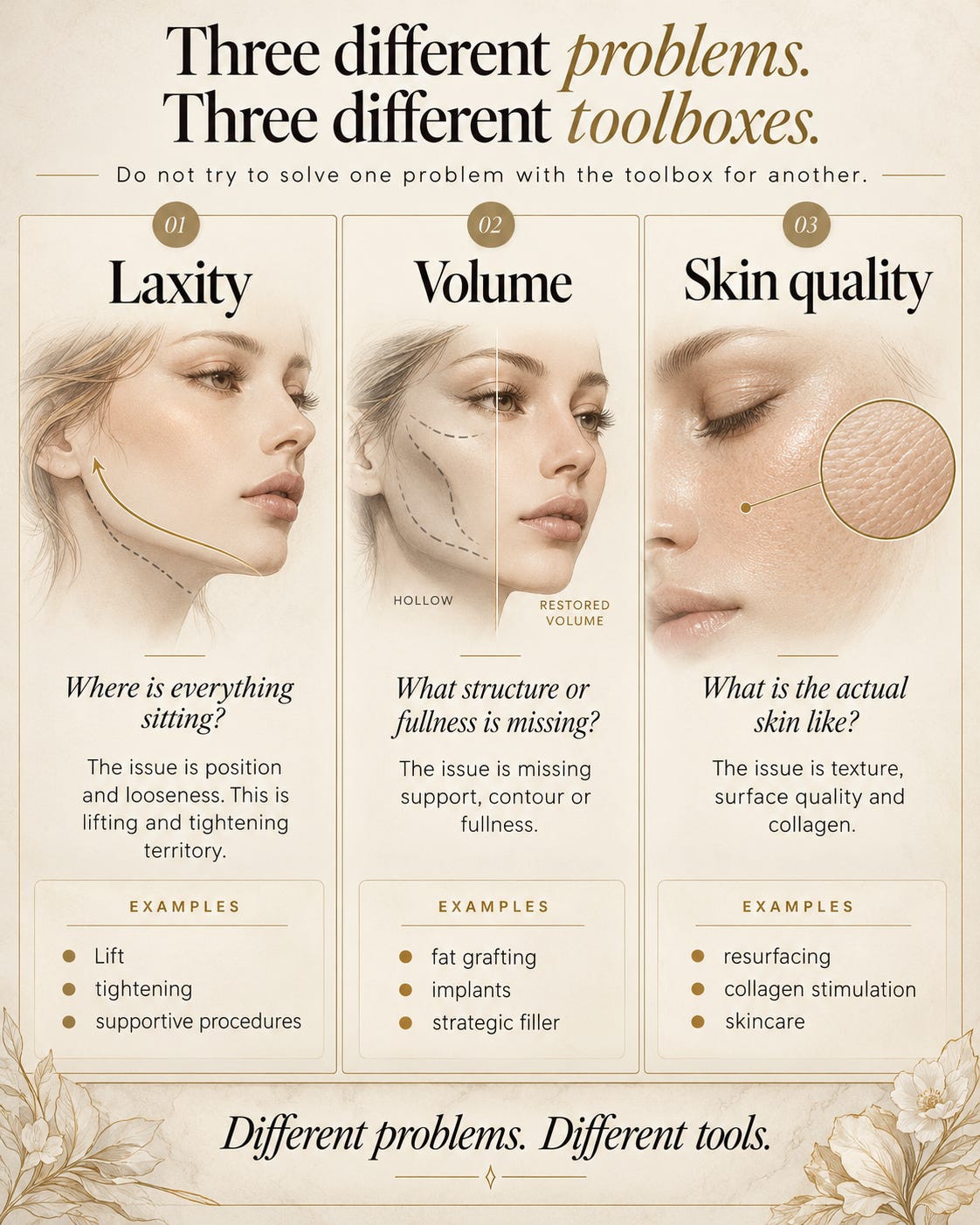
This is how I eventually came to think about my own face:
Laxity. Volume. Skin quality.
They overlap, obviously, but they are not the same problem.
Laxity is basically how firm everything is. If you’re pushing 40 or 45, there’s a reasonable chance things aren’t quite sitting where they did when you were 25.
Although not always.
I know one trans woman who is 51. I was sitting next to her in a car the other week looking at her face and she has virtually no skin laxity whatsoever.
You bloody cow.
I did.
The mistake I think people make is trying to solve substantial laxity by throwing hundreds and hundreds of pounds or euros at comparatively small treatments.
€500 here.
€600 there.
Another €700 six months later.
None of these things are cheap. They’re just cheap relative to surgery.
There are non-surgical treatments that can tighten skin to a degree, particularly if the problem is fairly mild. But if you have significant facial and neck laxity and want a significant result, you are eventually getting into facelift and neck-lift territory.
Sorry.
I was.
Volume is a completely different problem. I had lost an enormous amount of it. My mid-face was virtually concave when I started.
I’d lost significant amounts of weight twice in my life and done years of endurance cycling, and I had very hollow cheeks. At the time I thought it made me look lean and masculine.
Which, unfortunately, it did.
It just wasn’t remotely what I wanted when I started trying to make my face look female.
Then there is skin quality itself: thickness, texture, pores, pigmentation, fine lines, smoothness, sun damage and that slightly crepey quality skin can acquire as it ages.
So those were my three problems.
And I started attacking them.
The nuclear option
When I first transitioned, before the FFS, before the facelift, before everything else, I sat down and looked at the enormous list of things I could supposedly do to improve the actual quality of my skin.
Then I ranked them.
Sitting at the top was CO2 fractional ablative laser.
This was the hard hitter. Not the pleasant option. Not the lunchtime option. Not the pop in on Thursday and nobody at work will notice option.
This was the one where I effectively had to disappear for the best part of eight or nine days because I came out looking like a burns victim.
It is brutal.
My God, though, it works.
I’ve had it done twice. More on round two later.
The first time I had my whole face done, my neck and even my eyelids, and I had absolutely no idea what I was letting myself in for.
They put me on a bed in the clinic, anaesthetised the area around my eyes, and then inserted these little metal shields underneath my eyelids. Essentially enormous metal contact lenses with tiny handles on them.
Why?
So they could laser my bloody eyelids.
The things I will do for beauty.
The recovery was horrific. For the best part of a week I looked like some sort of monster.
Then it healed.
And the results started appearing.
If somebody said to me, “You get one serious skin-resurfacing treatment. Pick one,” I’d pick this.
It made a massive difference to me.
Where I initially got fillers completely wrong
My first experience with filler and Botox was before transition. I went into a clinic presenting completely as a man.
And almost immediately, something ridiculous happened.
The doctor spotted my Rolex.
Then we somehow got into that peculiar thing men occasionally do where each one starts subtly trying to out-impress the other.
You know the sort of thing.
A little man-off.
And I participated enthusiastically because, apparently, I was an idiot.
I walked out afterwards and thought:
You fucking idiot, Stevie. What are you doing?
Because not only had I walked into an aesthetics clinic presenting as a man, I had then spent part of the consultation performing masculinity with the bloke who was about to inject my face.
Unsurprisingly, he gave me the most masculine filler imaginable. Definition, angles, chiselling. He had looked at the man sitting in front of him and tried to make him into a better-looking man.
Entirely reasonable.
Also precisely the opposite of what I actually wanted.
A few months later, I tried again.
I was still at the stage where I thought filler might be capable of doing quite a lot of the heavy lifting. I already knew I probably needed a facelift eventually, but my mid-face was badly depleted and everything was rather, shall we say, soggy.
I thought perhaps filler could fill it out temporarily while I worked out what I was going to do properly.
This time I went somewhere completely different.
And this time I told her everything.
I was still presenting male when I walked through the door, but I showed her a photograph of Stevie.
She looked at the photograph.
Then she looked at me.
Then back at the photograph.
Her expression basically said:
Who the hell is that?
“That’s me,” I said.
“That’s the other me.”
So I explained.
From that point onwards, everything was aimed at the female face I was trying to create.
We added volume to the cheeks and it helped to a degree, but I was still asking filler to do far too much.
Eventually I realised that.
So I stopped.
Completely.
I decided I would deal with the actual structure first and come back to filler later, if I still needed it.
That turned out to be one of the better decisions I made.
Botox
That second clinic was also where I started doing Botox properly.
In my head, I divide Botox into two types.
The first is ordinary anti-wrinkle Botox: forehead, frown lines, crow’s feet, the usual areas.
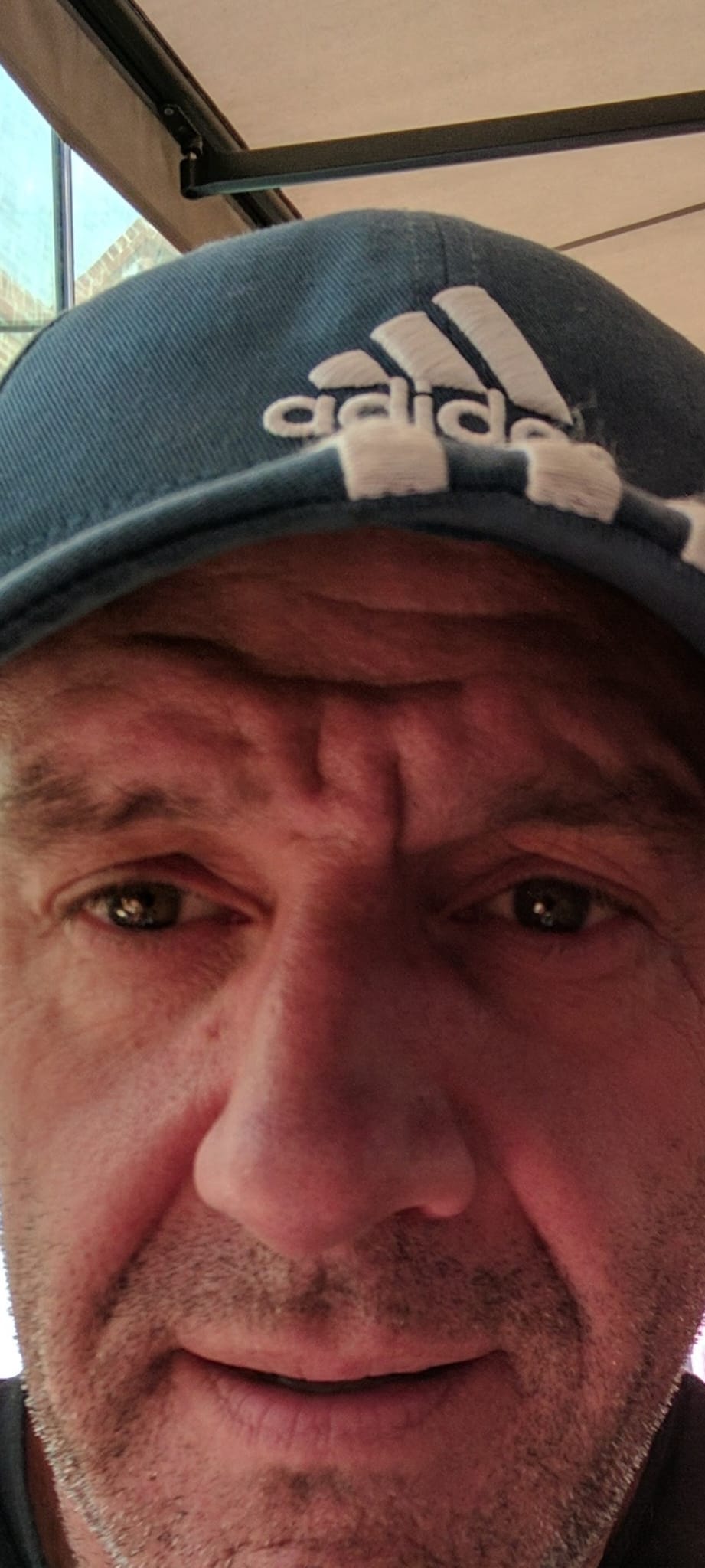
Something I didn’t appreciate initially was how cumulative the cosmetic result could be. Obviously the Botox itself starts working quite quickly, but if you already have established expression lines, one round isn’t necessarily going to erase years of creasing.
What happened to me was that repeated treatment stopped me continually folding the same bits of skin in the same places, and over time everything became much smoother.
I have a before-and-after photograph I’ll include here. Both pictures are pre-FFS. No facial surgery whatsoever.
The difference is significant.
Incidentally, the second photograph is also rather poignant for me. It is the very last photograph of me as a man.
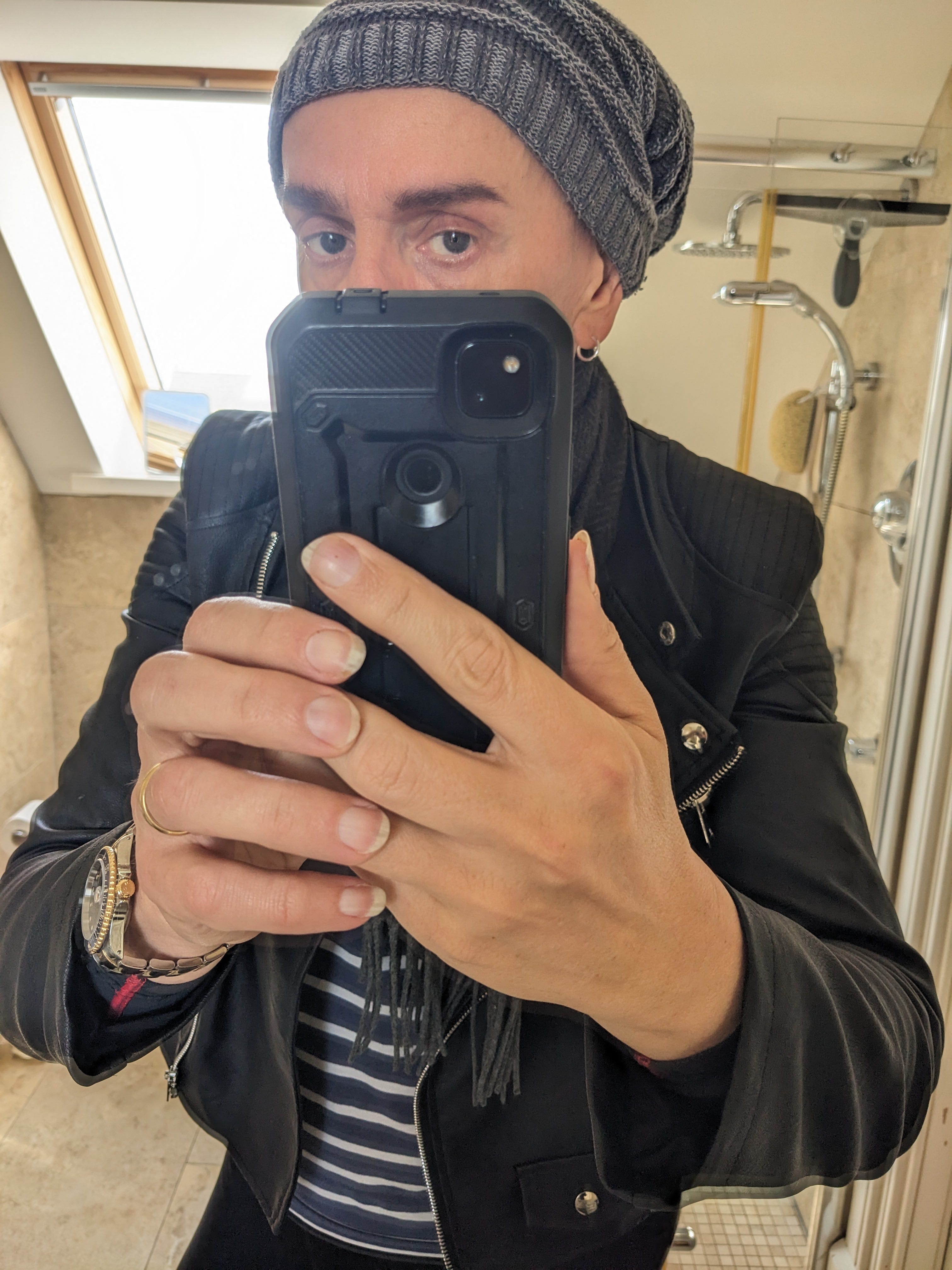
I think about a week later, he was gone.
The second type is what I rather unscientifically think of as atrophy Botox.
The obvious example is masseter Botox, where much larger quantities are injected into the muscles at the side of the jaw with the intention of weakening them and, over time, reducing some of their bulk.
If you are trying to feminise a square lower face, you can probably see the attraction.
I did this twice.
The first time was quite funny. I was still living with my family and I think we had steak for dinner that evening.
Oh my God.
My jaw was knackered.
I sat there chewing and chewing and thinking:
For Christ’s sake, why is eating this steak suddenly an endurance sport?
Whether it made a gigantic visual difference to me, I’m not entirely sure.
But I did it.
Twice.
I’ve also done the smaller tricks, like lip-flip Botox.
Chasing collagen
Around all of this I became increasingly interested in collagen.
I started taking hydrolysed collagen every morning, which I’ve now done for years. Am I absolutely convinced it makes a dramatic difference? No. I do it anyway.
More interesting to me was Sculptra.
Sculptra is made from poly-L-lactic acid, or PLLA. Rather than simply behaving like a conventional filler and creating immediate volume, the idea is to stimulate a gradual tissue response and collagen production.
One of its early medical uses was treating facial lipoatrophy in people living with HIV, which immediately caught my attention because, structurally at least, a depleted face was exactly one of the problems I was trying to solve.
So I had Sculptra.
I liked the philosophy of it: rather than endlessly adding more filler, encourage the face to rebuild some structure of its own.
And, by the way, I also microneedle my face every so often.
The structural work
Eventually I had the FFS and facelift.
Initially, everything looked extraordinary.
Partly because the work was extraordinary.
Partly because my face was swollen to approximately the size of Belgium.
As the swelling disappeared, though, it became obvious that I still had a lot of volume depletion through the mid-face.
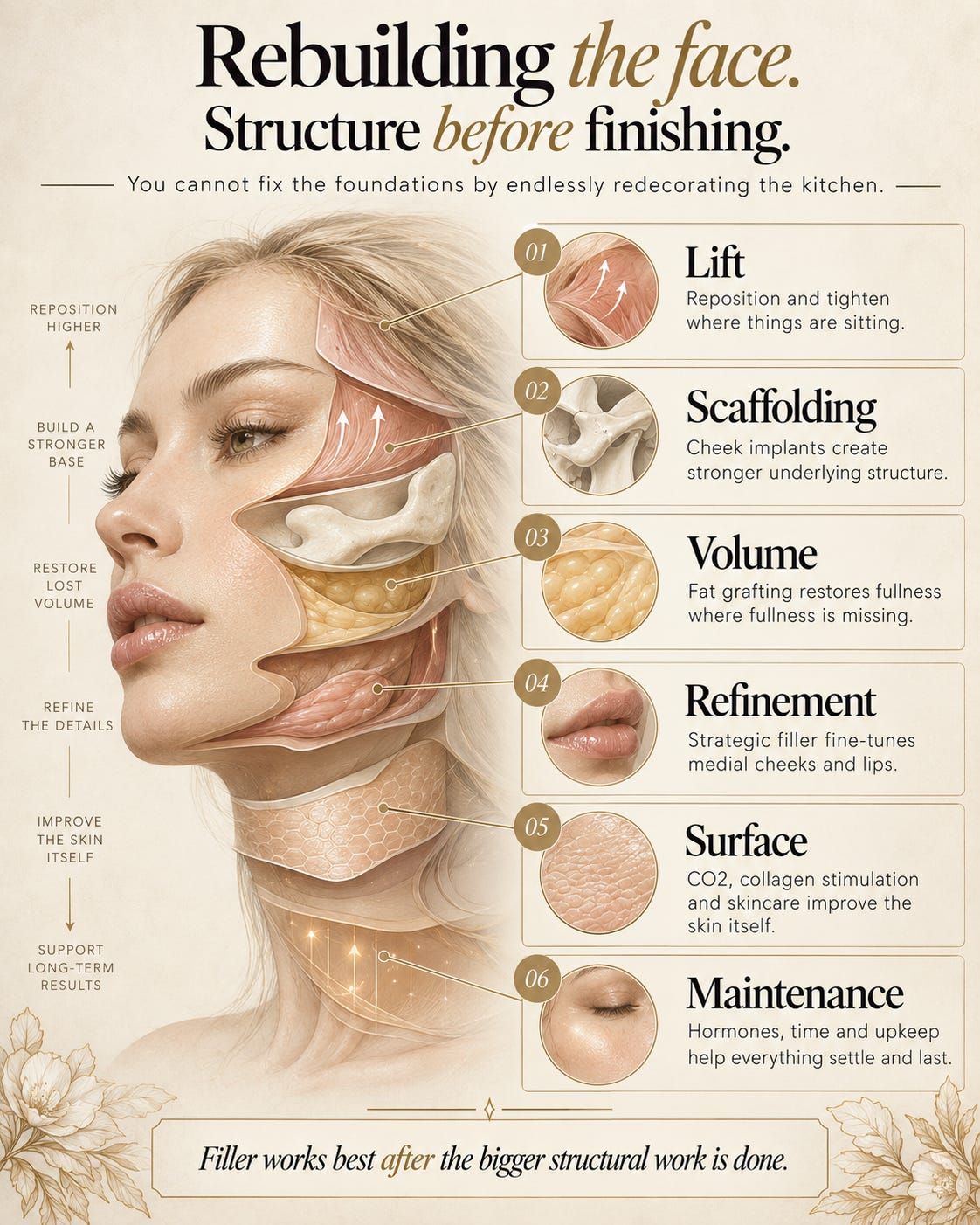
So I moved on to fat grafting.
I was warned from the outset that I might need several rounds because not everything survives.
I was deeply unimpressed by this information.
I had rather hoped they could put it in once and we could all go home.
But no.
The first round helped a lot, but I still didn’t have the underlying projection and structure I wanted.
So my next trick was...
Cheek implants.
I know.
I am slightly extreme.
Little incisions inside the mouth, solid implants positioned over the cheekbones, and suddenly the soft tissue had something underneath it that had been missing before.
Scaffolding.
That made a substantial difference.
There was still some hollowing lower down, so I had another round of fat grafting.
Again, better.
Much better.
Still not quite there.
And this is where filler finally became brilliant.
Architecture versus finishing work
By this point, the lifting had been done. The implants were in. The fat grafting had restored a lot of the missing volume.
I wasn’t asking filler to rebuild my face anymore.
I was asking it to finish it.
I had filler placed into the medial cheeks and suddenly it worked spectacularly well. That relatively small amount of additional volume filled the remaining hollow and tied everything together.
That was when filler finally made sense to me.
Early on, I had been trying to use filler as architecture.
Later, I used it as finishing work.
And it was vastly better at the second job.
Lips
I’ve also had several rounds of lip filler over the years because I started with virtually no lips whatsoever.
Honestly.
Two little elastic bands attached to the front of my face.
I haven’t gone for gigantic lips. I just wanted enough to give my mouth some actual shape and definition, and it has helped enormously.
These days all of this is much less intensive. I might have a little medial-cheek filler when it needs it, some lip filler perhaps once a year, and Botox roughly every four months in the normal girly bits.
That’s about it.
At this point you’re probably thinking:
Jesus Christ, Stevie. Is there anything you haven’t done?
We haven’t even got to the bathroom cabinet yet.
The bathroom cabinet
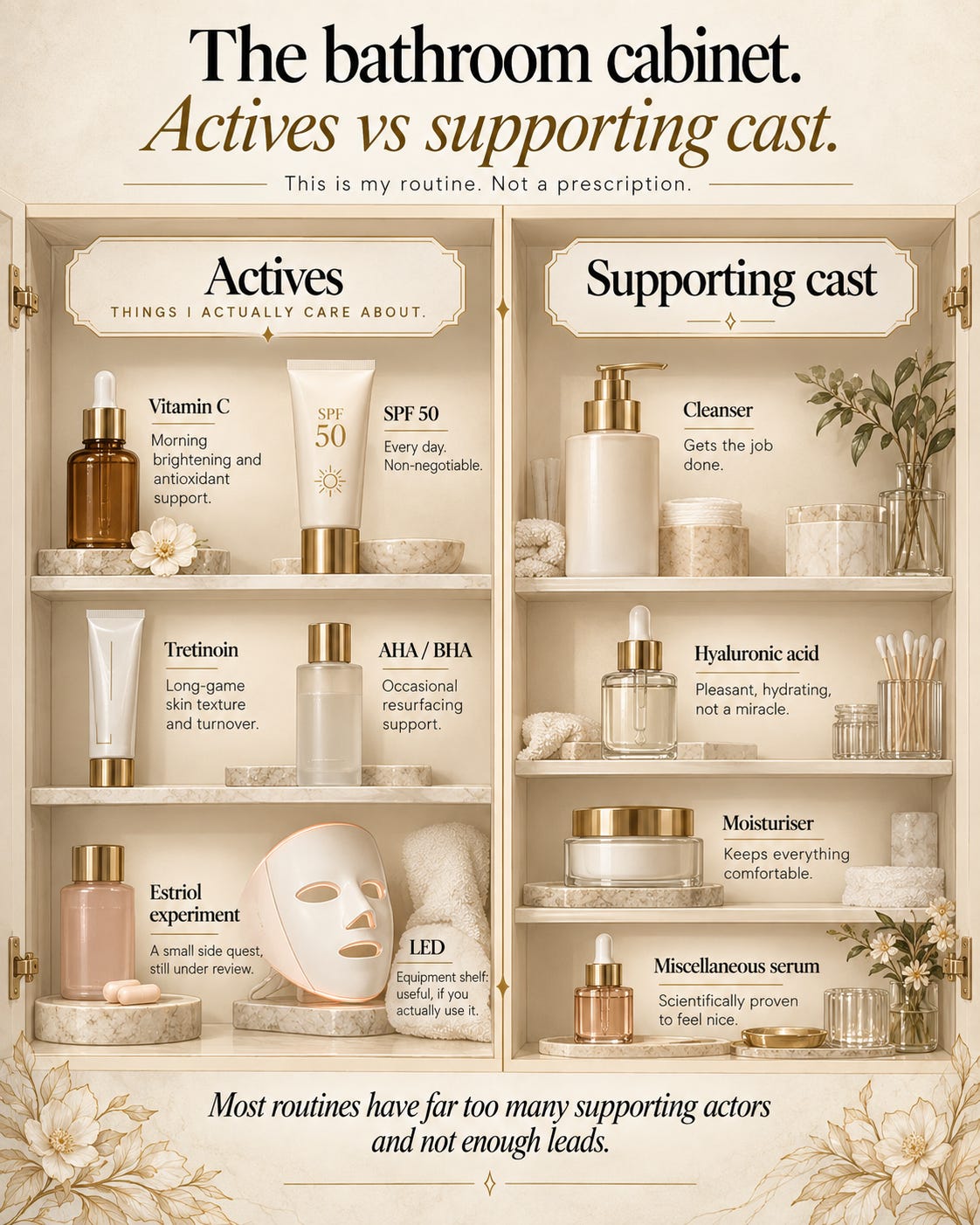
At some stage I researched the living hell out of skincare.
My morning routine is actually fairly simple.
I cleanse in the shower. I buy decent cleanser, although I’m not entirely convinced this is an area where anyone needs to spend a fortune. We still have a few irritating little hairs to shave off as well, which is depressing, but we’re getting there.
Every other day or so I use an AHA/BHA exfoliant. At the moment it’s just The Ordinary.
Then hyaluronic acid for hydration and a bit of plumping. I’m currently using Vichy, although again, I doubt you need to spend much money here.
The first thing I really care about is vitamin C. At the moment I’m using La Roche-Posay C12.
Then comes the least glamorous but probably most important part of the whole routine: SPF 50.
Every day, whatever the weather. Even when Ireland is doing that weird thing where it looks as though somebody has placed a grey Tupperware lid over the entire country.
SPF 50.
Then moisturiser.
Done.
Night-time Stevie
In the evening I use a serum. At the moment it’s some Clarins one I got relatively cheaply and, if I’m being completely honest, didn’t research to within an inch of its life.
It feels nice.
That’s about the strength of my scientific conclusion.
Then comes tretinoin.
For me, this is one of the serious parts of the routine.
I now use it almost every night, but I absolutely could not do that when I started.
Oh God, no.
Before I’d even had my facelift, I went through a phase of pushing my luck with it. If I used it too many nights in a row, particularly around the eyes, there would eventually be consequences.
I remember waking up one morning and my skin was flaking, the area beneath one eye had dried up and crinkled, and I looked like Emperor Palpatine from Star Wars.
I stared at myself in the mirror and thought I had finally overcooked it.
So I backed off, started again, backed off, started again, and gradually my skin became much more tolerant of it.
Mine is prescription strength, although I acquired my current mountain of tubes over the counter in Bangkok.
I bought enough to survive a small apocalypse.
At the current rate I should probably make it into 2027.
Then moisturiser.
Bedtime extras
I also have two LED masks, one for my face and one for my neck and upper chest.
Both run for about ten minutes, so I generally use them when I get into bed.
You are imagining me lying there looking like Darth Vader’s high-maintenance sister.
But it’s ten minutes while I’m already doing absolutely nothing, so it doesn’t particularly inconvenience me.
I’ve also just started another experiment: prescription estriol cream on my face twice a week, replacing tretinoin on those nights.
There is some interesting research around topical oestrogens and ageing skin, particularly collagen, thickness and hydration. But there is a fairly enormous difference between interesting research and everyone should smear hormones on their face.
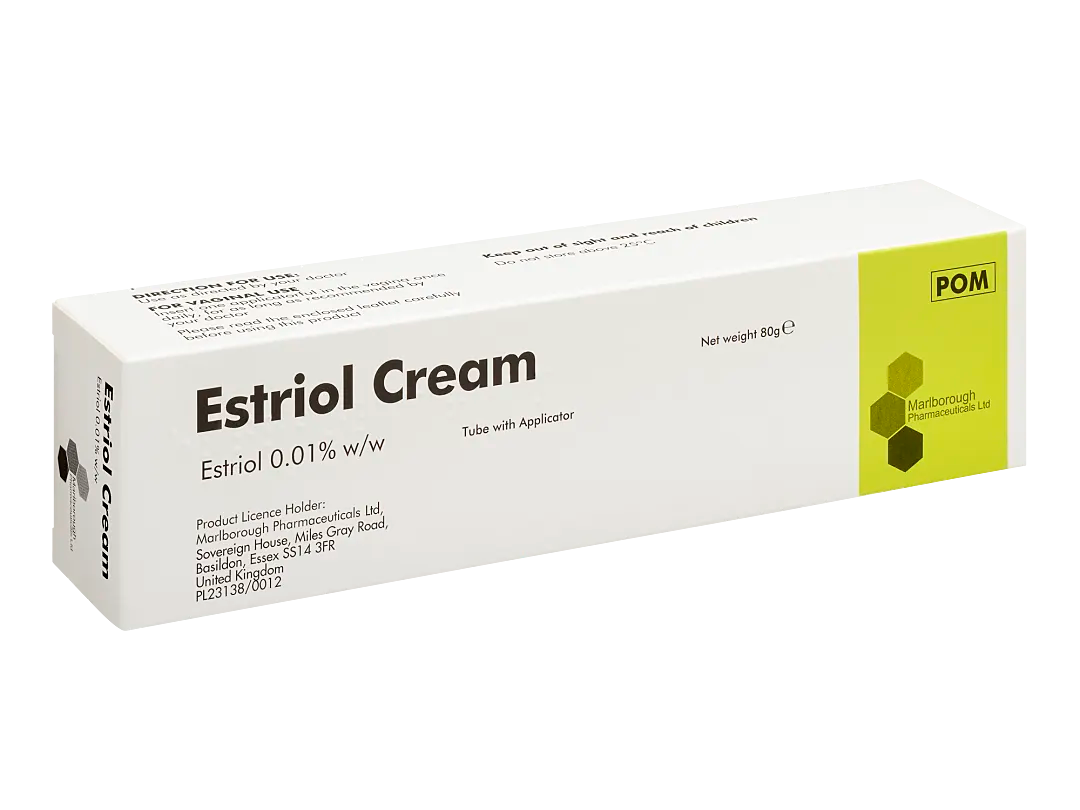
I’m trying it.
That’s all.
Whether it does anything spectacular for my skin remains to be seen.
Ask me in six months.
And finally, the controversial one
Right.
Here we go.
The blue liquid.
GHK-Cu.
Copper peptide.
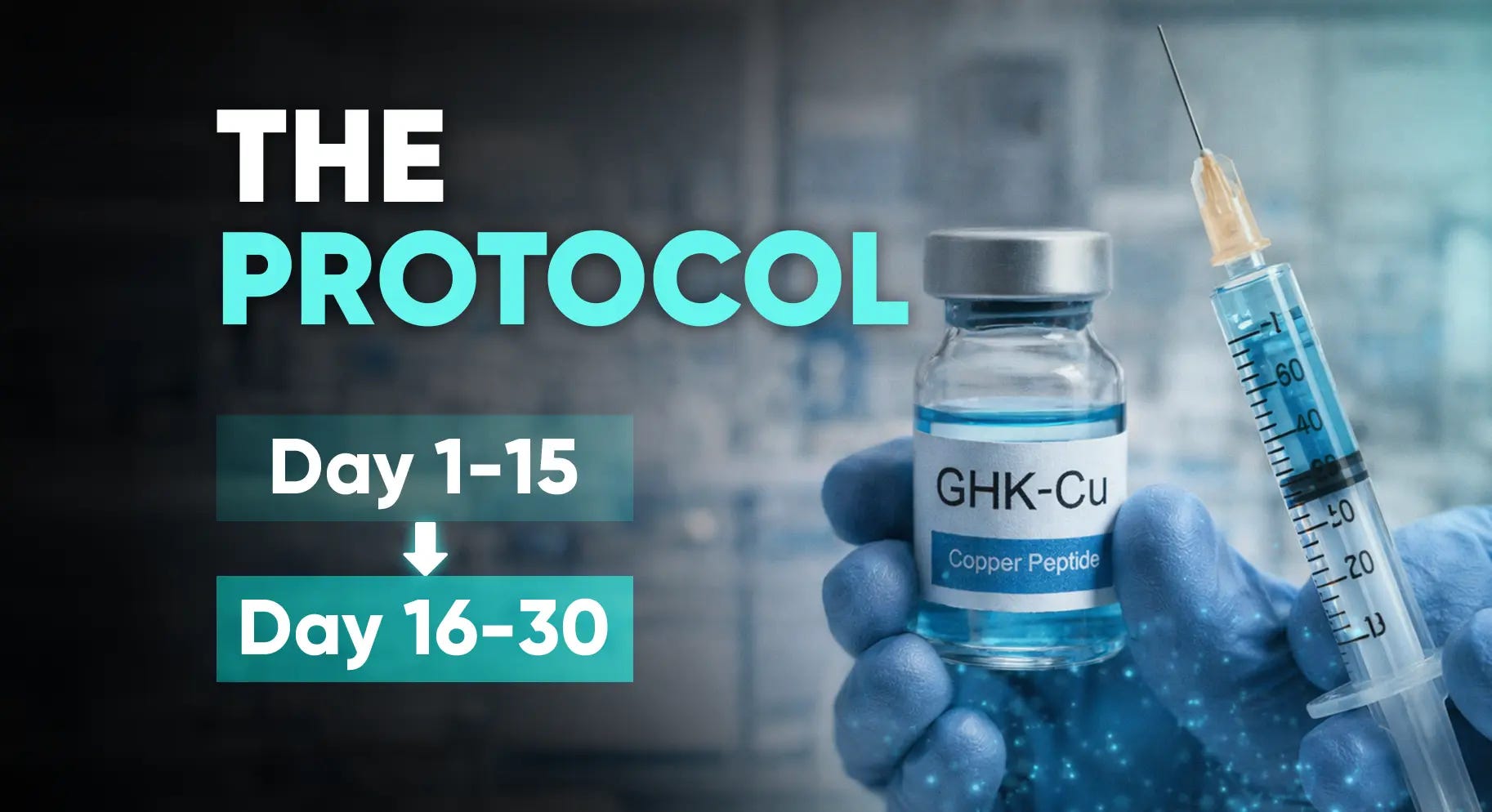
GHK-Cu is a naturally occurring copper-binding peptide in the body which has attracted quite a lot of interest around tissue repair and skin biology.
You’ll find copper peptides in perfectly ordinary topical skincare products.
That isn’t the controversial bit.
I inject mine.
Daily.
And before anybody starts ordering syringes because Stevie Bennett said so on the internet:
don’t.
Injectable GHK-Cu for cosmetic skin improvement is nowhere near as established as sunscreen, tretinoin or Botox. The evidence base is much thinner and this particular corner of the market can be something of a regulatory Wild West.
I’ve read about it and made my own decision.
That does not make it a recommendation.
The boring things
Beyond all of that, I do the boring things.
I drink a lot of water and have done for twenty-odd years. I don’t sunbathe. I stay out of strong sun where I can. I wear SPF. I generally eat pretty well.
Not perfectly.
I am a human being.
But pretty well.
Day to day, none of this actually feels particularly onerous. Morning skincare takes a few minutes, evening skincare takes a few minutes, and the LED happens while I’m lying in bed. Botox is every few months. Fillers are occasional.
The giant interventions happened over years.
Am I finished?
Not quite.
I still have some electrolysis to finish around my chin and mouth. Once that is finally done, I’m going to reassess the skin in that particular area.
And this is where that second CO2 treatment comes in.
I had another round focused there and, disappointingly, it didn’t make as much difference as I’d hoped.
So there is still some work to do.
The cheeks are a completely different story. Between the resurfacing, electrolysis, collagen work, surgery, fat grafting, implants, filler and simply giving everything time, they have changed enormously. The enlarged pores and roughness I used to notice have pretty much disappeared.
To my eye, if you look closely at my cheeks today, there is nothing particularly unusual about the skin compared with other women my age.
And considering where I started, I’ll take that.
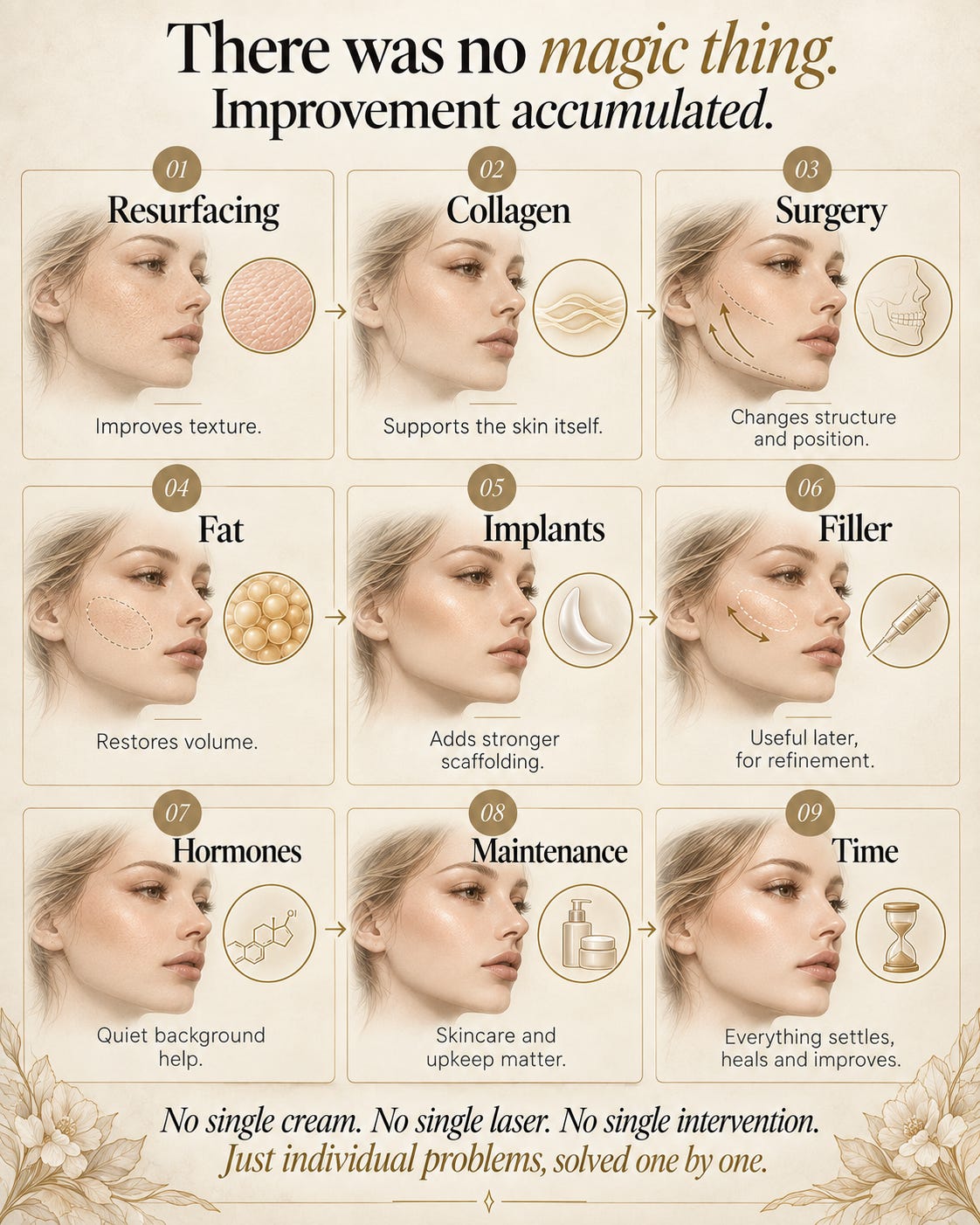
There was never one magic cream or one magic treatment. There were three different problems: laxity, volume and skin quality.
It took me a while to stop asking one treatment to solve another treatment’s problem.
But eventually, bit by bit, we went from a craggy-arsed man with a forehead resembling a topographical map to what I have today.
And one Friday afternoon in Cork, while a small army of synthetic workers quietly got on with writing my code, I sat down and realised that the face I used to spend so much time trying to fix isn’t really a problem I think about very much anymore.
Which is probably as good a result as I could have hoped for.