

Two weeks after losing my voice, I have discovered that it also means losing the way I write.
Today marks two weeks since I had my voice feminisation surgery.
I had so many plans to write about the process: the decision, the journey to Seoul, the examination, the operation itself, the recovery and the peculiar experience of voluntarily surrendering my voice.
I intended to write all of this much earlier.
There has, however, been one massive snag.
I fucking hate typing.
Confession: I generally never type. Ever.
My brain works at the speed of a fire hose. My mouth can just about keep up with it, but typing feels like attaching a drinking straw to my brain. The thoughts are all still in there, charging around at full pressure, but now I have to extract them one letter at a time by patting a little keyboard like a bloody chimpanzee.
I have used top-of-the-line voice-dictation software for more than a decade. I talk, words appear, and then I clean them up. That is how I write everything: technical documents, messages, articles, software designs, long rambling thoughts about transition and, occasionally, complete bollocks.
I can dictate 1,500 words almost as quickly as I can think them.
Typing 1,500 words feels like trying to empty a swimming pool with a teaspoon.
Still, I love you all, so I am going to do my best.
I am also typing as quickly as my dyslexic little brain will allow, so apologies in advance if any of this resembles alphabet spaghetti thrown at a wall.
The Ironman of voice surgery
There are several different forms of voice feminisation surgery. The best-known is probably the Wendler glottoplasty, but that is not what I had.
Because, naturally, I appear to have selected the Ironman version of voice feminisation surgery.
This is tongue-in-cheek. Surgeons do not actually sit you down and say:
“Would madam prefer the sensible 5K, the half-marathon or our full psychotic triathlon package?”
But Mrs Bennett did once observe:
“A 5K would bore you. It always has to be some psycho challenge.”
She was not wrong.
Facial surgery could not simply involve one or two modest adjustments. I had to fly to Thailand, have most of my skull redesigned, get breast enlargements and undergo a full facelift over two days.
I could not merely lose a bit of weight. I had to become fascinated by fasting, metabolic pathways and precisely engineered salads.
And apparently I could not just learn to speak slightly higher. I had to fly to Seoul, surrender my voice for two months and let a surgeon reconstruct the working geometry of my vocal folds.
But I did not actually choose VFSRAC because it sounded like the most extreme option.
I chose it because the clinical evidence was the strongest I could find.
The data without the coma
Voice feminisation surgery is a niche field. There are no enormous trials randomly allocating thousands of women to competing procedures and following them for twenty years.
What Dr Kim has published is, however, unusually substantial for this type of surgery.
His first major paper covered twelve years of experience and 362 patients. It did not rely only on whether somebody thought her voice sounded nicer afterwards. The researchers measured pitch, airflow, acoustic quality and the physical vibration of the vocal folds before and after surgery.
A later update analysed 506 patients selected from a total cohort of 1,025 women who underwent the procedure between 2003 and 2021. That is a serious amount of clinical experience in a very specialised area.
The evidence is not perfect. The studies are retrospective and come from the specialist centre that developed the operation. This is not independent, randomised, head-to-head proof that VFSRAC is superior to everything else.
But it is considerably more persuasive than watching twelve carefully selected YouTube clips and thinking:
“Well, she sounds nice.”
That was why I chose it.
Not because I wanted the hardest recovery.
Not because I fancied myself as the Bear Grylls of vocal surgery.
Because after reading everything I could find, it gave me the greatest confidence that I could achieve a stable, natural result.
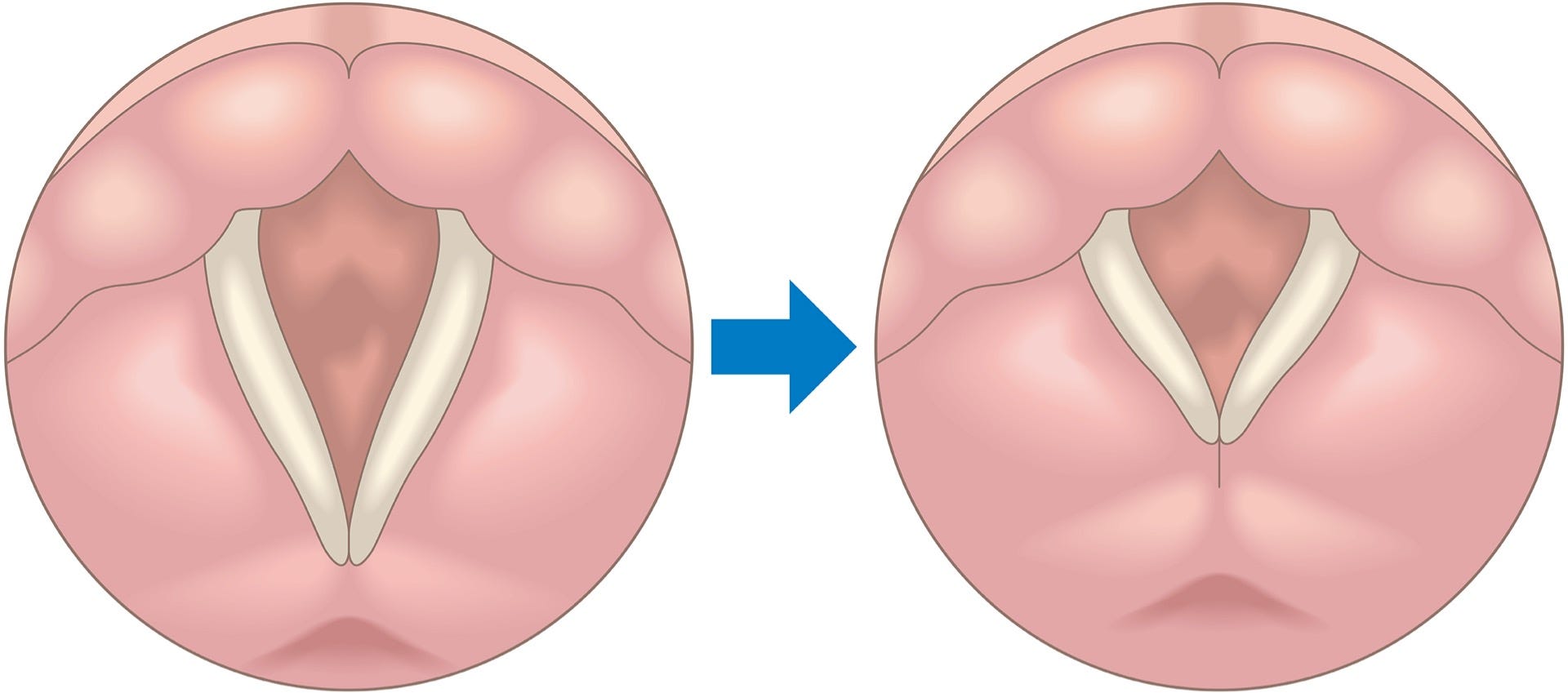
The procedure is called Vocal Fold Shortening and Retrodisplacement of the Anterior Commissure, mercifully abbreviated to VFSRAC.
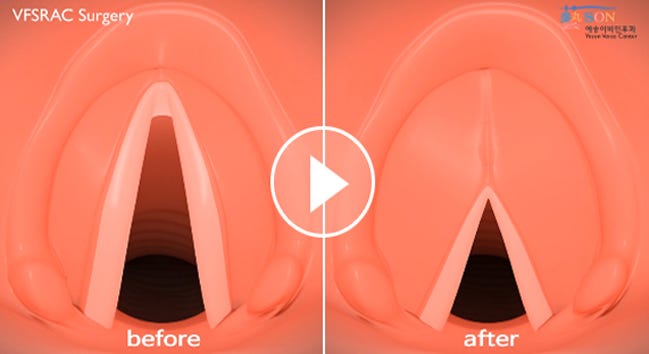
The surgeon operates entirely through the mouth, so there is no incision in the neck. In brutally simplified terms, the front section of the vocal folds is dissected and reconstructed. The vibrating portion becomes shorter, thinner and differently tensioned, while the point where the folds meet at the front is moved backwards.
The important point is that the surgeon has not simply pressed a pitch-up button.
He has physically changed the instrument.
My body now has to heal it. My muscles have to adapt to it. My brain has to learn how to play it.
That is why the result develops over months rather than appearing fully formed when I wake up.
The consultation
My consultation took place at 3pm on the day before surgery.
Calling it a consultation is slightly misleading.
It was more like a massive battery of tests with a brief conversation attached to the end.
First came all the usual pre-operative business: blood tests, blood pressure, chest X-ray and the dreaded ECG.
I hate ECGs.
My heart has some history courtesy of Graves’ disease, and I have managed to fail an ECG a couple of times in my life. Nothing makes you contemplate your mortality quite like watching somebody stare silently at a printout produced by your own heart.
So every time I have one, I am bloody terrified.
Thankfully, I survived the electrical interrogation and moved on to the probes.
And the noses.
And the throats.
I had various objects pushed through various openings while a nurse appeared to be attempting to wrench my tongue clean out of my head.
I was instructed to make different vowel sounds while cameras watched my vocal folds vibrate.
The noises were ungodly.
Not words. Not singing. Not even sounds that should reasonably emerge from a human being.
Just:
“Eeeeeeeeeee.”
“Aaaaaaaaaaa.”
“Uuuuuuuuuugh.”
All while somebody held my tongue like they were trying to start a lawnmower.
After about ninety minutes of being prodded and lanced like a suckling pig, I thought I was finally ready to meet Dr Kim.
Phew. The instruments were finished.
They were not.
Out came an entirely new set.
This time they went up my nose and down my throat.
Eventually, after the final bout of nasal spelunking, Dr Kim called me over to his desk. We sat side by side while he reviewed the enormous quantity of data the tests had collected.
It was quite an impressive dataset.
Graphs. Measurements. Videos. Airflow. Vibrations. Slow-motion footage of the folds opening and closing.
I do not remember much about the first part of the conversation.
What I remember is the mic-drop moment.
My vocal folds were not normal.
They were asymmetric and somewhat deformed.
I also have a vocal tremor. Had it al my life.
What?
I had never heard a tremor.
Apparently, that was because I had become extremely good at hiding it. I compensated using muscular control and a frankly heroic quantity of airflow.
According to Dr Kim, I was using roughly ten times the normal amount of air to produce speech.
At last, scientific confirmation that I am absolutely full of hot air.
He explained that I had spent years controlling the instability by forcing air through my vocal folds and holding everything together with muscle tension.
Essentially, I had been speaking as though somebody had attached a bicycle pump to my voice box.
At this point, I looked at his face and detected what I interpreted as the dreaded prepare yourself expression.
I was waiting for:
“I’m afraid we cannot help you.”
I could feel my eyes beginning to glaze and the first hint of a lip quiver.
It had taken years to reach this point. I had flown to the other side of the world. I had imagined the new voice, feared the new voice and pinned an enormous amount of hope on the new voice.
And now my vocal folds were apparently wonky.
But I was premature.
His version of “prepare yourself” was not that he could not operate.
It was that he would repair the underlying problem first and then perform the voice feminisation surgery.
The catch was that afterwards I would need to learn to stop speaking as though I had a bicycle pump connected to my larynx.
Deal.
Absolutely fucking deal.
I left relieved, but the discovery has not entirely left my mind.
There is still a little voice, ironically the only one I currently possess, whispering that perhaps the result will not be as good because my starting point was more complicated than expected.
Dr Kim found the problem.
He repaired it.
He told me the operation had been successful.
Rationally, that should be reassuring.
But silence leaves an awful lot of room for fear to wander around unsupervised.
Surgery day
Yeson Voice Center was approximately 150 metres from my hotel in Gangnam.
That is absurdly convenient for major surgery.
I left the hotel and, about twenty minutes later, I was sitting in a hospital room wearing a surgical gown.
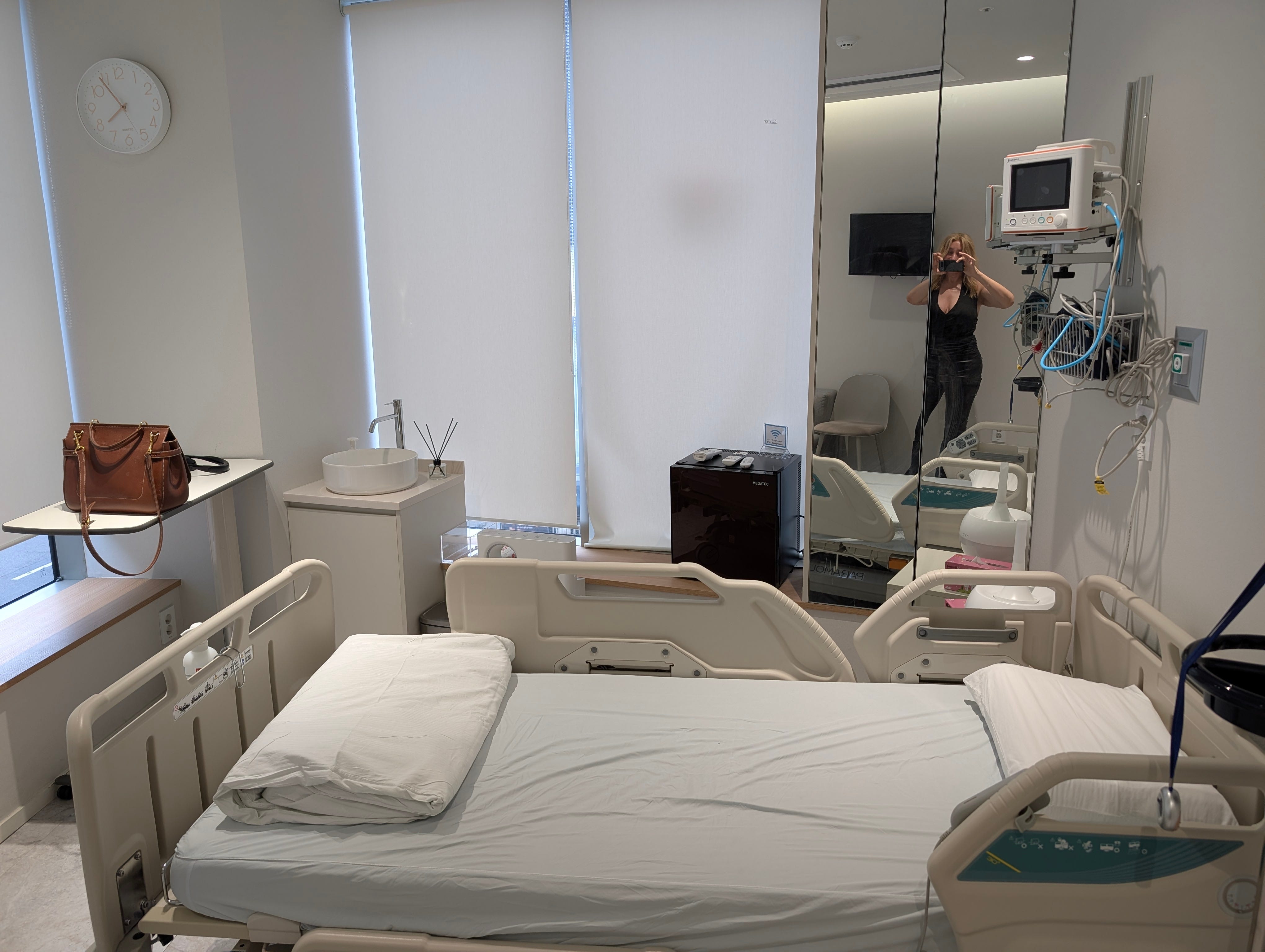
Here we go again.
I know this drill now.
In comes the anaesthetist.
“Hello, I’m Dr So-and-So. I will be looking after you during the procedure.”
Yes, lovely. We both know that in a few minutes you are going to inject something into me, the ceiling will become unusually interesting and then a chunk of time will disappear.
Then in comes the surgeon.
Final explanation.
Final check.
Any questions?
Same drill.
I have now done this in four countries and, reassuringly, the choreography seems remarkably similar everywhere. Hospitals may differ in language, décor and the precise style of their gowns, but the pre-operative parade appears to be universal.
Anaesthetist.
Surgeon.
Cannula.
One last trip to the toilet.
A surprisingly cheerful journey towards a room full of machinery.
Then nothing.
The next thing I knew, roughly three hours had disappeared.
Compared with some of my previous operations, the anaesthetic did not feel like half the kicking I had expected.
About ninety minutes after waking, I was up and walking to the toilet.
A lovely nurse then brought me the only thing I was allowed to eat.
Ice cream.
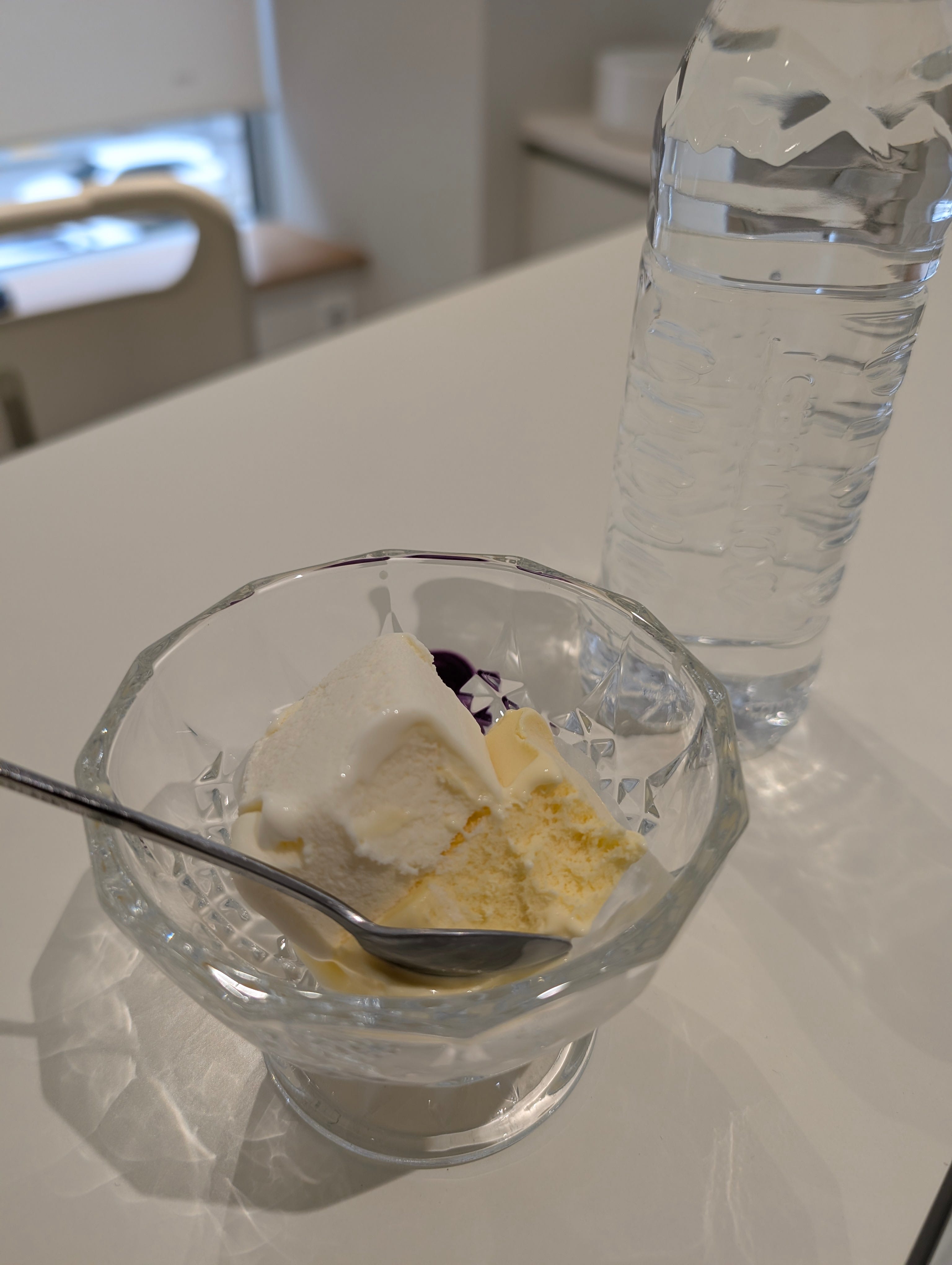
I know. I am a trouper.
She told me that for the rest of the day I should eat only soup and ice cream.
Deal.
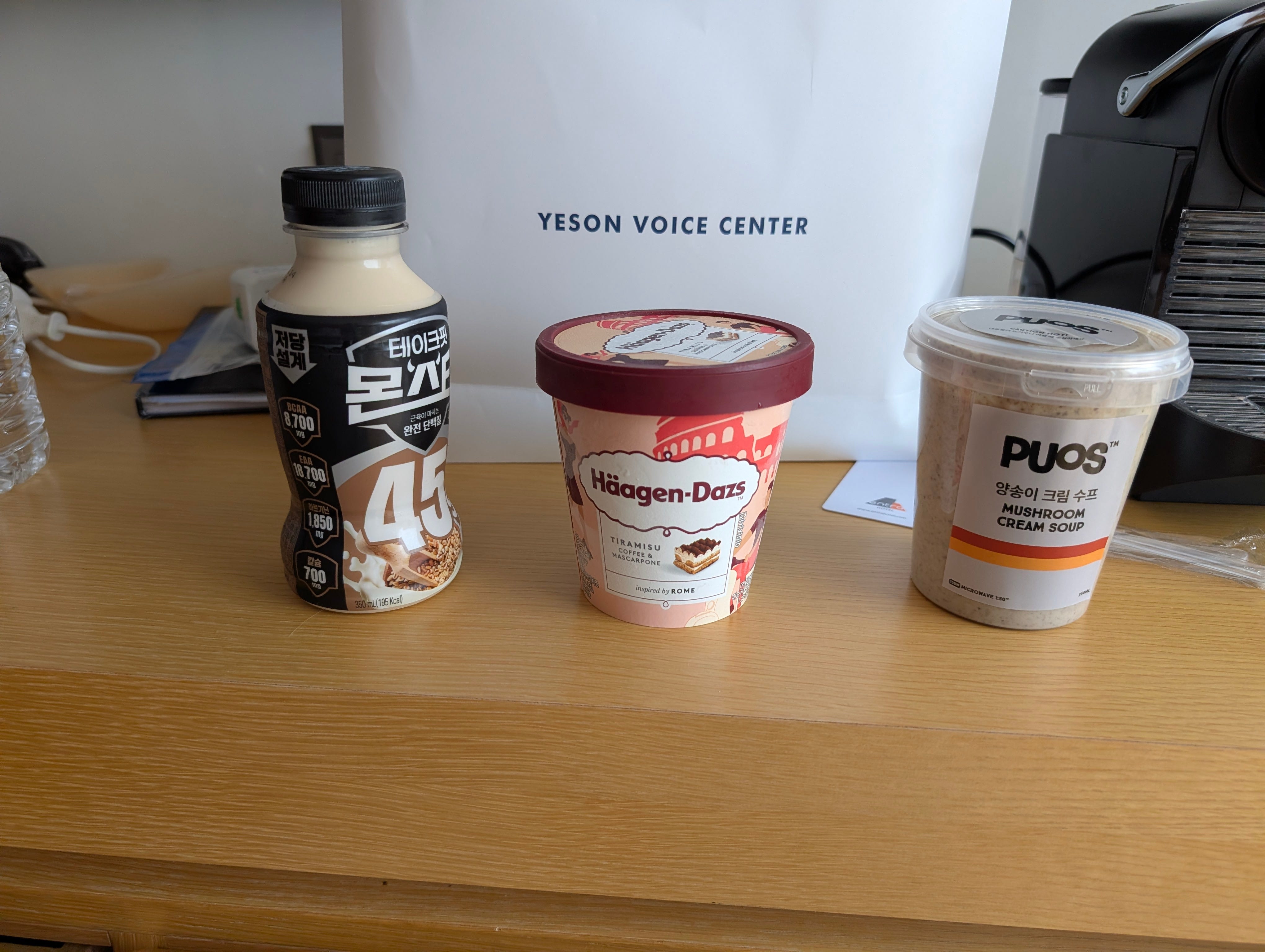
At about 3pm, I went downstairs to see Dr Kim.
There were, naturally, more probes down my throat.
By this stage, I was beginning to suspect that they simply enjoyed it.
He examined the surgical site and announced that the operation had been successful.
I was allowed to leave.
That was it.
A day case.
I walked back to my hotel that afternoon with my newly reconstructed vocal folds hidden inside me.
This was not vaginoplasty.
This was not facial surgery.
There were no drains, no swollen head, no hospital stay and no weeks spent walking like a wounded cowboy.
Physically, it seemed almost ridiculously easy.
But the next part was arguably harder.
The recovery protocol from hell
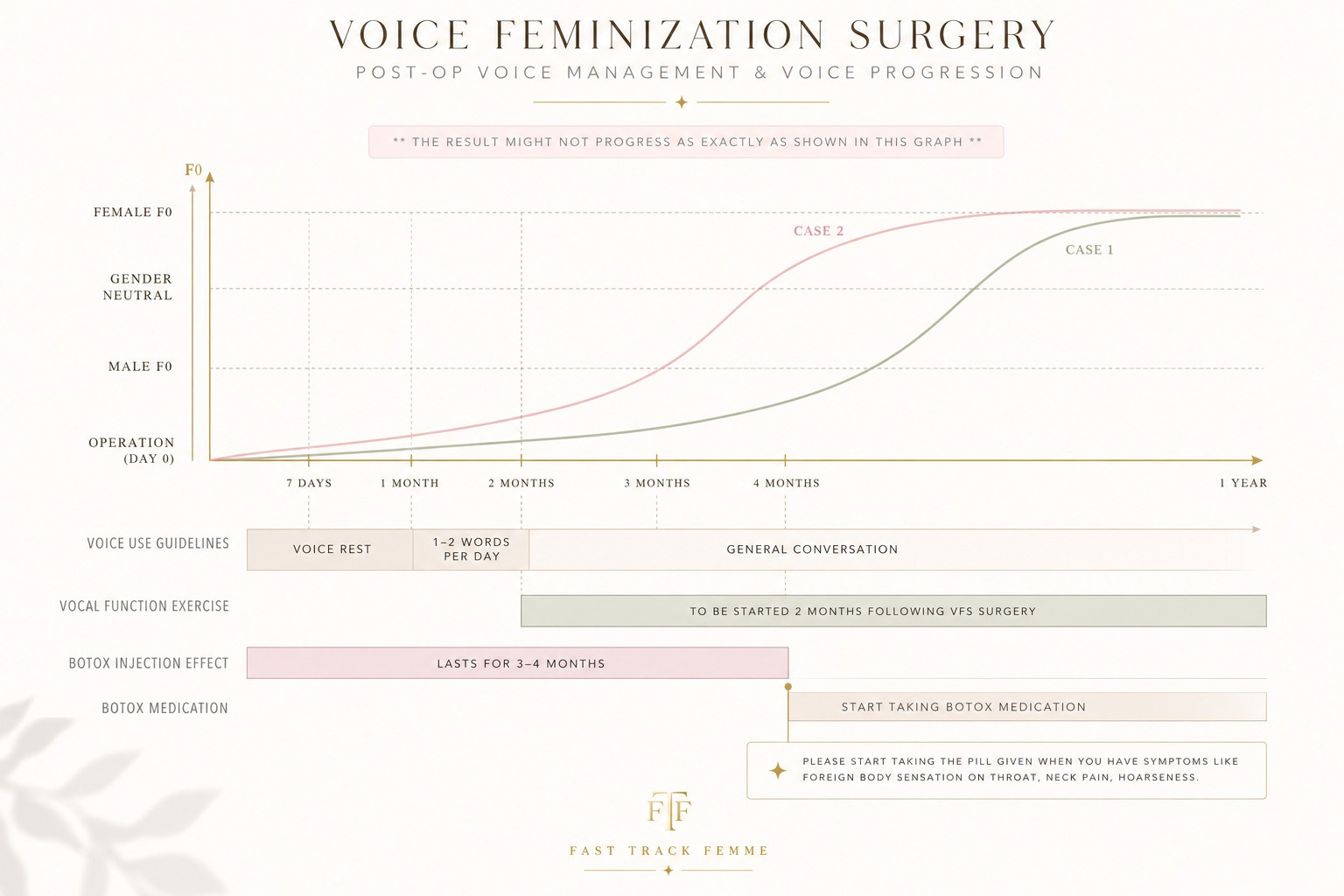
The first month is absolute voice rest.
That does not mean “try not to talk very much.”
It does not mean “only speak when necessary.”
It means no sound.
No speaking.
No whispering.
No humming.
No little experimental squeak to see whether the surgery has worked.
No answering the dog.
No instinctively saying “thank you” when somebody holds open a door.
No swearing when I drop something on my foot.
For the second month, I am permitted only one or two words per day.
One or two.
Not sentences.
Not conversations.
Words.
Only after two months do general conversation and the formal vocal exercises begin.
There are other rules.
For the first few weeks, I have to avoid exercise and heavy lifting. I must not clear my throat, because violently slamming the folds together is exactly what the healing tissue does not need.
If I cough or sneeze, I am supposed to open my mouth and let the air escape as freely and silently as possible.
I must remain hydrated.
Caffeine is banned. My massive shrine to coffee lies dormant. THAT is killing me.
Strongly flavoured and spicy foods are restricted because they might irritate the throat, provoke coughing or encourage reflux.
I travelled to Seoul and underwent surgery, only to discover that the official recovery protocol involved taking away speech, coffee, spicy food and exercise.
At that point they may as well have confiscated my personality at reception.
Everyone undergoing this procedure receives Botox as part of the protocol. Mine was not a special emergency response to the tremor but it will help it.
The Botox suppresses the old muscular behaviour while the reconstructed folds heal, and its effect lasts for roughly three to four months.
That also means that the first sounds I eventually produce will not represent the finished voice.
It may initially be weak.
It may be breathy.
It may wobble.
It may sound rough, strange or disappointing.
It may not yet sound particularly feminine.
That will not necessarily mean anything has gone wrong.
My folds will still be healing. The Botox will still be active. My brain will still be trying to operate a newly reconstructed instrument using decades of deeply embedded instructions written for the old one.
The surgeon can change the tissue in an hour.
The brain takes months to catch up.
Four forbidden words
I have nearly spoken twice.
Not deliberately. I have not succumbed to temptation and secretly whispered my name.
These were reflexes.
Speech is so deeply wired into us that sometimes the words are already halfway out before the conscious brain remembers that talking has temporarily been abolished.
I did actually speak once.
Four words.
In my sleep.
“What are you doing?”
I think I was dreaming that my ex-wife was about to pull out at a junction.
(This is particularly ironic because she would maintain that I was the terrible driver.)
So after two weeks of heroic silence, the only person to extract four words from me was apparently an imaginary version of my ex driving badly.
That feels about right.
The second near catastrophe came from an even more deeply embedded reflex.
I heard approximately three seconds of Ferris Bueller’s Day Off.
“Bom bom.”
And after forty years of conditioning, my brain immediately prepared the compulsory response:
“Chicka chicka.”
I caught it just in time.
Of all the things that might destroy my month of silence, I had not anticipated it being Yello.
I have also sneezed three times.
Each time, I opened my mouth and tried to let the air escape without force, exactly as instructed.
And the strange thing is that the sneeze sounded different.
Not dramatically.
It was not a tiny Disney-princess sneeze followed by woodland animals arriving to help me fold the laundry.
But it was sufficiently different that I noticed.
At the moment, sneezing is the only available trailer for my new voice.
Two weeks down
So here I am.
Two weeks down.
Two more weeks of complete silence to go.
Then another full month in which my exciting new vocal freedom will consist of approximately two words per day.
Choose wisely, Stevie.
For the moment, there is no dramatic reveal.
No before-and-after recording.
No sweet little canary voice emerging from my throat.
Only silence.
I communicate by typing on my phone, showing people pre-written messages, sending WhatsApp messages to somebody standing three feet away and making increasingly theatrical facial expressions at anyone who fails to understand me.
Work
I have returned to work and joined meetings where people debate subjects about which I have “extremely strong opinions” while I remain physically unable to interrupt their “misguided understanding”.
Perhaps this is the universe attempting to teach me patience.
The universe can fuck off.
So instead, I have developed a new system.
I sit silently through the Teams meeting, watching everybody make terrible decisions, talking bollocks about software I BUILT while I am physically unable to interrupt them.
Then, the moment it ends, I unleash an enormous message explaining precisely where everyone went wrong.
“You said to test the IP from the lectern PC. WRONG. That will not prove anything. You need to test the X-Forwarded-For header through the actual gateway, otherwise you are just testing some random network clue and pretending it means the app works. It does NOT…. Arghhh.”
A full written lecture.
Paragraphs.
Subheadings.
Possibly an action plan. I really am not joking! I do this.
I may be mute, but nobody is escaping my opinions.
Out and About
There is also the little card I carry around in public, which says:
I am temporarily unable to speak, but I can hear and understand you perfectly.
This produces one of three reactions.
The first is ideal:
“Oh, okay. Cool.”
They carry on speaking normally, I type or point, and everybody survives the encounter.
The second is that they begin talking to me very slowly, with exaggerated facial expressions, as though temporary muteness has also reduced my IQ by about seventy points.
“DO. YOU. WANT. A. BAG?”
Yes, Susan. I can hear you. My vocal folds are injured, not my fucking brain.
The third and strangest is that they apparently decide they are mute too.
They stop speaking entirely and begin pointing at things.
The menu.
The card machine.
The door.
Me.
At which point I am furiously stabbing my finger at the sentence “I CAN HEAR YOU” while silently attempting to communicate:
I can bloody hear you, but thanks for joining me in this entirely unnecessary mime performance.
Being unable to speak is odd enough. Discovering how quickly other people forget how conversation works is quite another thing.
And then there is the fear.
What if the asymmetry matters?
What if the tremor returns?
What if having such an abnormal starting point means that my result will never be quite as good as those beautiful voices I listened to before making my decision?
Rationally, I know Dr Kim identified the problem and repaired it.
I know he examined me after surgery and said it had been successful.
I know the final voice cannot possibly be judged after two weeks, three months or perhaps even six.
But human beings are not entirely rational, especially when they have made an irreversible decision and are then required to sit in silence for months waiting to discover the outcome.
There is no reassurance available yet.
I cannot test it.
I cannot hear it.
I cannot even produce one tiny note and tell myself that everything is going to be fine.
I simply have to trust the surgeon, trust the process and wait.
But beneath the frustration and fear, there is something enormous happening.
For the first time in my life, the voice I have always known is gone.
I have not heard it for two weeks.
Perhaps I will never hear it again in quite the same form.
The next voice that properly emerges will be unfamiliar. It may take months before it feels like mine. My brain will have to build a new relationship with it, just as it had to build a new relationship with the face in the mirror after facial surgery.
That is frightening.
It is also the entire point.
For now, though, I remain mute, full of thoughts, full of opinions and furiously prodding a keyboard with the typing ability of an intoxicated chimpanzee.
This article has been brought to you through love, determination and an absolutely heroic amount of spellcheck.
I am glad you are ok. I was starting to worry. I thought you may have lost your voice and I see I was right. I very much hope it is all worth it. Now I know you use voice to text it explains the longer than usual radio silence. Lastly I absolutely love your sense of humour. Very best wishes. :)
So no phone calls? OK, bad joke right now. I suspect my daughters wish I'd go for this surgery - 8 weeks of not listening to me yak non-stop is a dream of theirs I suspect.
Guessing you didn't do typing in high school? I did in grade 9 - probably the most useful course I took, I can type at a solid speed (70+ words per minute). Then I go back and fix my typos but it works well for me (learned on one of those ancient typewriters that if you missed the key your fingers got stuck between 2 others and it hurt - great incentive to learn quickly) - using word to text never works well for me, plus I have always hated my voice which doesn't help. Can hardly wait to hear what your new voice sounds like! Then in a few months to see what surgery you go for next (doubt any of us believe the 'this is the last one, really, truly, honestly') - no idea what could be left at this point, but I'm sure something is out there.