


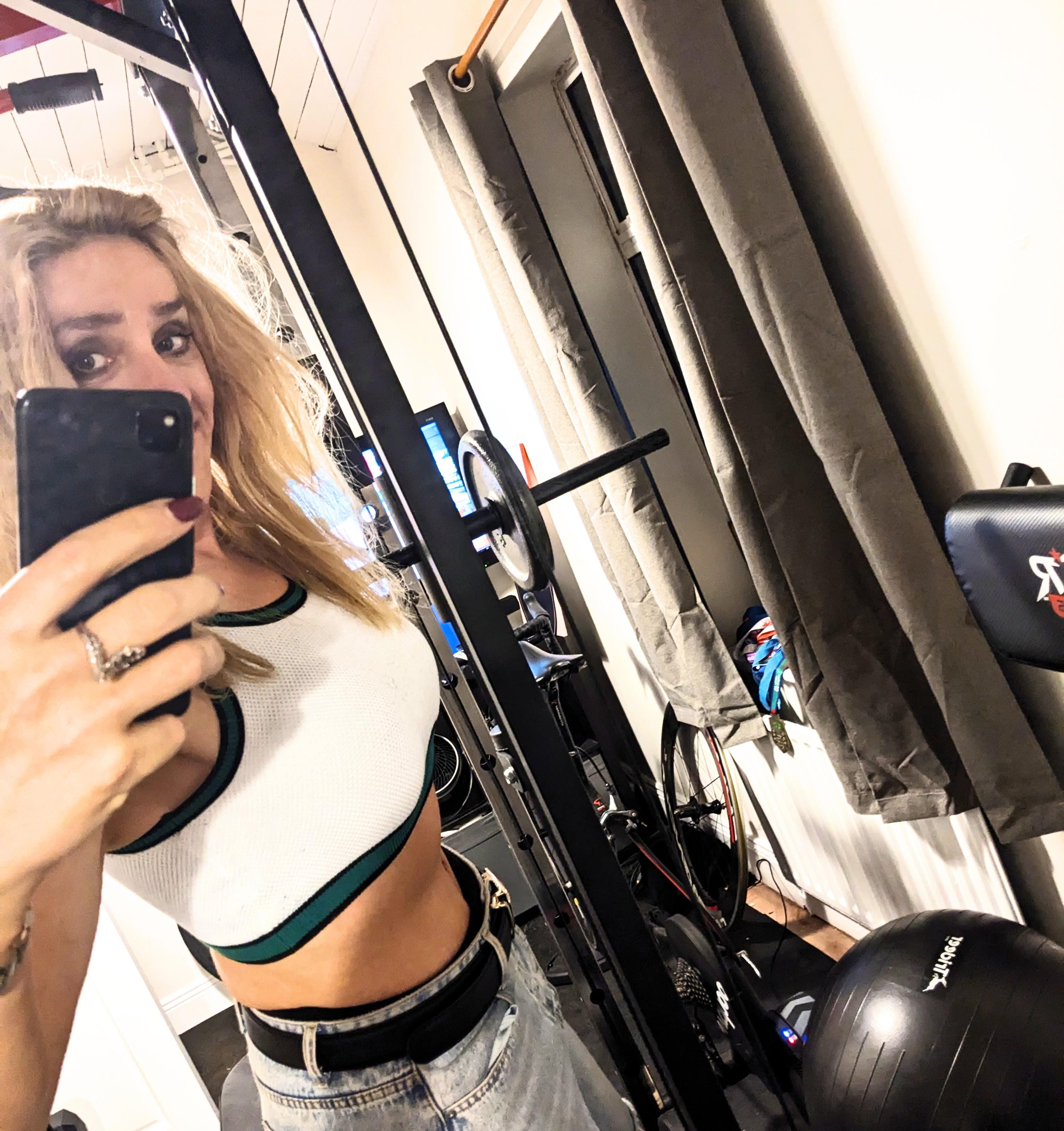
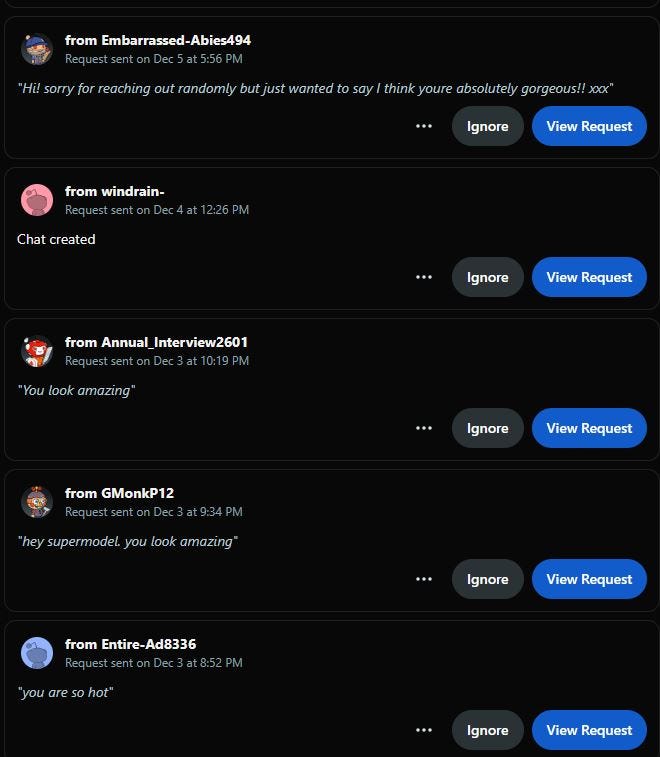
I’m not going to lie. I get a lot of compliments as a trans woman, mostly from other trans people, but from others too. I get a lot of attention. What we call chasers. DMs from endless creepy men trying it on, sliding into conversations they imagine are intimate or invited.
It’s always the same register.
“High-sexy”, low-effort.
“You look hot.”
“You look beautiful.”
“Oh my God, you’re stunning”, et cetera, et cetera.
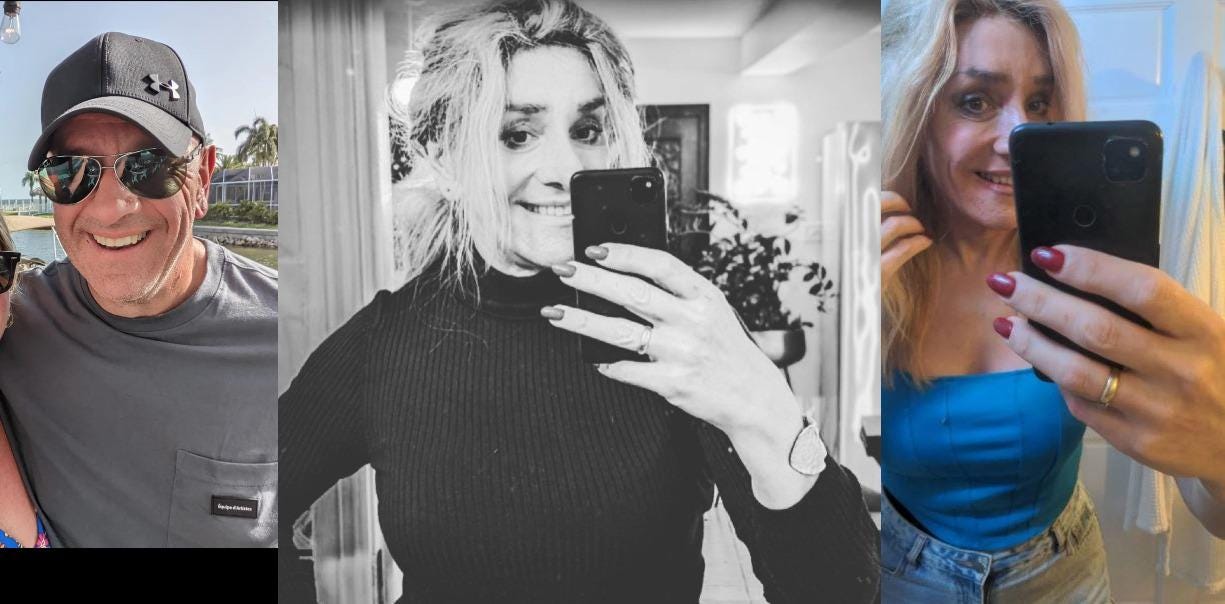
And I know this much, at least. I have turned out far better than I ever dreamed was possible.
I was a fairly manly looking man. I did not expect this. I did not expect to look in the mirror and see something that still feels, even now, like a small miracle. Some days it genuinely feels like a dream come true.
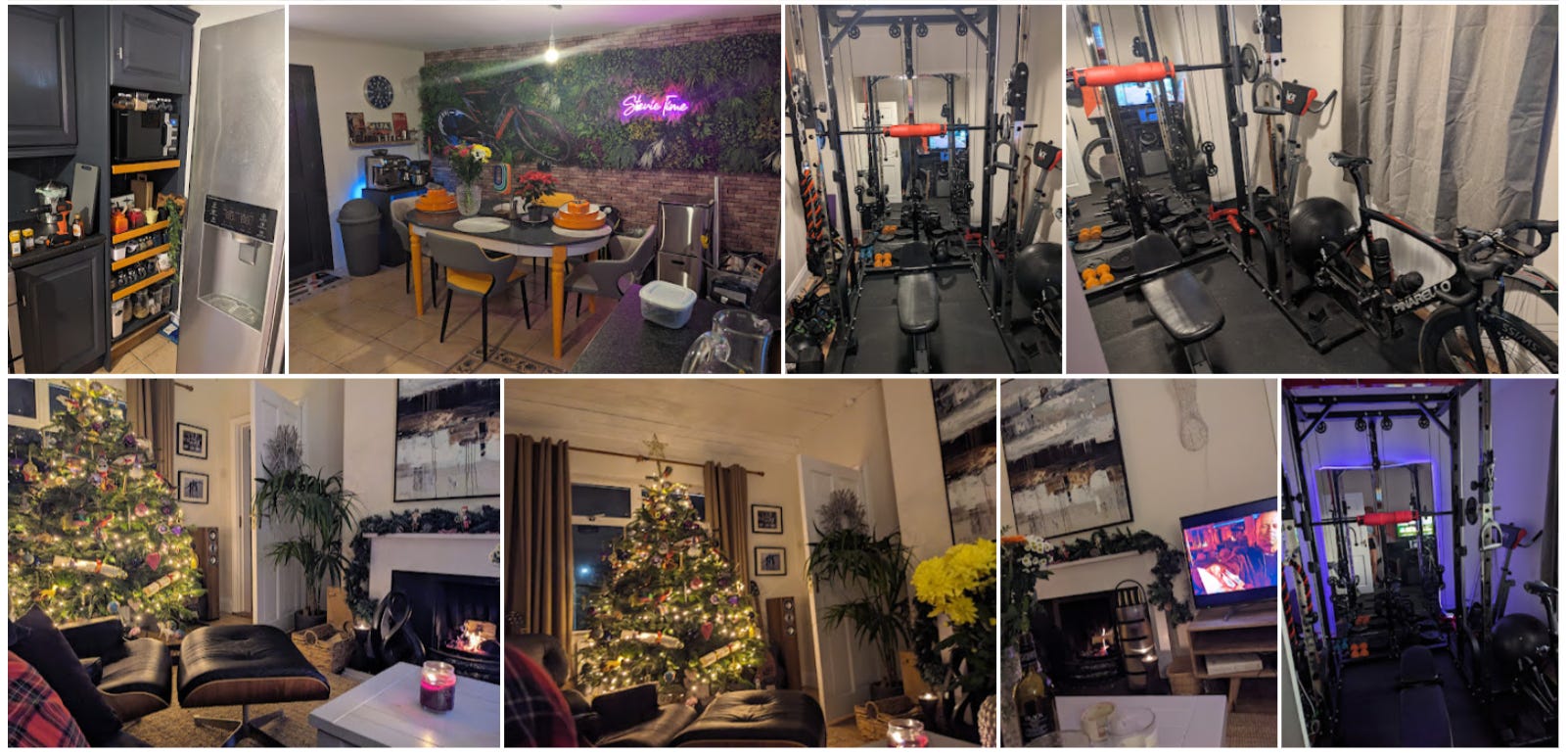
I’ve created a life that functions. I’ve created a beautiful home from nothing again. I’ve endured a total social burn-down and started a total social rebuild, which is ongoing and, honestly, not going too badly.
But most of the relationships I have now, even some very good ones, don’t live in Cork. They’re remote. They exist through screens, messages, voice notes. They’re real, they matter, but they don’t exist in the small, practical way that helps in the evenings. II can’t just pop round. I can’t just sit on someone’s sofa, watching some absolute rubbish on television, drinking coffee, taking the piss out of Simon Cowell’s latest facelift while eating a bag of Taki’s (I am addicted to Taki’s). I can’t do the boring, unremarkable things that quietly stop evenings from turning into something heavier.
Instead, when the day winds down, it’s just me, and that’s when things soften or unravel.
If those friendships were local, I think some of the edge would come off. I could see someone. I could exist alongside another human being for an hour. Instead, when evening arrives, I am mostly alone again. And that matters more than I would like it to.
The biggest pain, though, isn’t loneliness. I’ve never been particularly lonely. I’m extremely self-reliant, and I enjoy my own company. I always have.
The pain is grief. Grief for family members who are still alive but no longer reachable. That kind of grief has no script. There is no funeral, no permission to mourn properly. It just sits there, unresolved, threading itself through ordinary days.
And this is the part people don’t really talk about.
There is a kind of Faustian bargain buried in all of this. I turned out far better than I ever expected to. Far better. I got more beauty, more alignment, more relief than I thought was possible. But the price of that has been a grief far deeper than I ever anticipated. It feels almost proportional. As if for every inch of ground I gained in becoming myself, an equal measure of pain arrived to match it.
And the thing about that bargain is that it only runs in one direction. There is no going back. No undoing. No version of this where I keep what I’ve gained without also carrying what it cost.
Under the circumstances, I have an immense amount of resilience. I really do.
I think this situation would crush most people. And it may still change me, mark me, reshape me. But it won’t flatten me. On the positive side, I don’t suffer from depression. I never have. I’m very lucky in that respect. My baseline isn’t despair, or withdrawal, or numbness. If anything, it’s the opposite.
That doesn’t mean this is easy. It just means the struggle takes a different shape.
My job is going well. I’m enjoying it. I’m putting in effort. I’m focusing. The people I work with like me. I’m writing a lot. From the outside, it looks like competence and momentum, and most days it is.
But there is a time of day, usually around seven or eight in the evening, when things can start to spiral.
Not every day. Not all the time. But the temptation to spiral at that point is heavy, and it has a familiar shape.
When I first came to the Little Basic House™, it followed a four month drinking spell. That matters, because before that I had not drunk at all for well over a decade. Fifteen’ish years, give or take. I naturally fell back out of it again, and for a while I was fine.
Then, over the last three weeks, I’ve slipped back into the habit.
It always starts in a way that feels almost respectable. An espresso martini. Something civilised. Something that still fits the idea I have of myself. And then, quietly, it turns into a gin and tonic that, if I’m honest, has far more gin in it than tonic.
The intention is never to get drunk. It’s just to take the edge off the grief.
But more often than not, the result is that I do end up getting drunk.
The next morning I look at myself and I know. I didn’t do my evening routine properly. I didn’t look after myself. And I hear myself saying, very clearly, Stevie, you stupid, stupid thing. Don’t do this. Please don’t do this.
It might happen again the next night. Or it might not.
This is not going to help. I know that. I’m not stupid. I don’t like it. I don’t want to do it. I need a release spout that does not destroy me.
I’ve been thinking about this for the last couple of days, and I keep coming back to meditation. I need something that brings me down in the evenings, something with a bit of structure. Something that helps me accept what is true, instead of trying to fix what cannot be fixed.
Because the grief is not going away. I can accept that now. It might be there for the rest of my life. That is brutal, and if I’m honest, it terrifies me. Not in a poetic way. In a practical way. It scares me what I could do if I got into a bad state. I didn’t work this hard to become this person, only to destroy it all in an impulsive run of evenings.
A therapist said to me once that I have a tendency to intellectualise fear and grief instead of sitting with it. I try to think it through, rationalise it, strategise it, solve it. I am always reaching for a plan. And I think that is exactly what happens at night. I try to solve something that cannot be solved. Then I fail, and I reach for a chemical solution instead.
Maybe the answer is not another strategy. Maybe the answer is learning to sit with it, and letting it be heavy without trying to make it stop.
I don’t need meditation to make me happy. I need it to stop me running. Ten minutes. No incense, no enlightenment, no spiritual theatre. No chakras, no reiki, no homeopathy, no pretending the universe is whispering secrets to me.
Just a chair, a timer, and a nervous system that needs to be brought down a notch. There’s nothing mystical about it. There’s a growing body of evidence that it helps regulate stress, interrupt spirals, and reduce impulsive coping. That’s all I’m interested in. If it gives me a small pause before I reach for a drink, that’s enough.
Christmas is coming, and I can already feel the fear about how I will behave, and how I will handle it. I know my own patterns well enough to take that fear seriously.
That’s why I want to have meditation in place before I reach that period. Not as something to discover in the middle of it, but as a practice I’ve already started, something familiar I can lean on when the days get heavier. I’ve resolved, regardless of what happens, to be kind to myself over Christmas, because I am carrying a lot. Sometimes it feels unbearable.
Conclusions...
People only see the glamour side of all this. They see the writing. They see me performing at work. They see flashy pictures of big screens and me coding away with a grin. They see the confidence, the competence, the “after”.
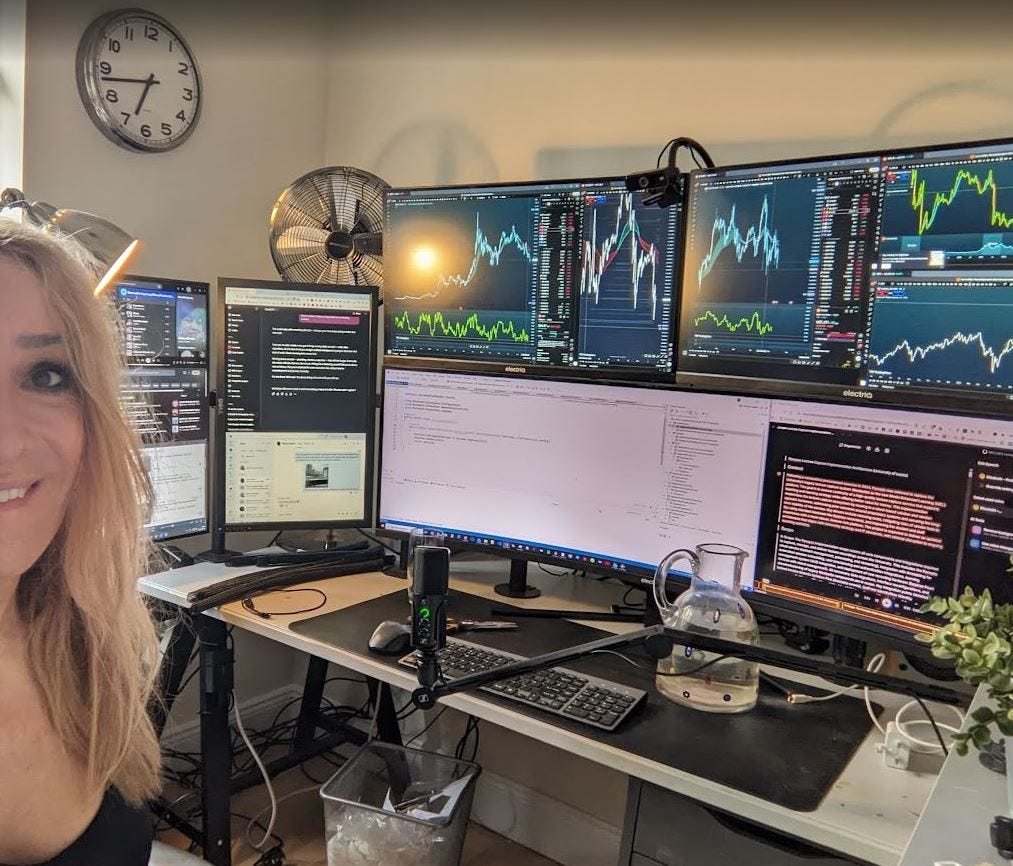
What they don’t see is this.
Living with grief for people who are still alive. People who exist somewhere, but not here, not with me. It’s like having family members in a coma, where there is no clear prognosis and no clean ending. You can’t mourn them properly, and you can’t stop hoping either. There is nothing you can do to resolve it. Absolutely nothing.
Most of the time, I can accept the coma. I grieve for the coma. I build a life around that reality.
But there is a small part of me, five per cent perhaps, that still wants to shake them awake. To demand they come back. And when I remember that I can’t, the grief lands all over again.
You just live alongside it, and hope it doesn’t take you down with it.
Wow this one hit hard, it was kind of a guy punch with the coma metaphor and all and I TOTALLY relate to feeling like it was some kind of Faustian bargain when I transitioned.
I mean ok I didn't drive my truck off that cliff that day after 30 years of spiraling into deeper depression, which unlike you I AM very prone to since age 9, which in 2018 felt like the only other option.
So I went to Barcelona for three months and when I came back it was with a new name and a fabulous wardrobe!!
But I took lost my family along the way in the bargain somewhere and oh how I miss my now 18 and 19 year old children, but they want nothing to do with me, NOT in my case because I'm trans (that DID cost me my extended family I grieve for too) but because I have bipolar disorder from a head injury when I was 20 and the kids and their mom BLAME ME for out of control things I did due to it BEFORE I WAS PROPERLY TREATED
I've been on stable meds for years now but they don't care the kids therapist, without ever having spoken to me, branded me as a narcissist and a monster who gave them PTSD on purpose or something. Like I had a choice about getting that head injury or what it did to me so I'm grieving doubly, for all the people I've lost because I'm transgender and all those I've lost due to my mental health struggles
I wish I COULD shake them awake out of a coma God do I ever
I hear wgmhT you are saying and am going through a similar process with family. Even though I haven't gone through transition as far as you, I realize by your experience as well as others that it is not easy for anyone (us, kids, spouses, relatives and pets) but do wish that people were more like pets and more accepting of others and their differences.