


This is the last of my pre-going-back-to-work, Pattaya-written Substack articles. I promise you the volume of my waffle will go down in the next few days. Although, fair warning, we do have Chapter 11 of my autobiography coming up, probably the most pivotal chapter in the whole book, hopefully in the next few days.
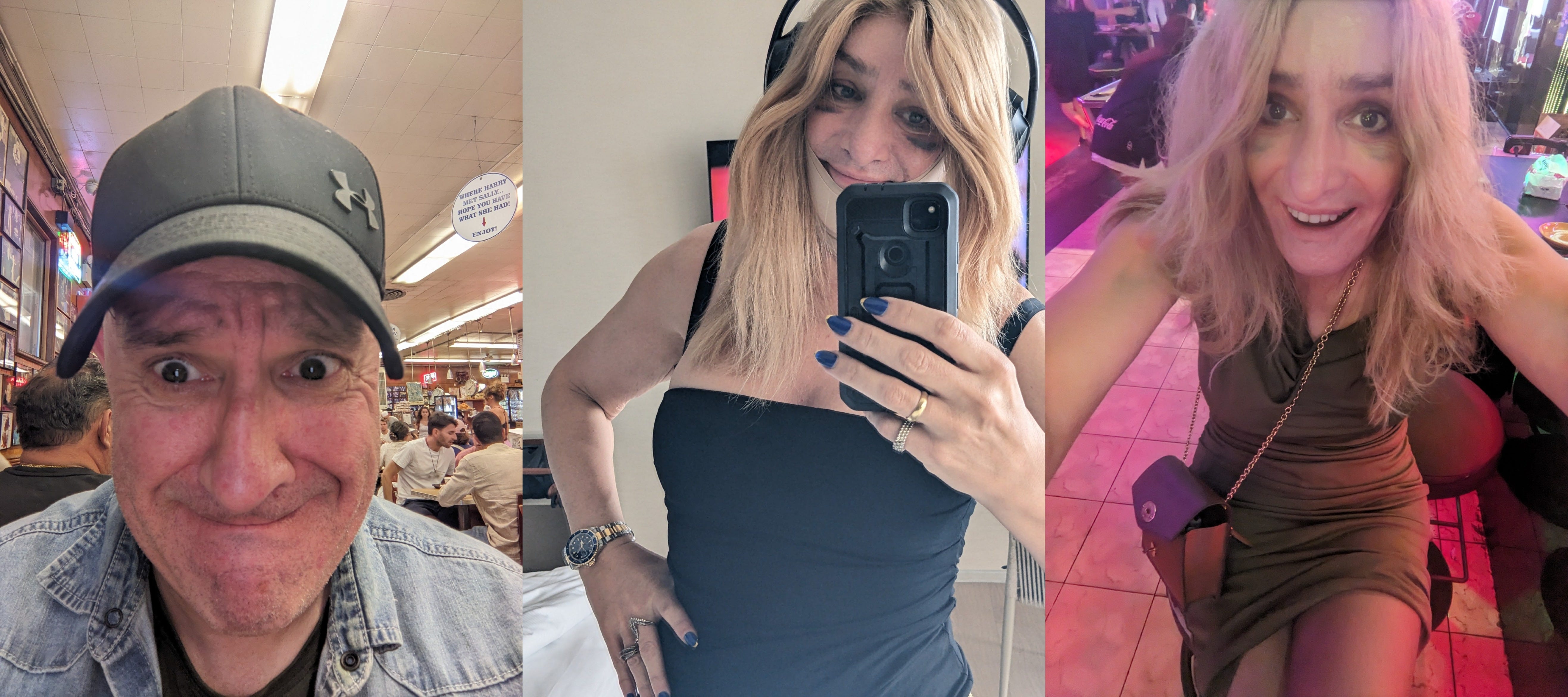
I’m very old. Fifty-seven this year. A child of the 1970s and 80s. And I’ll admit, language has changed a lot since then. But what does that actually mean in reality?
Well, here’s one thing I’ve noticed: you don’t hear the word transvestite anymore. It’s vanished. These days you just hear this vague, universal phrase: trans.
Back in the day, people threw around transvestite constantly. Eddie Izzard called himself one for years, proudly, even. And now he simply says “trans.” The umbrella has swallowed everything.
But I still carry relatively fixed definitions in my head. And now that I’m properly in this world, meeting people all the time, I can’t help but notice the differences. I’d say ninety percent of the people I meet are what I’d call old-school transsexuals like me: the non-sexualised kind. The ones who don’t treat it as a fetish, who don’t “get off” on it, but who simply want to live as women. Real simple.
Then there’s another group, maybe ten percent. Old-school transvestites. The pattern’s always the same. They’ve been dabbling a few years, there’s a fixation with lingerie, and sooner or later you realise their cross-dressing activities generally end in a very male way, with masturbation. They often gravitate towards people like me because they see me as some more extreme version of their fantasy.
Now, don’t get me wrong. Being a transvestite isn’t evil or problematic. It’s a perfectly acceptable thing to do. If you want to buy some lingerie and spank the monkey, then go for it. Life’s short. It’s just not me. Not what I do at all.
And here’s the rub. This is why I struggle with the word trans. It includes both camps. So when you see people on X being rude and horrible, more often than not they’re actually aiming their anger at the transvestite stereotype: the enormous fake breasts, the fishnets and PVC in the supermarket aisle, the caricatures. They’re not thinking about people like me, your average old-school transsexual who’s quietly living, working, paying bills, and blending in. But because the word trans is the only one left standing, the caricature sticks to all of us.
Back in the 70s and 80s, there was at least a crude sort of clarity. The language separated out different experiences. Transvestite might have been a loaded word, but it was specific. Today, the distinctions have blurred, and outsiders lump us all into one pot. That’s why the stories in the press about “trans people arrested in toilets” or the photos that go viral online so often bear little resemblance to the reality of most trans women’s lives.
Language matters. Not because I want to police anyone else’s choices, but because without precision, we end up with a world where fetish and identity, parody and reality, are all painted with the same brush. And that makes it far too easy for the mockery, the suspicion, and the hostility to spread to everyone.
So where have all the transvestites gone? Nowhere really. They’re still here. They just got folded into a bigger word that flattened the landscape. But for those of us who lived through the old distinctions, the loss of the word has consequences. Because without it, too many people can’t see the difference and that difference matters.