

It’s been a while since I wrote a Witterings article, one where I simply witter on about how life has been for the last couple of weeks and what I’ve been up to.
Usually, my life is too boring to make that question worth asking.
Twice a week, I see my electrolysis technician, the lovely Megan, who invariably asks:
“What have you been up to?”
“Working.”
“What do you mean?”
“Just working.”
I get up at six and start working. When lunchtime arrives, I stop.
Well, actually, no. I don’t stop.
I sit at the breakfast bar eating my salad while listening, in audio mode, to ideas generated by my various synthetic workers. Then I go back to work.
I eat my dinner, and I work.
At 8.30 in the evening, an alarm goes off telling me to stop working.
So I stop.
Usually. Sometimes.
Megan looks at me as though there is something seriously wrong with me.
“What are you doing this weekend?”
“Probably a bit of work.”
But it hasn’t all been work, despite everything I have just written.
This week has contained imprisonment, political protest, family anguish, rooftop glamour, plastic surgery administration, sobriety and a Chihuahua impersonating Ben-Hur.
Perhaps I’ve finally got an answer for Megan.
Swooshing through Departures
We are now getting extraordinarily close to my trip to South Korea for vocal surgery.
I leave in 90 mins!
I’m becoming properly excited.
I’m one of those people who likes to dress up for an aeroplane. I enjoy putting my best foot forward, wheeling nice luggage through the airport and swooshing purposefully through Departures as though I’m about to be photographed boarding a private jet, rather than queuing behind a family of six while somebody argues about whether a half-empty bottle of Calpol constitutes a liquid.
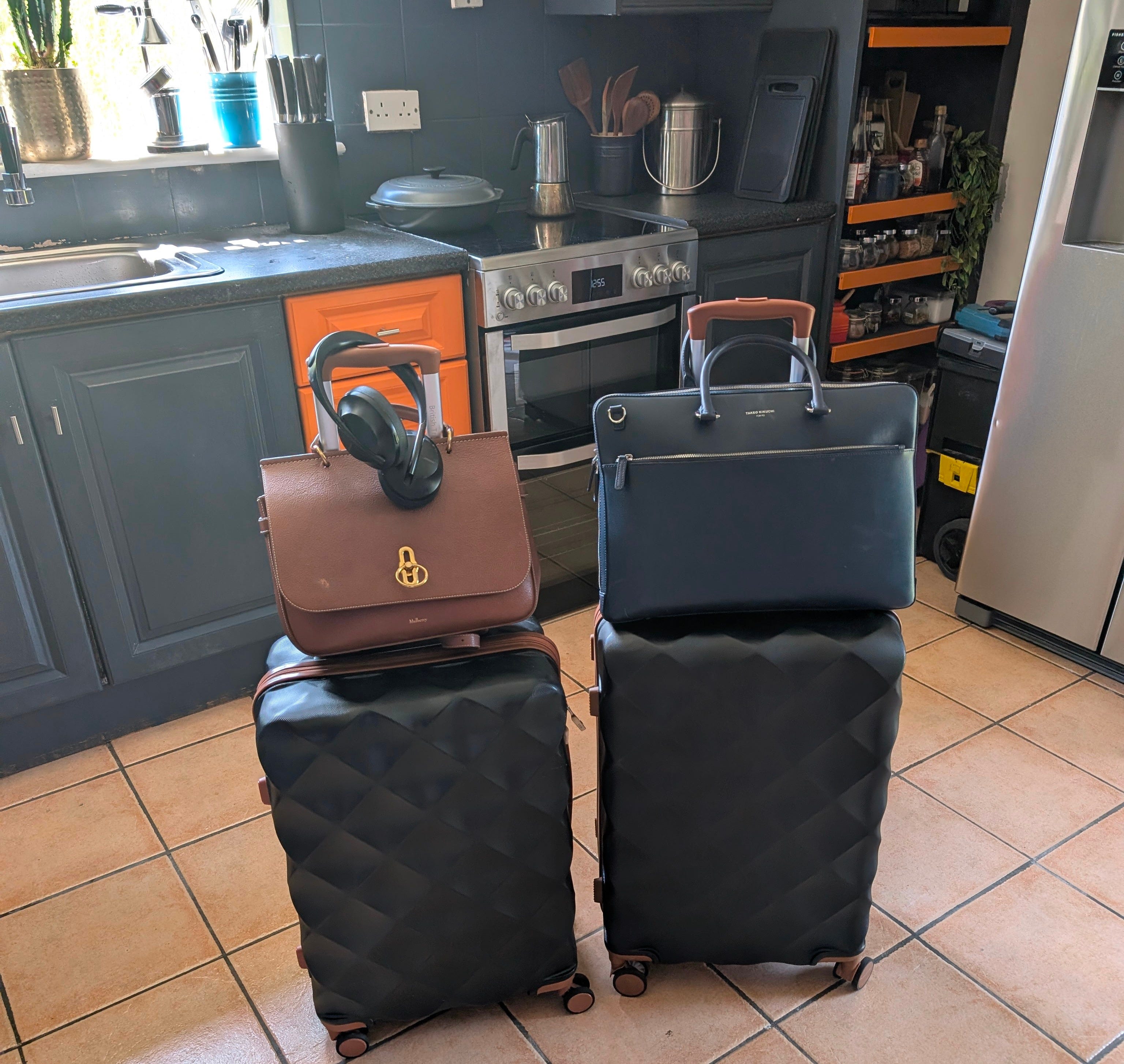
Even Steve used to make half an effort for airports, within the extremely limited parameters available to men.
As for my children, when my son protested that he wanted to wear “comfy” grey jogging bottoms to the airport, I would say:
“Absolutely not. You look like a criminal on remand. All you need are a few little holes in them from smoking marijuana, plus crusty fingernails and bad cuticles that give off the whiff of someone who has never eaten a vegetable in their life, lives on Pot Noodle and uses the container as an ashtray.
“Absolutely not. Put some jeans on and a nice shirt.”
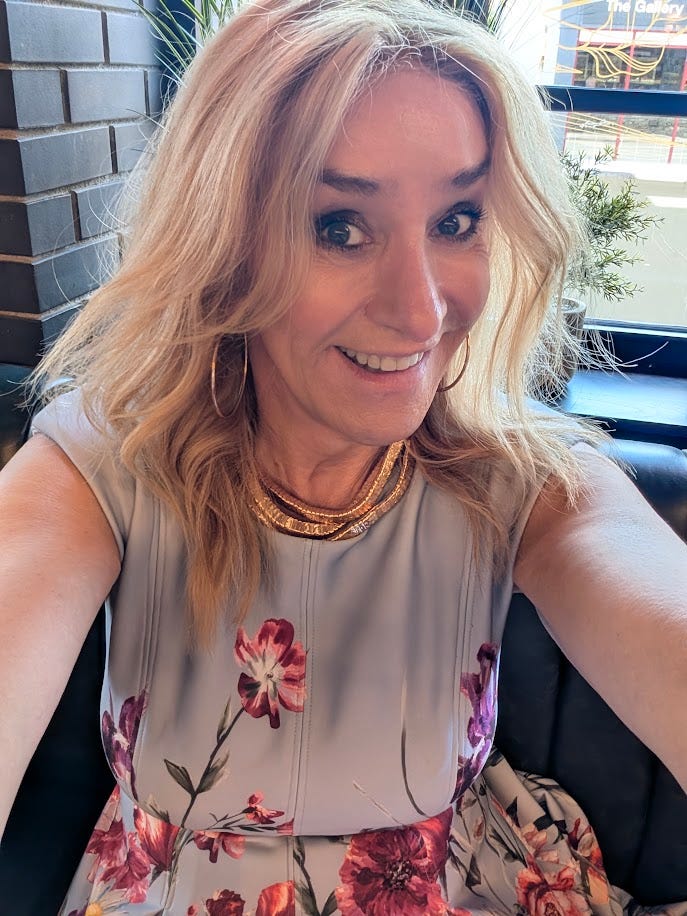
For this trip, I have a lovely blue dress that I want to wear on the flight. It didn’t fit me quite properly, so I found a local woman who does alterations and took it along to her.
She is putting darts everywhere. She will take it in, reshape it and somehow make it look as though it was designed specifically for me.
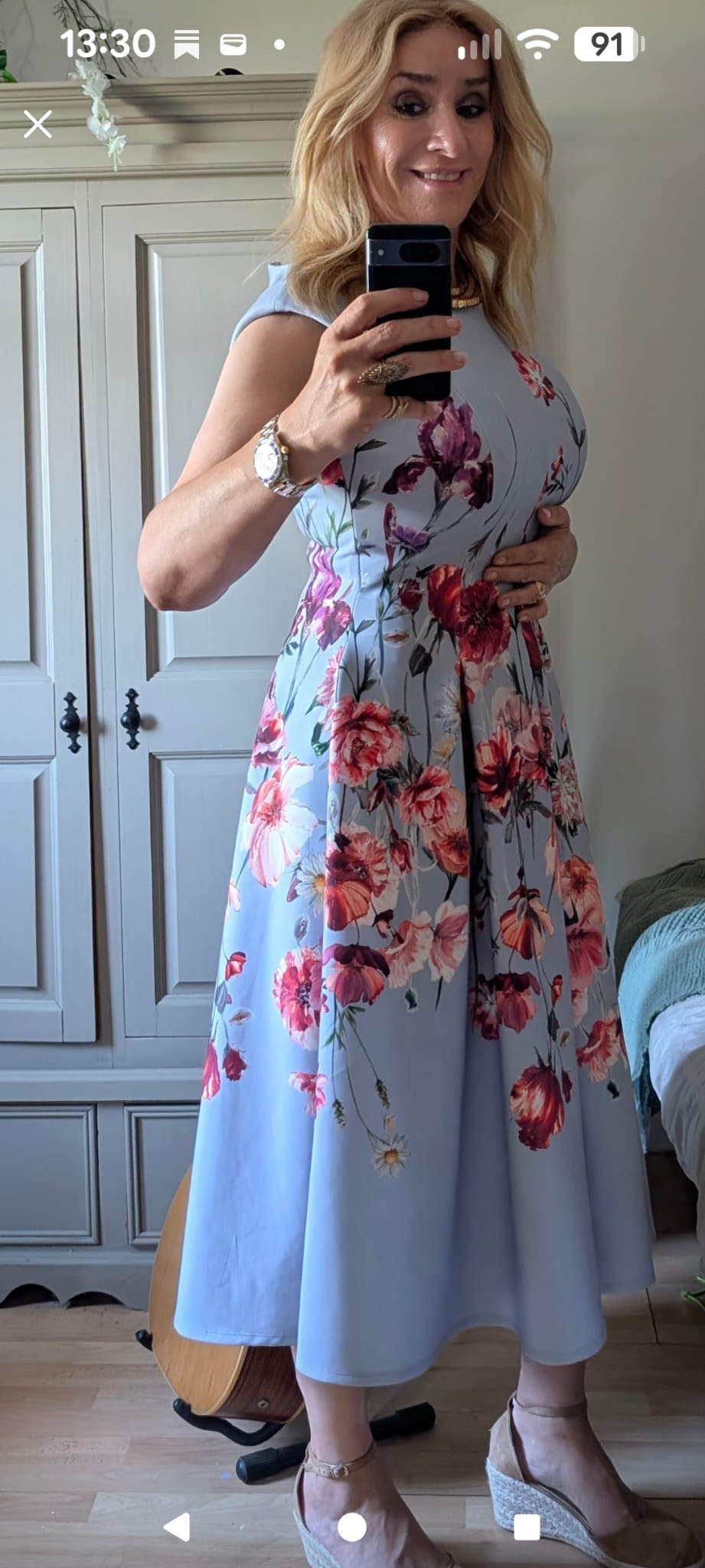
The entire job will cost €31.
I nearly spat out my coffee.
At that price, I’m going to take every item of clothing I own to her. I shall arrive outside her house with a removal van.
Nothing will ever merely “fit reasonably well” again. Every dress, jacket and pair of trousers I possess will be sculpted around me to within a millimetre of its life.
And she was lovely.
So, I shall be swooshing through the airport in my newly fitted blue dress, on my way to have somebody operate on my vocal cords and render me completely silent.
There’s probably a metaphor in there somewhere.
Guantanamo
Meanwhile, the saga of Colonel Chesterton and his endless pooing continues.
Two weeks ago, I bought a large enclosed pen, which I have plonked outside the back door.
I now call it Guantanamo.
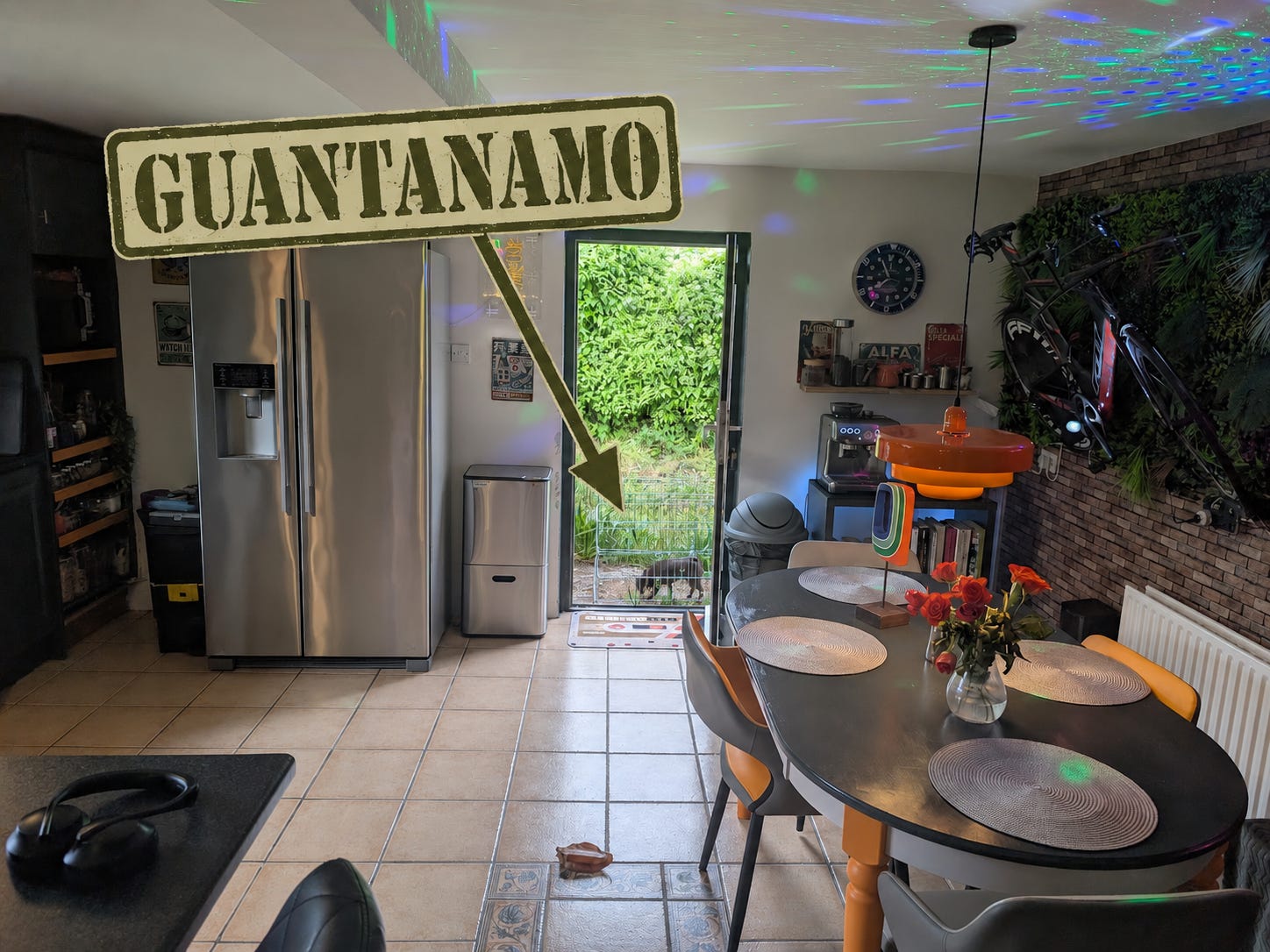
Before Guantanamo, our mornings were beautiful.
I would open Chester’s crate and say:
“Mummy’s special boy! What a great little soldier you are! Come here, my little prince. Mummy cuddle! Mummy cuddle!”
I would scoop him up and give him the biggest cuddle imaginable while he bounced around like an unmedicated squirrel that had discovered espresso.
His whole body would be vibrating. His miniature tail would be wagging at approximately a thousand miles an hour. He would lick my face, climb onto my shoulder and behave as though we had been separated for seventeen years rather than seven hours.
Things are different now.
When I open the crate, he hides at the back.
He knows what is coming.
I scoop him up. No praise. No kisses. No mummy cuddle. I open the back door, deposit him in Guantanamo and solemnly issue the command:
“Toilet.”
He looks at me as though his entire world has collapsed.
What the actual fuck happened?
Why have you stopped loving me?
Then the game begins.
Who will blink first?
Will Chesterton do the poo, thereby earning his freedom, his breakfast and the return of Mummy’s love?
Or will I soften after three minutes, five minutes or ten minutes of watching his tiny, tragic face through the metal bars?
He starts to whimper.
He shivers theatrically.
He gazes up at me like a political prisoner awaiting news from the embassy.
I have made the mistake of giving in before.
“He’s obviously not going to poo,” I think. “I can’t leave him out there forever.”
I open the door.
He trots inside, tail wagging, apparently delighted to discover that his person has regained her humanity.
Then he runs behind me while I eat my breakfast.
Twenty seconds later: poo on the floor.
“You fucking little bastard. You sneaky little shitface. I fucking hate you.”
But it is too late.
You cannot tell a dog off after the event. He has already moved on with his life. As far as Chesterton is concerned, that particular poo is ancient history, and any attempt to associate him with it would be a grotesque miscarriage of justice.
My Chihuahua may not be the easiest creature in the world to train, but he is possibly the most lovable.
I’ve also started showing him dog videos on the television.
He adores them.
He stands with his little front paws pressed against the television cabinet, staring upwards in complete wonder. Sometimes, he tries to look behind the screen to find out where the dogs have gone.
His entire universe has suddenly expanded.
There are dogs inside the wall.
The final, final, final surgery
Elsewhere in Stevie’s entirely sensible and restrained life, I am tentatively investigating one more cosmetic procedure.
Yes, I know.
My vaginoplasty was supposed to be my final, final, final surgery.
Then my voice operation became my final, final, final surgery.
Now it appears that the final, final, final surgery may not, in fact, have been final.
I am considering a waist-narrowing procedure called RibX.
We don’t need to go into all the rib-bending technical details here. The important point is that I have seen some dolls on Instagram who have had it done, and they look incredible.
I would like my waist to be more snatched.
There. I said it.
There is no profound gender theory behind this. No complex psychological explanation is required.
I am vain.
I want a more snatched waist.
As part of arranging a consultation, I need a DEXA scan to check that I’m suitable because I’m “very old”. This took me back to the doctor’s surgery in the village where I used to live.
I have never moved doctors because the receptionist there is lovely to me.
We compare notes on our various plastic surgeries like two women discussing home renovations. She has had her boobs done and her arms done. I tell her about my face, my body and my assorted other improvements.
It is basically Grand Designs, but with anaesthetic and without Kevin McCloud gravely warning that the budget has spiralled and we’re now “dangerously behind schedule”.
Fuck the budget!
Sorry, Americans, for the UK television references.
Because I was already in the area, I drove past my old house on the way home. There are two ways home, and I think this one is marginally faster.
I slowed slightly and looked towards the garden to see whether anybody was outside.
There was nobody there.
I carried on.
A few days later, I had to go back to my GP again.
This time, Chesterton was with me, standing upright in his passenger-seat carrier with his front paws resting on the edge like a tiny general inspecting occupied territory.
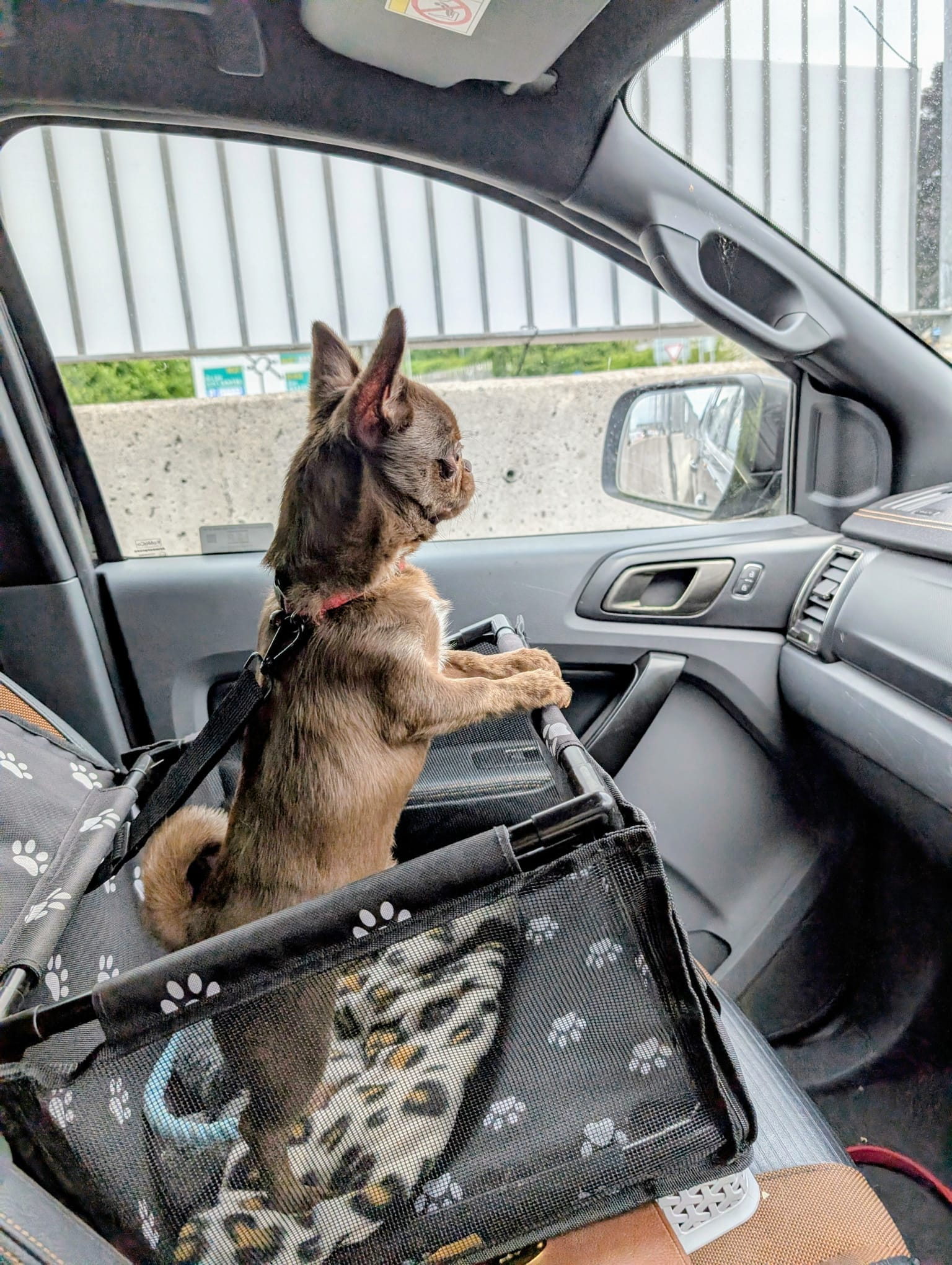
As I approached the road, I already knew I probably shouldn’t go that way.
What possible good outcome was I imagining?
Nobody was suddenly going to run into the garden, wave enthusiastically and shout that they missed me. There would be no miraculous cinematic reconciliation. No swelling music. Nobody was waiting to tell me that everything had been forgiven and understood.
Still, I drove past.
I slowed for a moment.
There was nobody there.
“That’s where I used to live,” I told Chester.
Then we went home.
What is here for me?
For quite some time, I have been asking myself the same question:
What is here for me?
What is keeping me in Cork?
I had already been thinking seriously about Manchester. Not as a momentary reaction or an impulsive escape, but as a genuine possibility.
A bigger city. More work. More people. More life. Somewhere I might begin again instead of remaining permanently tethered to the edge of a family life that no longer includes me, with the added risk that I might bump into someone in the city centre who would like to thump me on the nose for transitioning.
Anything but the nose, by the way!
In fact, as I drove home that day, I had almost made the decision.
I think I’m going to Manchester.
Then the messages arrived.
“Don’t drive past our house.”
“Why did you drive past our house?”
“It’s weird.”
There was something almost poetic about the timing, although not in a particularly lovely way.
Just as I had finally begun to choose somewhere else, the place I had stayed for seemed to confirm that there was nothing left for me to stay close to.
I had not stopped.
I had not knocked on the door.
I had not attempted to force myself into anybody’s life.
I had driven slowly past a house in which I had lived for years, looking briefly towards a garden where the people I love might have been.
And even that was too much.
For a day or two, Manchester felt settled.
Then I began investigating the probable upcoming legal and political changes in Britain, and the atmosphere I might be moving into.
I imagined arriving at a client’s office and being welcomed enthusiastically.
“We’re delighted to have you here, Stevie. Everyone’s very excited about the project.”
Then, after a slightly awkward pause:
“We’ve also set up a special toilet for you in the basement. It used to be the cleaner’s cupboard, but we’ve removed the mops. There’s no proper lock yet, and you may need to move the boxes of printer paper, but we thought it would be best. We wouldn’t want your presence in the women’s toilets to make anybody uncomfortable.”
Perhaps nothing like that would ever happen.
But I no longer find the possibility ridiculous.
Nor do I think the direction of travel under future governments is likely to become any kinder.
The idea of voluntarily moving somewhere that might increasingly treat my ordinary existence as a legal difficulty, a safeguarding concern or an administrative inconvenience suddenly seemed absurd.
So, for now, Manchester has gone back onto the shelf.
The question remains:
What is here for me?
I still don’t entirely know.
But whatever pain Cork contains, I can generally move through it unchallenged. I can enter a restaurant, visit a shop changing room and use a public toilet without feeling that the country is actively debating whether I should be allowed to do so.
For the moment, that is enough reason to remain.
When the factory went silent
That evening, after receiving the messages, I sat in front of my computer and stared at it.
I couldn’t work.
This is unusual for me.
Work is my great engine. It is the place where I know what to do. Problems have structures. Systems have boundaries. Software can be reasoned with.
Even synthetic workers are, on the whole, easier than families.
Then, almost comically, I ran out of credit on one of my two AI subscriptions.
Even though I pay for the absurdly expensive version, I had used my entire allowance. It would not reset until nine o’clock.
My whole synthetic factory went silent.
The workers disappeared.
The machines stopped.
The control room went dark.
There was just me, sitting alone with the pain.
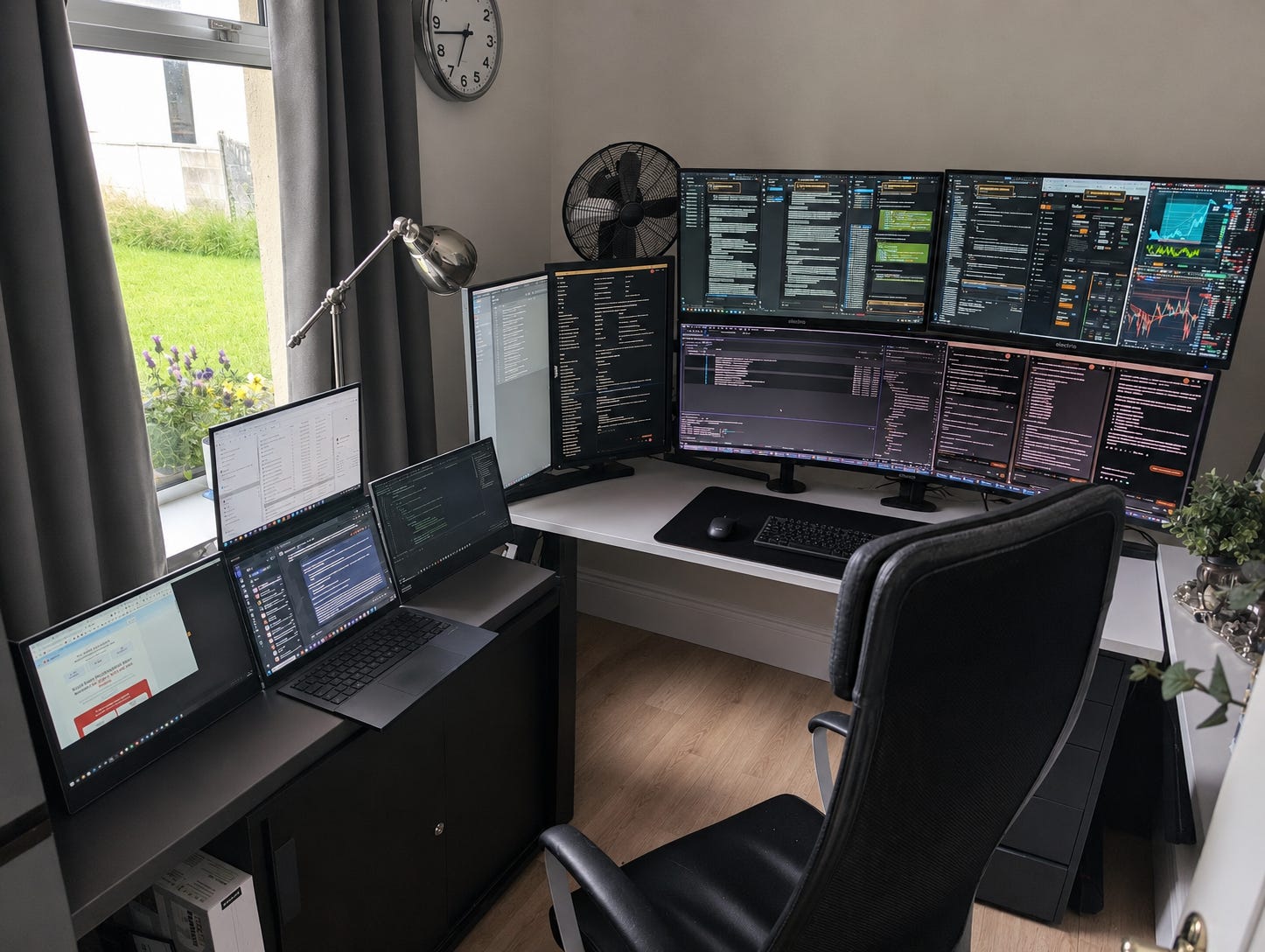
And this was the dangerous bit.
Not dangerous in the sense that I was going to do anything dreadful. I wasn’t.
But it was exactly the kind of pain I used to try to anaesthetise.
I told myself:
“No drinking, Stevie. Drinking will make tomorrow worse. You cannot drown this.”
So I didn’t.
It was very close for about two minutes, though. I won’t lie. I felt so hurt and rejected.
I just sat there, my eyes bright red from the tears, and stared at the screen.
I waited.
At nine o’clock, the factory came back online.
The lights flickered on. The workers returned to their stations. Code started churning out. Deltas landed complete. Architects delivered work faster than I could read it.
And there I sat at the top of it all, lord of the manor, directing the whole thing with a wave of my hand.
It is almost poetry when it runs like this.
I worked for two hours.
By the end of it, I felt much better.
Not cured.
Not unhurt.
But functional again.
Work is not therapy, and I know that endlessly burying myself in it is probably not the final answer to every emotional problem.
But that night, it was a bridge.
I put the pain back into its box, not because it no longer mattered, but because I could not allow it to consume everything else.
The following morning, I woke up feeling good.
We had made progress.
I understood myself a little better than I had the day before.
The triggers still hurt, but they no longer automatically control what I do next.
I can experience an evening of almost unbearable sadness without drinking, detonating my life or making an irreversible decision.
I can sit with it.
I can survive the silence.
And when the machines come back on, I can carry on building.
The Trans Pride Popular Front
Yesterday was Trans+ Pride Cork.
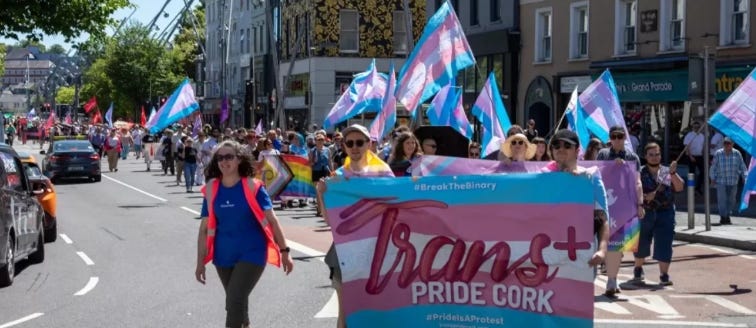
Or Cork Trans+ Pride.
No, apparently it was definitely Trans+ Pride Cork.
I suspect that getting this wrong could trigger a schism, three emergency meetings and the immediate formation of the Trans Pride Cork Popular Front.
“Trans Pride Cork?”
“Fuck off. We’re the Cork Trans Pride Front.”
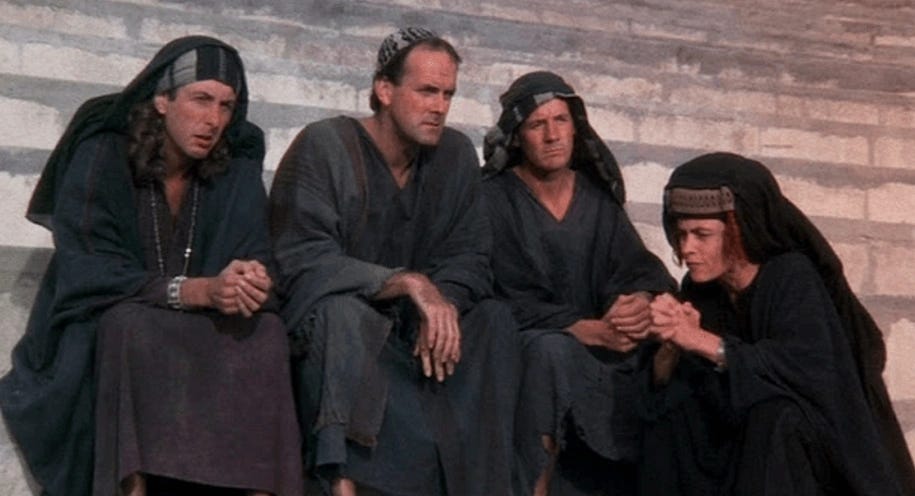
Yesterday also marked eight weeks since I stopped drinking.
That felt significant.
I decided that Chesterton and I should have an outing.
My reasoning was simple: even if everybody ignored me, they wouldn’t ignore Chester.
He takes the heat off me in unfamiliar social situations. I might not know many people, but everybody knows what to say to a Chihuahua who looks like a squirrel on a long lead.
First, however, I had my electrolysis appointment.
I came home afterwards and spent an unfeasibly long amount of time arsing around with my hair, using the GHDs and the Dyson Airwrap, until I had created the nearest thing I could manage to Olivia Newton-John about to burst into Xanadu.
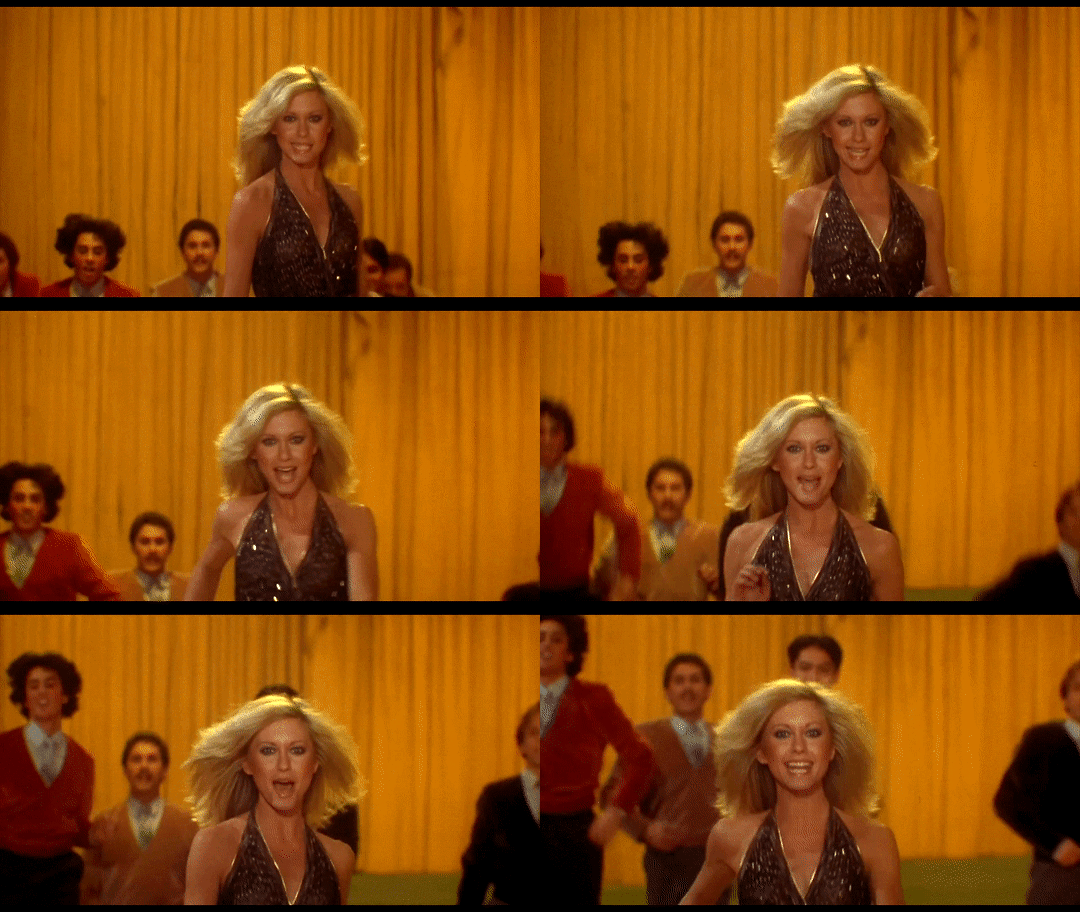
I decided to complete the tribute with a skimpy black halter top, skinny black leather trousers and boots.
Dear readers, this was a mistake.
It looked fabulous.
It was also a hot summer afternoon, and I spent much of it slowly roasting inside my leather trousers while everybody around me demonstrated the superior judgement of wearing a summer dress.
Never mind.
I stood out.
We drove into Cork, parked and walked towards Grand Parade.
Grand Parade is a place, by the way. I am not yet offering a judgement on the grandeur of the parade itself.
Walking Chesterton through Cork is an unusual experience because I cannot travel ten metres without somebody, usually a woman, stopping to coo at him.
He is freakishly good on a lead for such a tiny animal. The lead stays slightly taut, and he trots perfectly beside me like a well-trained sausage skimming along the pavement.
I am not a socialist
As we reached Grand Parade, I began experiencing the peculiar discomfort I often feel at events like this.
I saw Socialist Worker flags.
I saw People Before Profit flags, which is an Irish political party, incidentally, not merely an optimistic instruction.
I am not a socialist.
Transition did many things to me, but it did not cause me to seize the means of production.
I am, if I’m honest, a bit of a trans-trapreneur.
My instinct is to build things.
Create things. Make money. Develop tools. Solve problems. Show what transgender people are capable of and make ourselves progressively harder to ignore.
My vision of transgender progress is not one of permanent victimhood.
That does not mean I think discrimination is imaginary. It does not mean the state has no responsibilities. It certainly does not mean that somebody facing hostility should simply pull themselves together, launch a software company and buy a better moisturiser.
It means that my own instinct is based more on agency than grievance.
I want us to be visible, capable, successful, funny, attractive, clever, ordinary, extraordinary and everywhere.
I don’t want transgender life to be presented exclusively as suffering.
And then, standing there, I caught myself doing something rather ugly.
I started comparing.
I looked around and silently ranked everybody.
I’m sorry, but I did.
We all do this. I’m just being honest.
I decided that I was probably the most conventionally feminine trans woman there.
I knew that I passed more easily than many of the people around me.
A middle-aged doll, perhaps, but a dolly nonetheless.
My first reaction was pride.
My second was discomfort at my own reaction.
Do not be fucking smug, Stevie.
I try very hard not to judge other trans people by how they look. I know how unfair that is. I know that not everybody wants what I want, and that not everybody has the same body, resources, starting point or opportunities.
But I also resist the idea that my appearance simply fell upon me as a form of privilege.
I have worked incredibly hard for it.
Yes, money played a part.
So did surgery, dieting, training, skincare, hair, clothes, makeup, voice lessons, pain, research, obsession and a degree of determination that occasionally borders on insanity.
I am allowed to be proud of that work.
But passing is not a moral achievement.
It does not make somebody kinder, braver, cleverer or more deserving of dignity.
It simply changes the temperature of every room they enter.
Abnormally normal
The parade began moving through Cork.
At various points, people started chanting about parts of the Irish gender healthcare system. Acronyms were shouted which I didn’t recognise, despite being transgender myself.
I knew from day one that I would get nothing from the Irish state, and I wanted nothing to do with it when it came to my transition, so I organised everything privately.
Other chants used the language of genocide.
I looked across at the people watching from the pavements and found myself reading their faces.
They didn’t know what the acronyms meant either.
And when language becomes enormous, when every failure is violence and every injustice becomes genocide, I worry that the people we need to persuade simply switch off at best and become hostile at worst.
That doesn’t necessarily mean the anger is unjustified.
Ireland’s gender healthcare system has failed many people. Some wait years for help. Others have been treated with suspicion, obstruction or indifference.
There were undoubtedly people in that march who had endured things I have been fortunate enough to avoid.
But a slogan can be morally sincere and still fail as communication.
I didn’t feel that we were bringing the watching public with us.
I wanted more uplift. More humour. More confidence. More of a sense that we were inviting people to see us as part of their world rather than standing opposite them and issuing an indictment.
I want people to look at transgender lives and think:
Oh. They’re people.
Not normal in the suffocating sense.
Not uniformly respectable, beige or well-behaved.
Abnormally normal.
Odd in all the same ways everybody else is odd.
I didn’t always get that feeling yesterday.
Occasionally, I looked around and thought:
What the actual fuck is all this?
And if I, a transgender woman walking inside the parade, sometimes felt that way, I could imagine what some of the spectators were thinking.
Fanny the Wonder Dog
Afterwards, I went to the Sky Bar with two people I knew from the parade.
I had never heard of the Sky Bar.
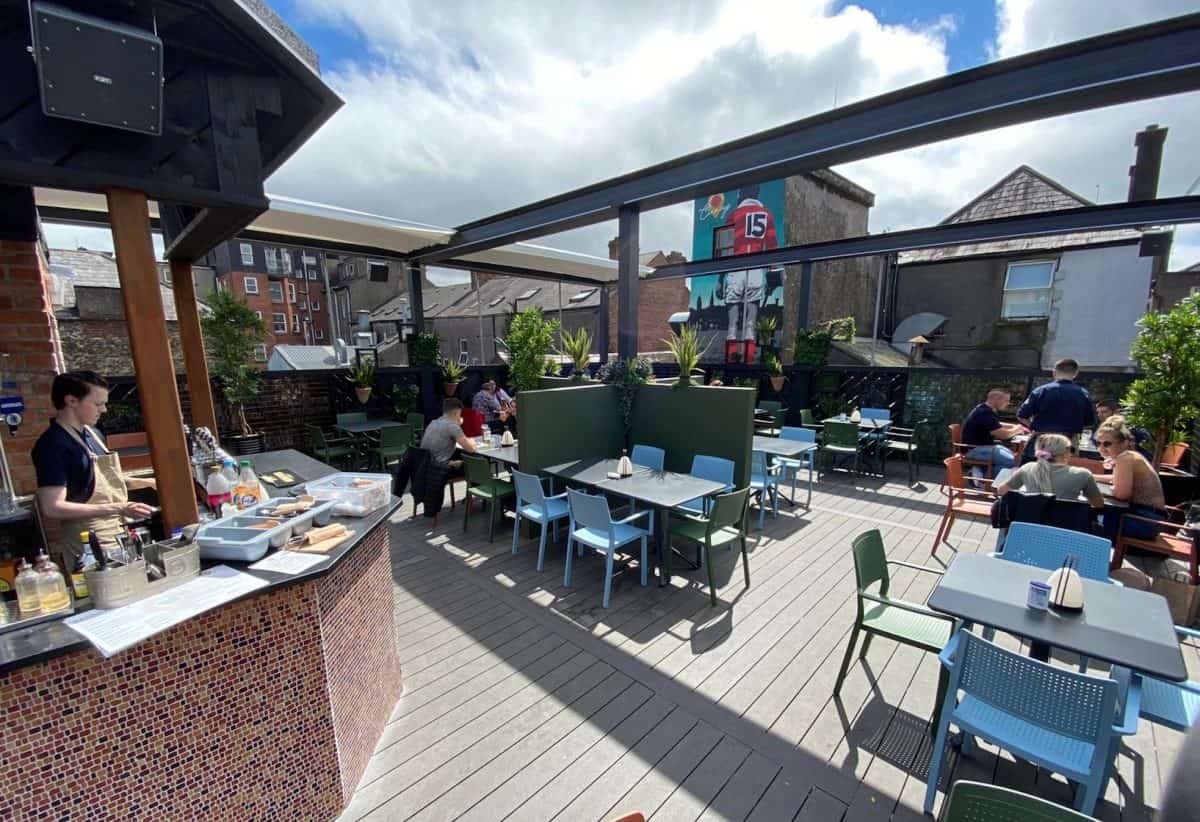
It turned out to be a rooftop bar in the middle of Cork, with a DJ, sunshine and a lovely atmosphere.
When we arrived, I scooped Chesterton up under one arm and walked straight inside.
It is easier to ask forgiveness than permission.
If dogs were forbidden, somebody would tell me. Even then, I suspected they might make an exception for a creature who looked less like a dog than an unusually alert bread roll.
The staff saw him, winked at me and let us carry on.
So I wandered around the bar like Julian Clary with Fanny the Wonder Dog tucked under my arm.
And then I was swamped by women.
Within minutes, I had been absorbed into a large group of women who wanted to stroke Chesterton, pick him up, ask questions about him and tell me how adorable he was.
Then they started complimenting me.
They told me I looked smoking hot.
They told me I must know how good I looked.
They behaved as though this was an established fact of which I had surely been aware for years.
“I don’t,” I told them. “I genuinely don’t know this yet. This is new to me.”
And it is.
I can recognise intellectually when I look good in a photograph. I can look into a mirror and see the result I have worked towards.
But being treated as an attractive woman by groups of other women is still new.
I have no internal history for it.
No childhood or adolescence spent learning how to receive that attention. No years of gradually adapting to it.
I am navigating it in real time, frequently with the emotional sophistication of a startled teenager.
One of the good drinking moments
The bar was also the most tempting place imaginable to mark eight weeks without alcohol.
Sunshine. Music. People laughing. Cold drinks arriving at tables.
It was one of those rare occasions when alcohol appears to be fulfilling every promise it ever made.
I looked around and thought:
Oh Jesus. This is one of the good drinking moments.
This was exactly when you were supposed to drink.
A rooftop bar in the sunshine, surrounded by friendly women, feeling attractive and included.
What possible harm could one drink do?
And then I reminded myself that I know where it goes.
There may be good first drinks.
There may even be a good first hour.
But there is still far too much pain in me to begin walking down that road again.
Only a few nights earlier, I had been sitting alone in front of a dead computer, shattered by two messages from a house I used to call home.
That is not a safe emotional landscape in which to reintroduce alcohol.
So I didn’t drink.
I stood on a rooftop in the sunshine, surrounded by women telling me I looked fabulous, carrying a Chihuahua under one arm, and drank something harmless.
That was enough.
The acceptable transsexual
The women also echoed some of the things I had been thinking during the parade.
They wanted to support trans people. They were perfectly happy to support trans people. But they found some of the language confrontational and some of the presentation alienating.
They wanted to be invited in, not shouted at.
It would be very easy for me to hear that and conclude that my instincts were entirely correct.
Look! The normal women agree with me! I am the acceptable transsexual! Give me a medal!
But there is another part of this which I cannot ignore.
I have a much easier experience of being transgender because I generally blend in.
I walk down the street, and people usually leave me alone. I enter shops and restaurants without causing a reaction. Strangers do not visibly inspect me or turn towards one another after I have passed.
I have, however, walked behind trans women who do not pass as easily.
Not deliberately. I simply happened to be walking behind them.
I have watched the public notice.
I have seen the second glance, the stare, the smirk and the whispered comment.
I have felt the atmosphere change around them.
And I understand why somebody who experiences that every day might become harder, angrier and less trusting than I am.
It is much easier to believe in gentle persuasion when the world is mostly gentle with you.
It is easier to advocate positivity when you are regularly rewarded for appearing in public.
If every journey to the supermarket involved people inspecting you, laughing at you or deciding that your existence was a public debate, perhaps you would arrive at Pride wanting to shout.
That doesn’t mean every slogan is effective.
It doesn’t mean I have to become a socialist or pretend to agree with political ideas I fundamentally oppose.
But it does mean I should be careful about mistaking my experience for the universal one.
Passing doesn’t make me better.
It makes my life easier.
Those are not the same thing.
Ben-Hur goes home
Eventually, Chesterton and I left the Sky Bar and walked back to the car.
I placed him inside the little carrier strapped to the passenger seat.
Usually, he stands upright with his front paws resting on the edge, surveying the road ahead like Ben-Hur commanding his chariot.
He looks magnificent.
A tiny Roman general being driven through the suburbs of Cork.
This time, he didn’t even stand up.
He curled into a ball and fell asleep within about twenty seconds.
I offered him a Skip, one of his favourite things.
Normally, he bats it around for two minutes, apparently unaware that it is food, before finally biting it and discovering all over again that it is delicious.
He didn’t want it.
He was completely exhausted.
He had spent an entire afternoon being admired by women, putting on his best face and accepting compliments from strangers.
Frankly, I could relate.
When we got home, he climbed onto the sofa and went straight back to sleep.
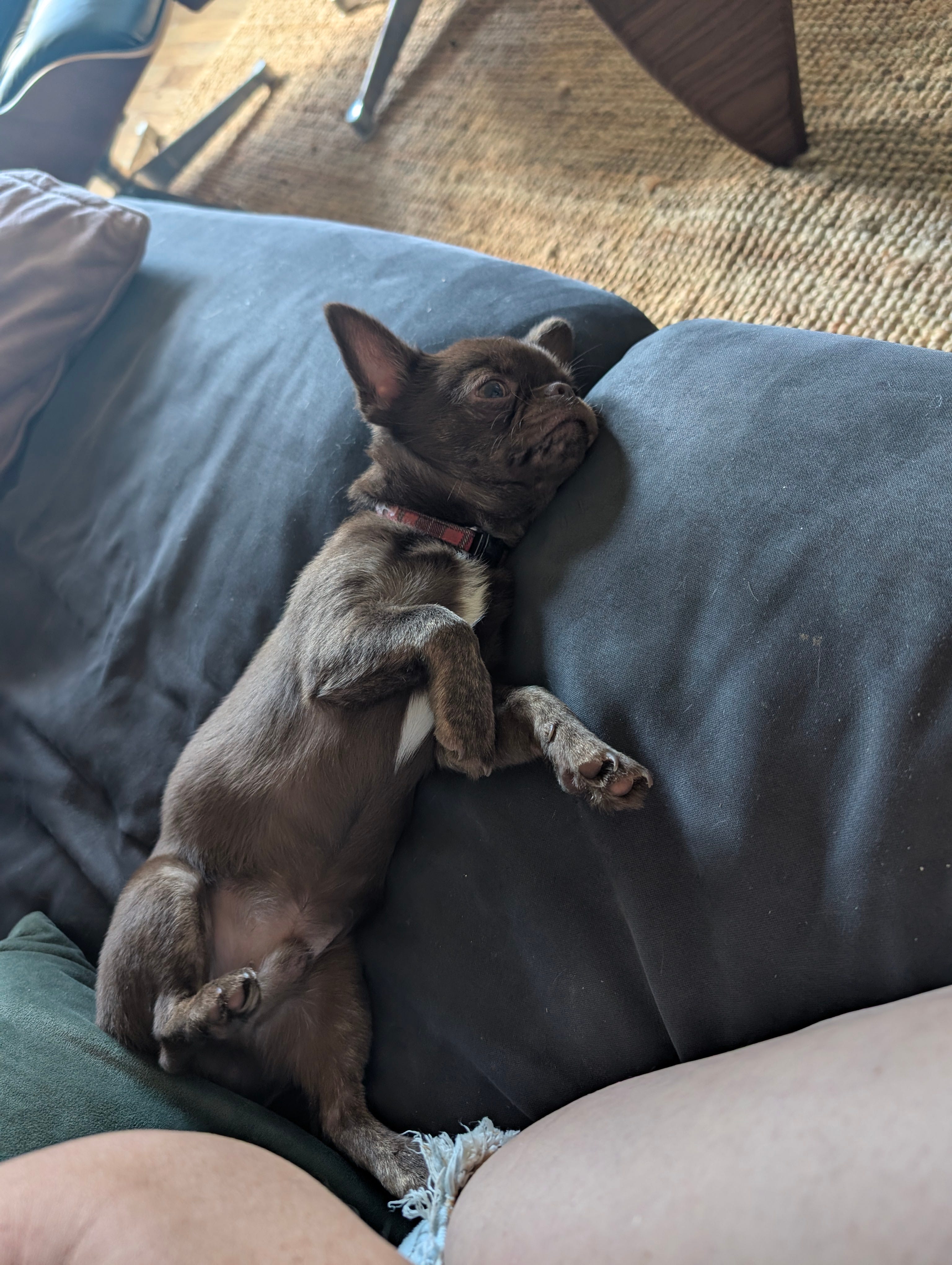
No playing. No bouncing. No unmedicated-squirrel routine.
He lay there completely wrecked by the burden of fame.
So that has been my week.
I have imprisoned my dog in Guantanamo, investigated having my ribs rearranged in the pursuit of vanity, almost moved to Manchester, dressed as Olivia Newton-John for a political march, been adopted by a rooftop full of women and paid a lovely seamstress €31 to make me look fabulous on an aeroplane.
I also reached eight weeks without alcohol.
That may be the most important part.
Today, I fly to South Korea.
The next time I write one of these, I may have a new voice.
Or, more likely, no voice whatsoever.
For several weeks, the wittering will have to remain strictly written.
Chesterton will probably appreciate the peace.
And when Megan next asks what I have been up to, perhaps I won’t just say:
“Working.”
Hi Stevie, I enjoyed the "ordinariness" of that- You are an inspiration just so you know- Best of luck with the surgery!
Paula
Very different lives we have. Always love the glances into yours. Still a bit nervous to post about mine. I have 3 daughters at home plus a grandson here after all. So sad how your family rejects you. They are missing out, but that doesn't change the pain.
I had an old female friend from high school chat online with me. She, and others, were part of my lifeline in high school without knowing it. Having women accept me then as a friend made me feel as good as possible then. Today their acceptance does the same. I just wish all trans women had that. Heck, we all deserve that trans or not.
The local trans march is Friday for me, a touch nervous as it is my first, but I know some of them and it should be fun.
Moving is something I've done every 4-8 years as an adult, but fake London is quite nice, 8 years and counting. Doubt a move is coming soon. You should look into multiple areas, go for a new adventure. If Cork isn't ideal, then think about what would be. Don't let anything stop you from being happy. And if your current home is ideal then stay.