


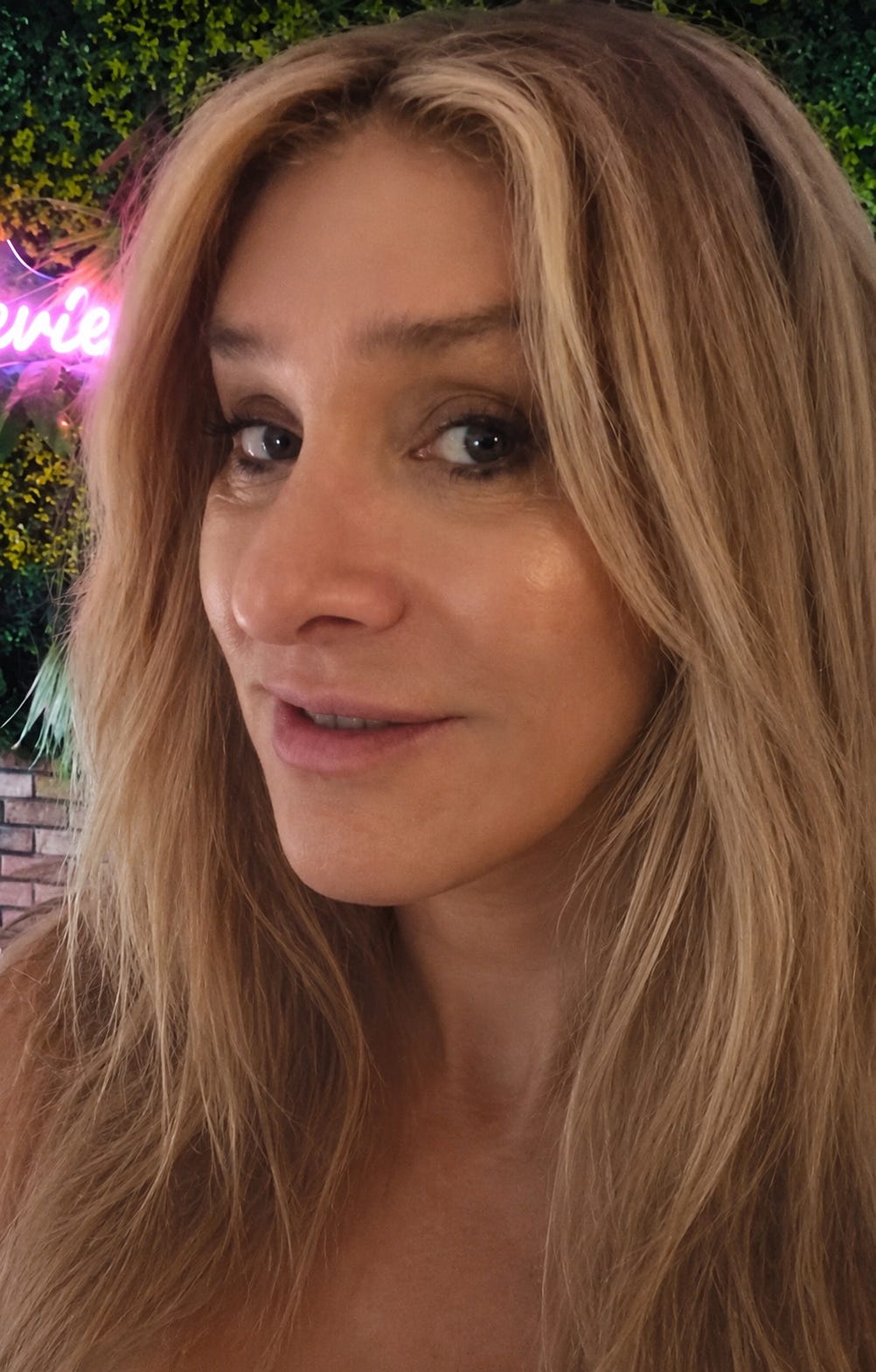
Around the time my marriage exploded, my ex-wife said something that lodged itself in my brain like a splinter.
“I can never trust a man again.”
I’m not going to write in detail about my marriage here, or about my ex-wife. Suffice to say, the collapse was acrimonious. Awful, even.
But that sentence kept coming back to me.
Not for entirely altruistic reasons either.
Part of me wanted to know whether she would be all right. That was true. I did want that.
But another part of me, if I’m being honest, wondered whether her falling in love again might eventually soften the whole emotional weather system. Not erase it. Not suddenly remove all the required scaffolding of Stevie-as-monster. Nothing as neat or sentimental as that.
Just enough, perhaps, for life to move on.
Enough for anger to become less useful.
That was the thought, or at least the half-thought.
Then came the research.
Not research on her, exactly. That would be a bit weird, and not quite true.
It became research on something larger and more abstract: middle age, divorce, rebirth, dating markets, trust, desirability, loneliness, and what happens when two people who built an adult life together are suddenly thrown back into the world under completely different conditions.
And then, because I am apparently unable to experience a human emotion without attempting to turn it into a model, I started breaking the whole thing down.
Post-divorce outcomes. Attractiveness distributions. Intelligence. Social status. Income. Children. No children. Geography. Profession. Age. The thickness or thinness of different dating markets. The unspoken filters people apply before they ever admit, even to themselves, what they are filtering for.
Before long I was trying to build a comprehensive model of who finds someone after divorce and who does not, driving it through Claude AI and into Excel (its bloody amazing at this), as if heartbreak might eventually yield to a sufficiently well-structured spreadsheet.
Then, eventually, I got brave.
Or perhaps stupid.
I decided to model myself.
Because, obviously, once you have built a deranged spreadsheet of post-divorce romantic probability, the next logical step is to point the machine at your own life and see what comes back.
The asymmetry was obvious almost immediately.
Her situation and mine were not the same.
She was a very attractive mid-forties heterosexual woman, with a good job and a big social world. In other words, she made sense to the ordinary dating market.
I, on the other hand, was a fifty-eight-year-old transsexual in rural Cork, trying to understand the lesbian dating pool with the air of someone examining a puddle and wondering whether it technically qualified as a lake.
And I do mean that honestly.
The pool is small to begin with. Then you add geography. Then age. Then the elephant in the room: a significant number of lesbian women would simply refuse to go anywhere near me. Politically, sexually, instinctively, whatever the reason. That is just true.
And then comes the other uncomfortable truth, which is that attraction is not a charitable programme. I do not automatically fancy every woman who might theoretically accept me either.
There are, regrettably, not many Jodie Fosters wandering around rural Cork waiting for a blonde transsexual software architect with a Chihuahua.
And that was how I ended up on dating apps at fifty-eight years old, like an anthropologist accidentally falling into a nightclub.
Now, let me explain something.
I know absolutely nothing about dating apps.
Nothing.
I met women the old-fashioned way. In pubs. At parties. Through work. Through conversation. Through eye contact and timing and humour and chemistry and all the ancient human mechanisms that existed before Silicon Valley decided romance should function like Deliveroo for genitalia.
My understanding of dating apps prior to this could essentially be summarised as:
People swipe at each other until somebody has sex in a flat with LED lighting.
That was roughly the extent of my knowledge.
I didn’t even fully understand the mechanics.
To this moment, I am not entirely certain I haven’t accidentally proposed marriage to six people simply by trying to scroll sideways with my thumb. Every time somebody says “swipe right” to me I still have to mentally rehearse which direction means “yes”. There is a genuine possibility that somewhere in Cork there is currently a bewildered lesbian hairdresser wondering why a trans woman, with a dog the size of a shoe, matched with her at 2am and then immediately vanished forever.
And then came the men.
Dear God.
Hundreds of them.
A lot of young men. Lots of good looking men. Two with six-packs. Men who appeared in my inbox calling me “cougar”, “MILF”, “gorgeous” and various other things which would have sent the male version of me into complete existential shock.
“Hi Stevie.”
“Hey gorgeous.”
“Wow.”
Some were very persistent.
Now, this was psychologically fascinating for two reasons.
The first was obvious: after spending most of my life inhabiting the social role of a man, suddenly receiving industrial-scale attention from strangers creates a kind of cognitive whiplash. Your brain simply isn’t calibrated for it. You still partly think like the old you while the outside world has quietly started treating you completely differently.
But the second thing was more interesting.
I realised very quickly that I didn’t actually want most of it.
Or rather, I wanted the validation, but not the reality attached to it.
That’s an important distinction.
Because sexual attention and emotional intimacy are not the same thing, and dating apps are very good at making people confuse the two.
And, if I’m honest, as a trans person I also knew perfectly well what a large proportion of this attention actually was.
Chasers.
Fetishists.
Men with strange fascinations surrounding trans women. Men who would happily meet you in a car park at midnight but would never introduce you to their mother in daylight.
That sounds harsh, but it is a reality most trans women become aware of very quickly.
The attention is often real.
The desire is often real.
But the willingness to integrate you into an actual public life is a completely different question.
I could also feel another danger lurking underneath it all.
Admiration.
That narcotic little human substance.
Last weekend I ended up “copping off”, as we say in England, with somebody considerably younger than me. Afterwards I found myself watching this person react to my life in a way that made me slightly uncomfortable with myself.
Not because they’d done anything wrong.
But because I could feel the asymmetry.
The lovely little house.
The tasteful interiors.
The office full of monitors.
The life story.
The reinvention.
The confidence.
The transition.
The sheer accumulated weight of having actually lived for nearly six decades.
To younger people, if you’re articulate and emotionally alive and have built any kind of coherent existence at all, you can start to seem weirdly impressive without really trying.
And I realised something slightly horrifying:
I did not want to become addicted to being admired.
Because admiration is not the same thing as being known either.
In fact, if I’m honest, I think I need the opposite sort of person entirely.
I don’t need somebody who thinks I’m fascinating.
I need somebody who occasionally says:
“Stevie, shut the fuck up, you’re being an idiot.”
My ex-wife was exceptionally good at this.
There is a particular kind of long-term intimacy where somebody becomes completely immune to your mythology. They see through all your performances instantly. They know exactly where you’re brilliant, exactly where you’re ridiculous, and exactly which parts of your personality need taking down a peg before they become unbearable.
Oddly enough, I suspect that is much closer to real love than admiration ever is.
And then it occurred to me that every hour I spent on dating apps was an hour I wasn’t spending on Substack.
At first I laughed at the thought.
Then I realised it might actually be true.
Because someone who has read fifteen or twenty of my essays already knows more about me than most people I ever met in pubs.
They know my politics.
My humour.
My grief.
My transition.
My arrogance.
My fears.
My obsessions.
My stories.
My emotional weather.
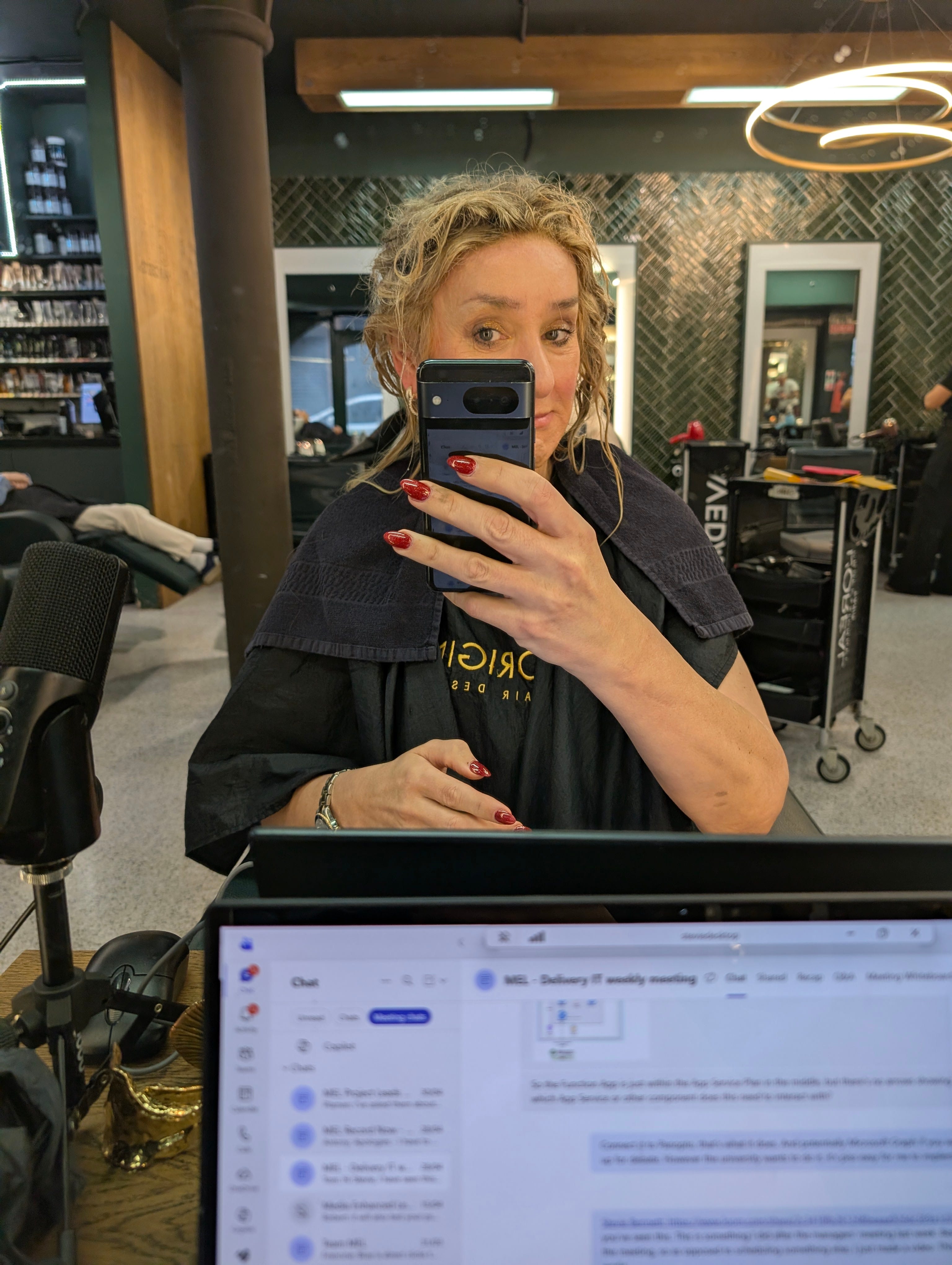
The strange route my life took from a working-class childhood in the north of England to this bizarre middle-aged existence as a blonde trans woman writing essays about identity while sitting beside a Chihuahua called Colonel Chesterton.
Dating apps reduce people to thumbnails.
Writing does the opposite.
Writing allows somebody to slowly encounter the texture of another mind.
And I think that may actually be closer to how human beings historically fell in love anyway.
Not through algorithms.
But through familiarity.
Voice.
Repeated exposure.
Conversation.
Curiosity.
Gradual fascination.
I still don’t know whether she’ll trust a man again. Perhaps she will. Perhaps she won’t.
But I’ve also slowly realised something else.
My guilt has to stop at the edge of being transgender itself.
I can feel sadness for what happened to the marriage. I can feel compassion for the shock, the grief, the collapse of the life we built together. All of that is real.
But beyond a certain point, other people’s reactions belong to them. Their choices, their interpretations, their anger, their healing, their future relationships those things ultimately sit within their own agency, not mine.
That distinction took me a long time to understand.
This is by far one of your best essays and rings true to my own experience as the wife of a transgender woman. When my husband came out to me my first reaction was "this is over, our marriage is over," and I moved out. And I got onto a dating app - the very same one we met on 18years ago. And at first I enjoyed the likes and the admiration but then I also missed the connection of emotional intimacy I had with my husband, and I realized that connection could not be replaced and ultimately was what drew me back to her. Of course here I am now, a heterosexual woman about to turn 50 who is moderately attractive with a successful career, athletic achievements and a strong social network - on paper I could probably easily find another partner. But I love the person I married and I choose to stay with her, even if it means a radical shift in the relationship.
Wise words.