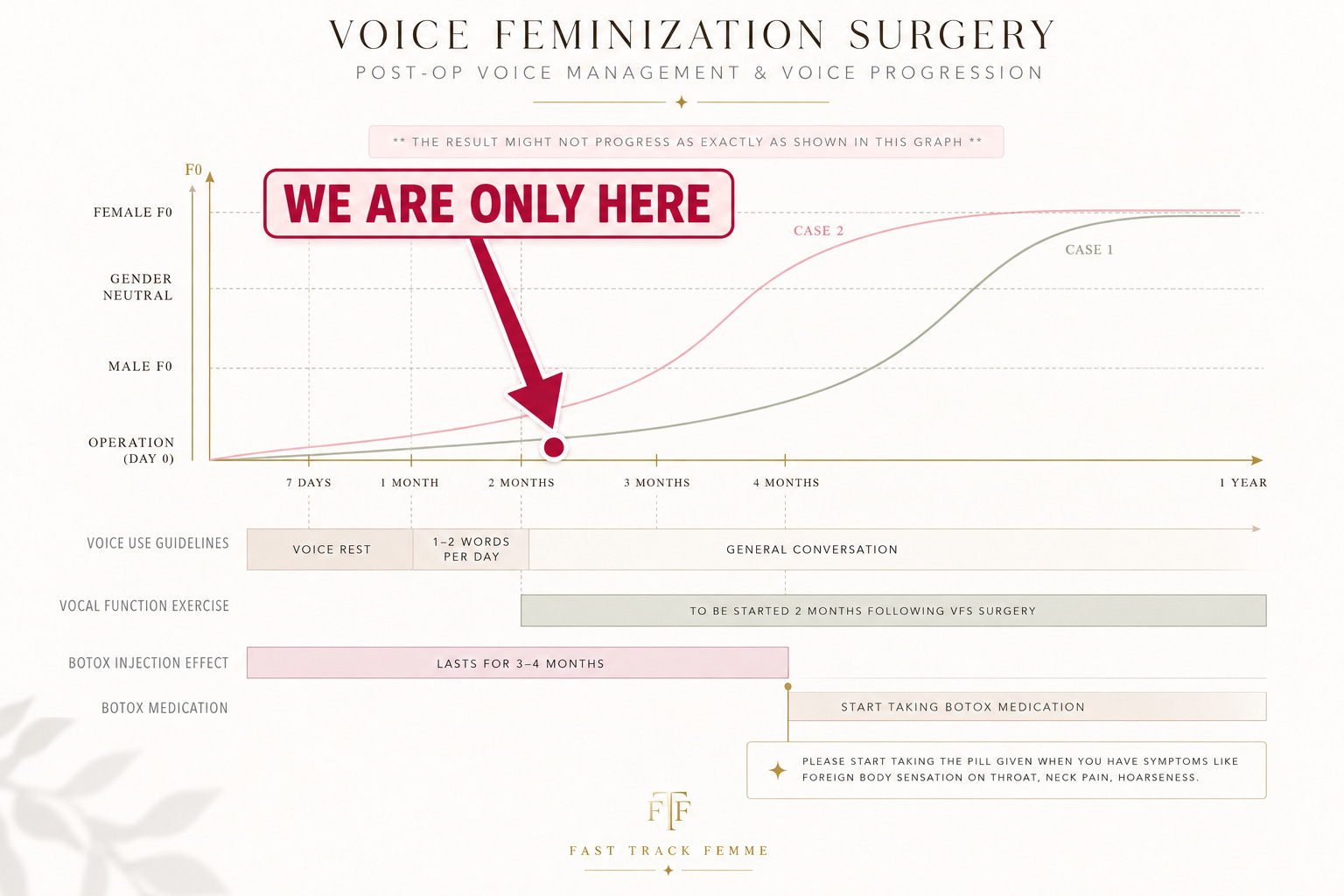
An aside: Okay, this is a big deal for me. This is the first time I’ve actually done this voiceover in my voice. We are still only at the two-month phase now, and so we haven’t really done a lot in terms of altering pitch, etc. It’s better than it was, but we’ve got a long way to go. Hopefully I’ll record with my voice over the next few months and it will sound better. We will see.
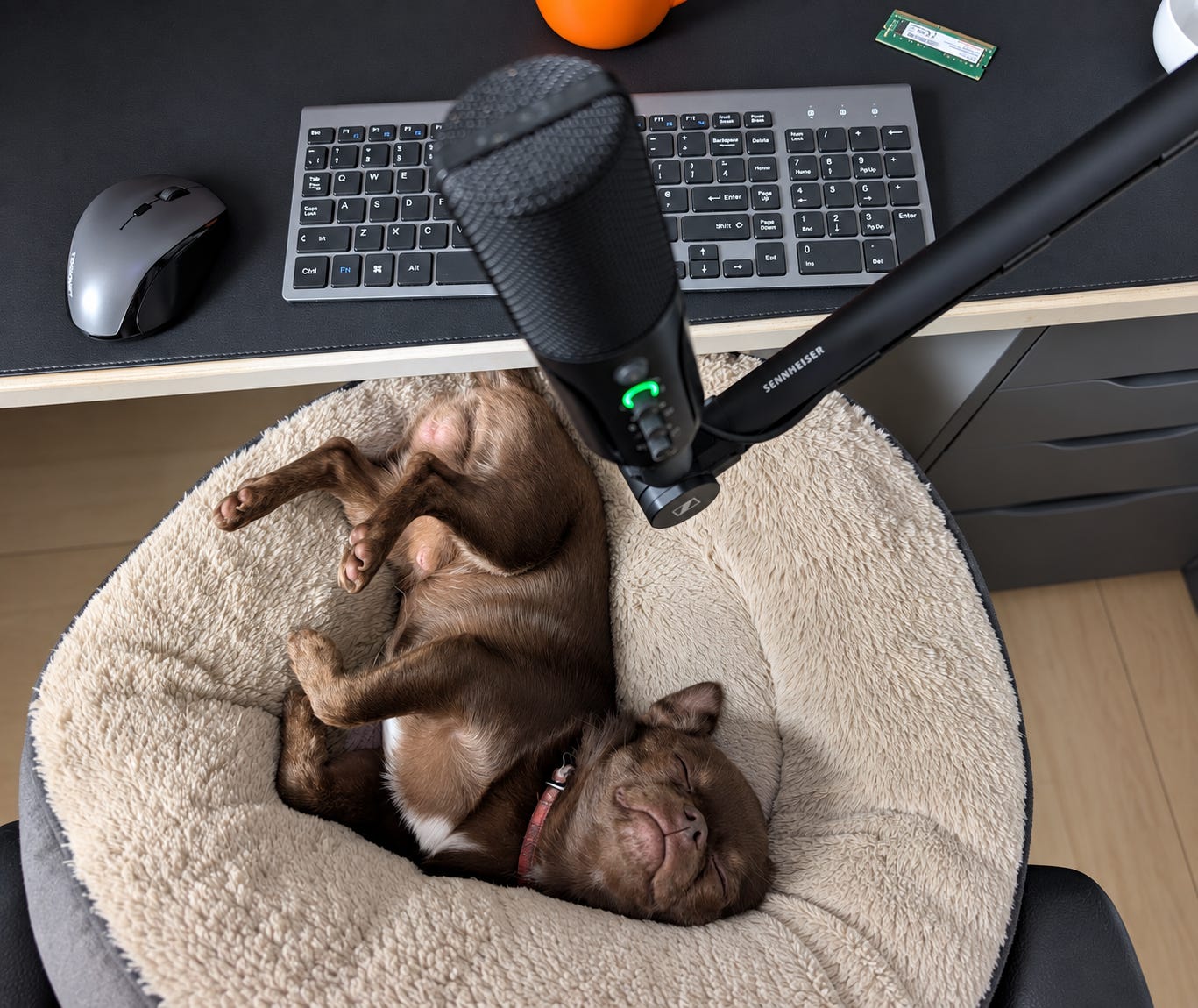
It’s Sunday morning in rainy Cork and I’m sitting in my office with Chester on my knee, his favourite place when I’m working.
Thank God he’s a chihuahua and not a Labrador.
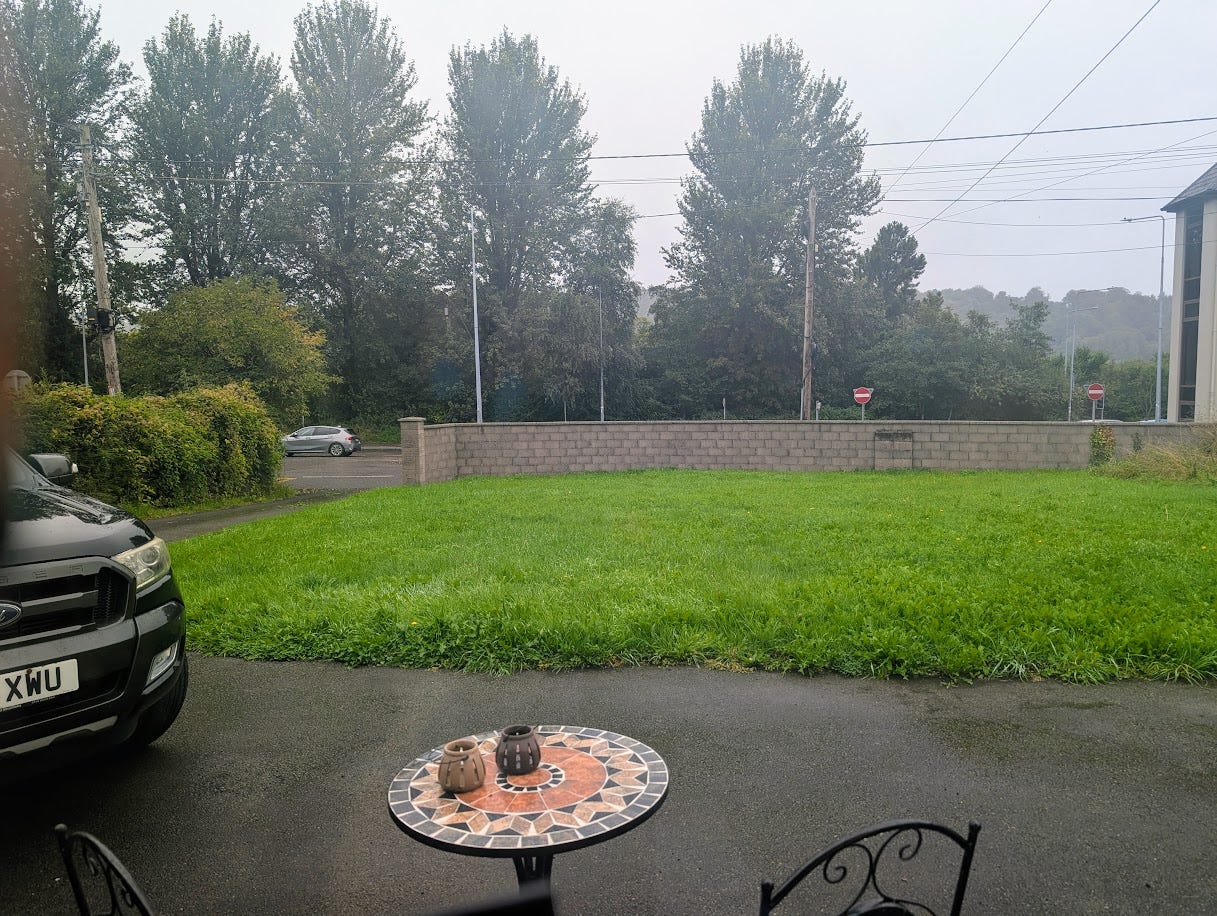
I’m looking out of the window at the grass, which has now turned into a meadow after three weeks of neglect, and trying, for about the fourth time, to write an essay I’ve wanted to write for a very long time.
Over the last couple of years I’ve had a lot of conversations with trans women about mental health. I’ve never wanted to break anybody’s confidence, so the people in this essay are composites. Circumstances have been altered, timelines moved, details merged. The psychology is real. The biographies are not.
What has stopped me writing it before is that I’ve never quite known what the question was.
I think I do now.
Thanks for reading Fast Track Femme! Subscribe for free to receive new posts and support my work.
Why do so many transgender people seem to struggle with their mental health?
Even writing that makes me uncomfortable because I know exactly what people hostile to us will do with it. Aha, they’ll say. There you are. You’re all mentally ill in the first place.
No.
It really isn’t that simple.
But I am equally unsatisfied with the opposite explanation, which is that the whole thing can essentially be filed under minority stress and we can all go home. Minority stress is real. Rejection is real. Discrimination is real. Fear is real. I have experienced enough of all of them to have no interest in pretending otherwise.
But I don’t think they explain everything.
So which came first?
The chicken or the egg?
Are some people already psychologically vulnerable before transition? Does dysphoria create that vulnerability? Does transition improve mental health while simultaneously putting it under enormous strain? Does the reaction of everyone around you do the damage? Does passing matter? Does money matter? Does age matter? Does social media make the whole world feel much more frightening than the one outside your front door?
Or have I simply met an unusually troubled bunch of transgender people and built a theory around a distorted sample?
That last possibility deserves taking very seriously.
My introduction to Transgenderland was hardly random.
Before I transitioned, I searched obsessively for examples of what was possible.
Not research in the proper sense. More like longing with Google.
I found trans women who represented something I wanted to believe could happen to me. Successful women. Beautiful women. Women who had transitioned late and somehow landed elegantly on the other side.
And, if I’m being completely truthful, I also performed a private feasibility study while scrolling.
I think I could look better than that.
I think I could look better than that.
I think I could look better than that.
Oh. Probably not her.
I think I could look better than that.
Awful? Maybe.
Human? Definitely.
I wanted to know what was possible.
Eventually I joined an online fitness community for trans women. The fitness was almost incidental. What I really needed was people. At that point almost everybody from my previous life had rejected me, so I entered eagerly.
And holy fuck.
My previous social world had been almost comically respectable. Bankers, architects, teachers, doctors, professionals. Nice houses. Sensible jobs. Dinner parties. Ocado.
Then suddenly I was surrounded by addiction, psychiatric crises, interpersonal chaos, paranoia, people falling in and out with one another, families in pieces. For a while I developed what I can only describe as an uncomfortable Queen Bee of Normality feeling.
Am I the only person here whose life isn’t permanently on fire?
But the obvious problem with that conclusion is that my previous world had been massively filtered. I just hadn’t noticed the filters: education, career, income, geography, marriage, professional networks, social class, temperament.
Transgenderland selects primarily on one thing.
Being transgender.
That is an incredibly broad filter.
And a support community filters again for people actively looking for support.
Perhaps I had walked into the psychological equivalent of A&E and concluded everybody in Britain had a broken leg.
Instagram gives you the opposite distortion. Look there and you can find an endless parade of gorgeous young trans women who appear to have their shit spectacularly together. Perfect hair, tiny waists, friends, holidays, crop tops, smiling into the camera. Happy as Larry.
But Instagram is no more representative than a support group. The algorithm does not preferentially serve you somebody lying under a duvet having a nervous breakdown.
So somewhere between the support group and the impossibly glossy reel, there must be something resembling reality.
And reality, from what I can see, is wildly varied.
I know a woman who remains deeply unhappy after transition. She has a close relationship with her child and, from where I stand, things in her life that I would once have given almost anything for.
One night she was particularly low and I said something like, “At least your child still talks to you.”
“Yes,” she said. “She’s asleep beside me.”
That stopped me.
I had not seen my own children for more than a year.
I was tentatively trying to rebuild those relationships from a distance, and here was somebody lying beside one of the things I missed most in the world and still unable to feel comforted by it.
That does not make her ungrateful.
It means we are psychologically different.
Her glass can be half full and she can somehow experience it as three-quarters empty.
I tend to do the opposite. Not always. I have had very bad periods. I have drunk too much at times. I have sat alone and wondered what the fuck I had done.
But eventually my engine restarts.
Work. Build something. Research something. Fix something. Make a plan. Move.
I love working. Give me something interesting and I become a small overcaffeinated dynamo. Perhaps that is healthy. Perhaps sometimes it is avoidance.
Probably both.
I have also known women whose addictions or other serious psychological problems predated transition by years. When things start to fall apart again, I have sometimes found myself saying some version of: get rid of what you have, call somebody qualified, and do it now.
Friendship has limits.
Sometimes the most useful thing you can do is recognise when you have reached yours.
And this is where the simple causal story breaks down. If somebody has a long history of trauma, addiction or psychiatric instability, it becomes intellectually ludicrous to meet her after transition and say: see, transgender people are mentally unstable.
There is an entire human biography sitting there.
Transition is part of it.
It is not all of it.
Then there are women whose transition itself goes reasonably well while the surrounding architecture of their lives begins to collapse. Marriage. Family. Home. Identity.
They sometimes frame the pain as people being unable to accept the real them.
And I keep wanting to say something less comforting.
Your partner can love you and still not be attracted to the woman you have become. Your children can love you and still struggle. Your transition can be right and still hurt other people.
Those things are not mutually exclusive.
Transition can be absolutely right and still create casualties.
And then there’s Sarah.
Sarah has a sensible job in procurement, a nice enough house, a cat and a garden she remembers to mow more often than I do. Her Instagram is full of material so catastrophically uneventful that I find it strangely soothing. A while ago she posted a short video of herself making lasagne.
Two hundred and eleven likes.
I adore Sarah.
Nothing is on fire.
She goes to work. She comes home. She potters. She meets friends. She does normal things and, as far as I can tell, being transgender is simply one fact about her rather than the organising principle of her entire existence.
Which raises the question I keep coming back to.
What separates one outcome from another?
And, more awkwardly, what separates me?
Because externally my transition was a fucking explosion.
My marriage ended. My relationship with my children collapsed. Friendships disappeared. Almost my entire previous social architecture went with it.
If the theory is simply that rejection destroys the mental health of trans people, I should be in pieces.
And yet my mental health improved.
Dramatically.
Before transition I was an angry man. Not permanently. Not cartoonishly. But increasingly angry.
Political obsession. Bitcoin libertarianism. Ayn Rand. Stupid ideological battles. Constantly projecting outward. Solve the world. Fix the world. Argue with the world.
Angry, angry, angry.
Looking back, I don’t particularly like him.
I sometimes wonder how my wife tolerated him.
Then I transitioned and enormous amounts of that simply evaporated.
That is the paradox at the centre of this essay.
Internally, transition made me healthier.
Externally, it blew my life to pieces.
The thing that improved my mental health was also the thing that created the circumstances in which I needed every ounce of mental health I had.
And that is why I distrust the idea that transition simply “makes you happy”.
Sometimes people approach it with the same magical logic as the miserable couple who decide to have a baby to bring them closer together.
You think: Oh Christ.
A baby may be wonderful. It may also introduce sleep deprivation, money worries, arguments, fear, responsibility and an astonishing quantity of shit.
Transition can be similar.
It can fix something absolutely fundamental without fixing everything else. It does not cure loneliness, addiction or trauma. It does not change your personality. It does not make your spouse gay. It does not manufacture friends.
It may solve the thing that made it necessary and introduce five completely new problems before lunchtime.
I knew this intellectually before I transitioned. I deliberately guarded against the utopian idea that once I became a woman everything would become marvellous.
This was not a ticket to Disneyland.
It was something I needed to do.
Then I would still have to live.
I think that matters.
Call it self-awareness, metacognition, expectation calibration, whatever you like. Some people seem better able to watch themselves thinking, to notice catastrophising, to distinguish “this is awful” from “everything is awful”.
That ability probably existed before transition.
And increasingly I wonder whether transition, rather than creating an entirely new psychology, often amplifies the psychological equipment you bring with you.
Not inevitably. Not in everyone. But transition places extraordinary pressure on identity, uncertainty, relationships, embodiment, grief and hope. Under that sort of pressure, the ways you already deal with the world suddenly matter enormously.
If you catastrophise, there is plenty to catastrophise about. If you need certainty, transition offers remarkably little. If you externalise every setback, there will be no shortage of people to blame. If you cope through work, humour, planning or sheer bloody-mindedness, those traits suddenly become extremely useful.
Transition may not create those tendencies.
It may simply turn the volume up.
Which brings me to late transition.
Late transitioners often enter this like excited puppies.
I did.
My God, the hope. The possibility. The clothes. The body. The idea that after forty or fifty years you might finally get to do this.
But there is something I would say to the person standing outside looking in.
You have no fucking idea how bad it can get.
I mean that seriously.
Not because transition is wrong.
Because by middle age you have built an enormous structure around yourself: marriage, children, career, money, friends, decades of shared history.
And suddenly every relationship in that structure has to renegotiate itself.
A twenty-two-year-old may have plenty to lose. But usually not forty years of accumulated architecture.
Do not mistake knowing that you need to transition for knowing what transition is going to do to your life.
Those are completely different forms of knowledge.
Then there is the question nobody particularly likes discussing.
Passing.
I suspect it matters enormously, although I think “passing” may be the wrong word.
The thing that matters psychologically is probably social friction: being stared at, being misgendered, seeing somebody hesitate, wondering whether you have been clocked, bathrooms, dating, talking on the phone.
I cannot know whether I pass completely.
Nobody can.
Unless you crack somebody’s skull open, you cannot know what they have inferred.
I can only observe how I am treated.
And these days I am treated normally.
Maybe people know.
Maybe they don’t.
I have no idea.
Would I have coped as well if my transition had not physically worked out as well as it has?
Probably not.
That sounds shallow.
But I’m not sure it is.
The entire endeavour is partly about embodiment.
My mother told me recently that I looked really pretty.
I welled up.
That mattered.
Appearance also carries extra freight during transition because it is doing several jobs at once: attractiveness, femininity, safety, belonging, and whether the whole bloody thing feels as though it is working.
That is a lot to hang on a mirror.
Then there is uncertainty.
Transition is an extraordinary exercise in surrendering control. You do not know exactly what hormones will do. You do not know what surgery will do. You do not know who will stay. You do not know how your children will react. You do not know whether dating will become easier or impossible.
At one point, before my first major surgery, I stood naked in Istanbul in front of a surgeon and several members of staff while they drew lines all over me and discussed my body in Turkish.
Breasts out. Loose skin. Penis. Everything.
Hmm.
What shall we do with this one?
There is no elegant Instagram caption for that.
Transition contains indignity, fear, disappointment and uncertainty alongside all the joy.
You need to be able to tolerate some of it.
And I am not sure our communities are always very good at saying that.
I understand why.
Trans people are attacked relentlessly. When anything nuanced can be dragged out of context by somebody who thinks your existence is evidence of social collapse, nuance starts to feel dangerous.
So slogans emerge.
It isn’t a choice. Be yourself. Live authentically. Everything will be better.
Some contain important truths.
But slogans are poor preparation for enormous life events.
“Be yourself” is emotionally lovely.
It is not a risk model.
And if somebody is about to reorganise almost every important relationship in their life, perhaps we owe them more than encouragement.
I also think the internet can make all of this worse.
Some trans people I know live in a state of almost permanent political alarm. The threats they worry about may be real. I am not qualified to tell them otherwise.
But I sometimes want to ask a much smaller question.
What actually happened to you today?
Not online.
Today.
You got up. You ate breakfast. You went to work. You came home. You fed the dog. You went shopping. Perhaps someone looked at you. Perhaps nothing happened at all.
Online reality and lived reality are not always the same thing.
Spend enough hours consuming material telling you that the world hates you and eventually your nervous system may start behaving as though the mob is permanently outside your front door.
Again, perhaps I find that easier to say because I move through the world with relatively little social friction.
That caveat matters.
So where does this leave the chicken and the egg?
With something messier.
I don’t think there is one causal arrow.
Some people arrive at transition carrying serious psychological problems. Some have been damaged by years of dysphoria. Some experience transition as an enormous release and then discover that the release came with divorce, loneliness or financial stress. Some are treated badly by the outside world. Some encounter almost no hostility at all.
And underneath all of that sits the person who arrived at the starting line.
Their temperament.
Their history.
Their habits of thought.
Their coping mechanisms.
Their ability to live with uncertainty.
Their capacity to recover.
That is why I keep coming back to amplification.
Not as a law.
As the closest thing I have found to an explanation for why the outcomes can look so radically different.
Transition puts enormous force through a human life.
What happens next depends partly on where that force lands.
I have spent a lot of time wondering what clinicians are supposed to do with any of this.
I don’t know.
Genuinely.
My own path tells me almost nothing about conventional gatekeeping because money and determination allowed me to route around most of it. I decided I was doing this, and then I did it.
Every neat rule I invent immediately produces somebody for whom that rule would be disastrously wrong.
So I am not going to pretend I have solved clinical practice over breakfast.
What I can say is what I would tell the woman standing where I stood a couple of years ago.
The one staring at photographs.
The one imagining hormones.
The one wondering what she might look like.
The one thinking that perhaps, finally, she can live.
I would not tell her not to do it.
God, no.
I would tell her that she has absolutely no idea what is coming.
That she may become happier than she has ever been and lose things she cannot imagine losing.
That those two things can happen at exactly the same time.
For me, transition made me psychologically healthier and made my life objectively harder.
Both happened at once.
That contradiction is not a flaw in the argument.
I think it may be the argument.
For me, it was better on the other side.
Much better.
But better and easier turned out to be completely different words.
Thanks for reading Fast Track Femme! Subscribe for free to receive new posts and support my work.
I think the internet can make anything worse, and mostly does an excellent job of that. On making things better, it’s not so good. I can say that my ongoing transition has dramatically altered my emotions. I no longer suffer from crippling anxiety. I no longer struggle with talking with strangers. I have gone from being a complete introvert who would feel utterly drained after a long conversation with people to someone who feels absolutely energized after talking with strangers. I am finally able to publicly acknowledge that I never understood men, always felt unable to communicate with them, and always had to fight the urge to naturally gravitate towards talking with women simply to preserve the illusion of the façade of maledom that I projected.
But you’re right that transition introduces its own problems. Nothing about transition is a certainty. Can it be engineered into the state that you desire - yes, absolutely it can, within reason. As much as my wife would love it, I’m not going to look like Cindy Crawford. OK, I’d love it as well if I did look like her, but I’m realistic enough to know that that, sadly, is unlikely. And as with you, I am possessed of the willpower, the motivation, the means, and the energy to fast track my transition into a little over a year for all of the major bits. I realize that this is unusual, and I am grateful for my ability to do so, because the notion of remaining in a state of flux for years is anathema to me. Granted there will be some hangover after the fact, and it will be closer to two years in duration before I am truly “done done”, to borrow a phrase.
Which brings me to mental health. Is there an improvement in my mental health since my medical transition began? Yes, an astonishingly big improvement has occurred. In addition to that which I have noted earlier, I no longer get angry when driving and encountering the inevitable person on the road who does not drive in a way that I deem to be fitting, and if you saw how I drive, you would understand. The car offer is still available ;).
In fact, I almost never get angry any more, and I am much more able to express myself emotionally now that I no longer have to fear being regarded quizzically for acting in ways rather uncharacteristic of a male, but there are things that are now a much more significant part of my daily concern, some of them real, and some of them concerning from a distance. The difference is that these are societal and political in nature, rather than existential in nature. As you noted - will I get arrested for going to the “wrong” bathroom? Will I get assaulted for being transgender? Will I be discriminated against in employment because I am transgender? Will I be mocked, scorned in public, and so on?
These are all external stressors, whereas before my transition began, they were all mostly internal stressors. But at the same time, my childhood was rife with trauma, so much so that I have been repeatedly diagnosed with Complex PTSD, and I must necessarily continue working on those issues that remain as triggers for my C-PTSD. So in that regard, transition has not resolved anything other than the intense dysphoria and lack of belonging to myself that I felt. But what it has done is that it, in a remarkably short space of time, has given me the mental freedom, space, and energy to actually finally begin to address those issues. Without transition, not only would I have not been able to address them at all, I would quite simply no longer exist.
Your description of being an angry man before transition and a mentally healthier person now is exactly what I have observed with my wife. Pre-transition she lived as if the world was constantly out to get her. She assumed the worst in everyone, or at least all men, governments, people with authority. She was miserable, never satisfied with anything long enough to get true relief. I used to joke that if someone gave her $1 million she would complain about now having to find a way to spend it. She fixated on negativity, on everything going on that was wrong. It was exhausting to be around. Now, she is lighter and happier, but her transition definitely brought with it the same feelings you describe, the uncertainty on physical outcomes, on passing, on the impact of her transition on her personal life. She has moments where she is feeling particularly low and catastrophizes that the future she had envisioned with me will not happen, at least not how she had hoped. And you are right - the forums and groups are similar to experiences that I had when researching side effects of a progesterone IUD to deal with perimenopause. The only people writing online about it are the ones who had bad experiences. Based on what I read, it sounded like I would endure excruciating pain followed by periods that never stopped, when in reality I had the opposite experience. But people like me do not bother to write in those forums or Reddit threads. And you are also right that Instagram only shows the highlight reel, the women you look at and wonder how they ever could possibly have been born with a male body when they look the way they do now. It’s a mindfuck for sure. We need more people like you to share your experiences, your thoughts, and your thought process in particular. So thank you for writing this.



I think the internet can make anything worse, and mostly does an excellent job of that. On making things better, it’s not so good. I can say that my ongoing transition has dramatically altered my emotions. I no longer suffer from crippling anxiety. I no longer struggle with talking with strangers. I have gone from being a complete introvert who would feel utterly drained after a long conversation with people to someone who feels absolutely energized after talking with strangers. I am finally able to publicly acknowledge that I never understood men, always felt unable to communicate with them, and always had to fight the urge to naturally gravitate towards talking with women simply to preserve the illusion of the façade of maledom that I projected.
But you’re right that transition introduces its own problems. Nothing about transition is a certainty. Can it be engineered into the state that you desire - yes, absolutely it can, within reason. As much as my wife would love it, I’m not going to look like Cindy Crawford. OK, I’d love it as well if I did look like her, but I’m realistic enough to know that that, sadly, is unlikely. And as with you, I am possessed of the willpower, the motivation, the means, and the energy to fast track my transition into a little over a year for all of the major bits. I realize that this is unusual, and I am grateful for my ability to do so, because the notion of remaining in a state of flux for years is anathema to me. Granted there will be some hangover after the fact, and it will be closer to two years in duration before I am truly “done done”, to borrow a phrase.
Which brings me to mental health. Is there an improvement in my mental health since my medical transition began? Yes, an astonishingly big improvement has occurred. In addition to that which I have noted earlier, I no longer get angry when driving and encountering the inevitable person on the road who does not drive in a way that I deem to be fitting, and if you saw how I drive, you would understand. The car offer is still available ;).
In fact, I almost never get angry any more, and I am much more able to express myself emotionally now that I no longer have to fear being regarded quizzically for acting in ways rather uncharacteristic of a male, but there are things that are now a much more significant part of my daily concern, some of them real, and some of them concerning from a distance. The difference is that these are societal and political in nature, rather than existential in nature. As you noted - will I get arrested for going to the “wrong” bathroom? Will I get assaulted for being transgender? Will I be discriminated against in employment because I am transgender? Will I be mocked, scorned in public, and so on?
These are all external stressors, whereas before my transition began, they were all mostly internal stressors. But at the same time, my childhood was rife with trauma, so much so that I have been repeatedly diagnosed with Complex PTSD, and I must necessarily continue working on those issues that remain as triggers for my C-PTSD. So in that regard, transition has not resolved anything other than the intense dysphoria and lack of belonging to myself that I felt. But what it has done is that it, in a remarkably short space of time, has given me the mental freedom, space, and energy to actually finally begin to address those issues. Without transition, not only would I have not been able to address them at all, I would quite simply no longer exist.
And that, my friend, is the biggest win of all.
Your description of being an angry man before transition and a mentally healthier person now is exactly what I have observed with my wife. Pre-transition she lived as if the world was constantly out to get her. She assumed the worst in everyone, or at least all men, governments, people with authority. She was miserable, never satisfied with anything long enough to get true relief. I used to joke that if someone gave her $1 million she would complain about now having to find a way to spend it. She fixated on negativity, on everything going on that was wrong. It was exhausting to be around. Now, she is lighter and happier, but her transition definitely brought with it the same feelings you describe, the uncertainty on physical outcomes, on passing, on the impact of her transition on her personal life. She has moments where she is feeling particularly low and catastrophizes that the future she had envisioned with me will not happen, at least not how she had hoped. And you are right - the forums and groups are similar to experiences that I had when researching side effects of a progesterone IUD to deal with perimenopause. The only people writing online about it are the ones who had bad experiences. Based on what I read, it sounded like I would endure excruciating pain followed by periods that never stopped, when in reality I had the opposite experience. But people like me do not bother to write in those forums or Reddit threads. And you are also right that Instagram only shows the highlight reel, the women you look at and wonder how they ever could possibly have been born with a male body when they look the way they do now. It’s a mindfuck for sure. We need more people like you to share your experiences, your thoughts, and your thought process in particular. So thank you for writing this.