


Not what you should do. Not the correct way to transition. Just, finally, an honest account of what I actually did
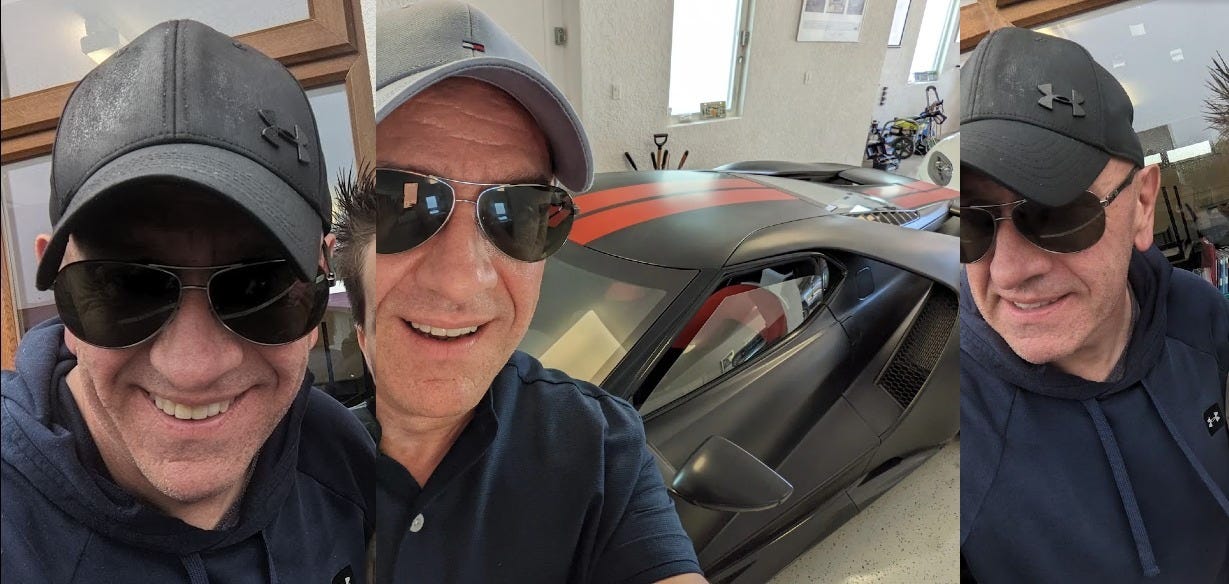
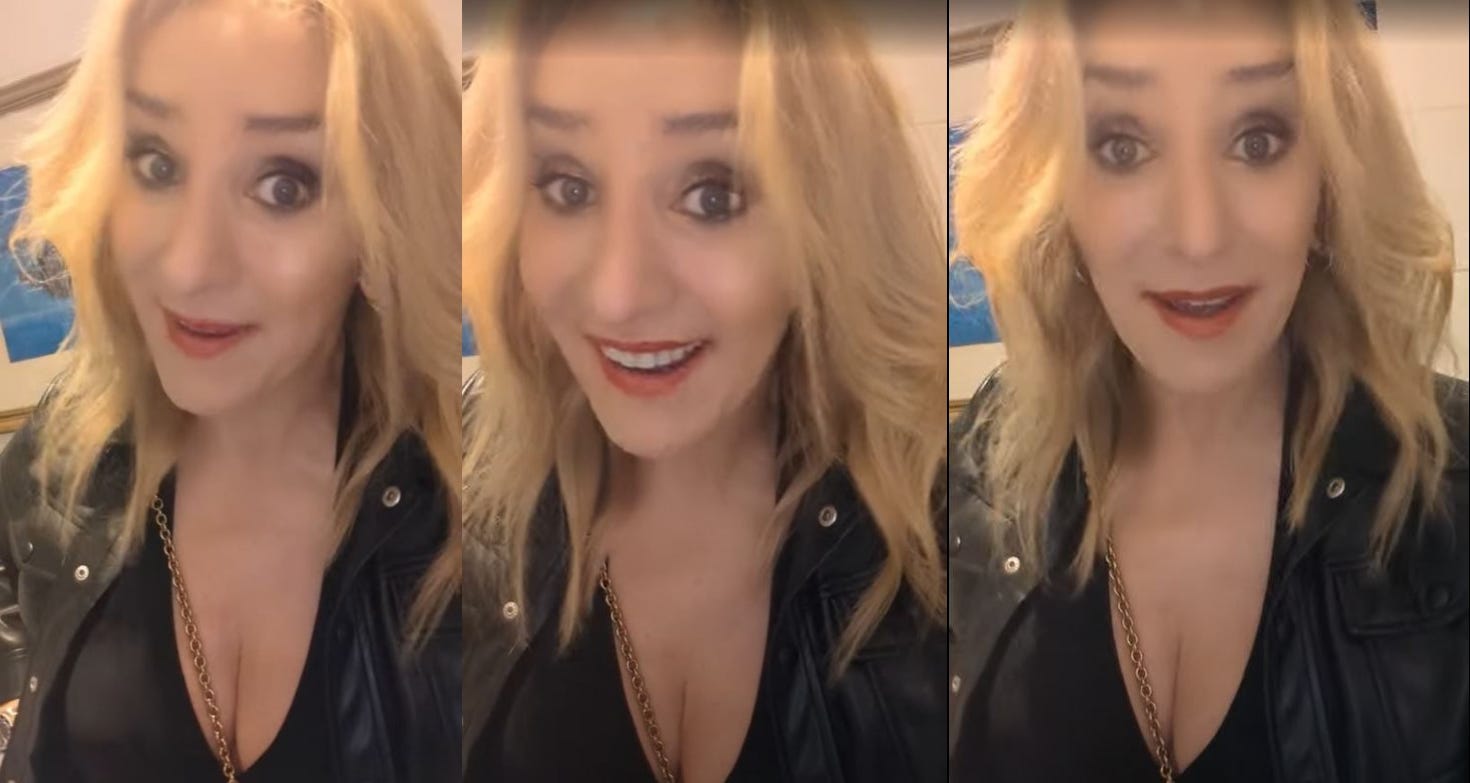
Well, well, well.
Apparently I am now established.
A few days ago I did an interview for Heroines of My Life, Monica’s transgender blog, which has been running for about ten years. There are hundreds of transgender women on there. I searched for a few women I remembered from years ago, women whose transitions had inspired me when I was still standing on the other side wondering whether any of this was actually possible.
There they were.
And from 15 September, apparently, there I will be too.
So. I’ve arrived.
Sort of.
This isn’t actually an article about that, although if Monica lets me, I’ll publish the interview here too.
This is the article I’ve been trying to write for nearly a year and have made a complete arse of about four times.
At one point, while recovering from bottom surgery, I tried to write about why I had gone to Thailand and how I had chosen surgeons. Then I started another article about how to assess different surgical options. Then, even worse, about nine months ago I started writing an incredibly arrogant article about how to transition successfully.
Dear God.
I had theories. I had frameworks. I had sections about embodied femininity. I had more frameworks. I had basically decided that, having transitioned for about five minutes, I had somehow reverse-engineered the entire subject.
I found it recently.
Slightly embarrassing.
So let me be clearer about what this one is.
This is a guide to what I did for my transition.
That’s it.
It is not a guide to what you should do. I’m not saying this was the optimal transition, or the safest, or the cheapest, or the most sensible, or the most emotionally enlightened.
It is simply the sequence of things I did, why I did them, what I was thinking at the time, and what I think about those decisions now.
That distinction matters to me because my thinking has changed.
I used to have this blueprint idea in my head: this is how you do it efficiently, this is the correct order, why on earth wouldn’t everybody do roughly what I did?
I don’t think that anymore.
People have different bodies, faces, finances, families, health, appetites for risk, dysphoria, ambitions and definitions of what a successful transition even means.
So this is mine.
Besides, I’ve learned something else over the last couple of years. Transgender people occasionally ask me for advice, I give it, and then they bloody ignore me anyway.
Probably for the best.
I ran it like a military operation
I have said before that I treated my transition like a military operation.
That sounds more dramatic than it was, but fundamentally it is true.
I had a fairly definite aesthetic idea in my head of where I wanted to end up, and I worked backwards from it.
I used a piece of software called Kanban Flow.
Every week I would rearrange the priorities.
What is number one?
What is number two?
What is number three?
What actual things am I doing this week?
At the beginning, the objectives were enormous.
Lose weight.
Sort out my skin.
Deal with facial hair.
Sort out my body.
Sort out my face.
Sort out my voice.
There was always something sitting at the top of the board demanding attention.
I still use the same system now.
The funny thing is that the board has gradually become much more boring.
Voice rehabilitation.
Finish facial electrolysis.
Skin treatments.
Possibly RibXcar.
General maintenance.
I think that is probably progress.
At the beginning, though, I had a visual target.
There were five or six transgender women around my age whose transitions had made a huge impression on me. Most of them have disappeared from public view now and I won’t name them. One who is still very public is Victoria Perera.
What struck me about these women was not simply that they had had good surgery.
They looked like women.
More than that, they seemed to understand how to look like women.
That was what I wanted.
Good face. Good skin. Good brows. Good makeup. Good clothes. Good mannerisms. Good surgery.
Not young. Not some Instagram fantasy of being 23 again.
I was in my fifties.
I wanted to look like an attractive, elegant middle-aged woman.
And I’m not going to pretend attractiveness didn’t matter.
It mattered enormously.
Passing mattered too, obviously, but I did not want merely to cross some technical gender threshold while hating what I saw in the mirror.
I wanted to look good.
That was always part of it.
The thing I hid underneath all the planning
Looking back at the organisation, the dates and the way I moved from one thing to the next, I probably look far more confident than I actually was.
I wasn’t confident at all.
I was terrified.
I have videos from early transition where I used my webcam almost like a confessional diary. I look back at some of them now and find them heartbreaking.
There is one from February 2025 that I have watched perhaps a hundred times.
I am sitting in my office and I say something like this:
In two years’ time, I want to be walking down Oliver Plunkett Street in Cork, with my earrings on, wearing a nice coat, heading back to my Range Rover Evoque.
Someone will look at me and say to her friend:
“Is that woman transgender?”
And the friend will say:
“Yes. I think so. I’m not sure. But she looks all right, doesn’t she?”
And I say:
That’s my dream.
Then I joke that what will probably really happen is people will look at me and think I look ridiculous.
That was where my expectations genuinely were.
Not stealth.
Not perfection.
Not some fantasy where nobody would ever know.
I hoped I might look like a reasonably attractive trans woman who made people hesitate for a moment.
I was scared I was about to throw my entire life away and end up looking awful.
And despite all the planning, I don’t think I properly started believing this could work until June or July 2025.
There is another video from around July where I am sitting in my office cutting between footage of myself then and an old video of myself as a man.
I am laughing.
Actually giggling.
“I cannot believe how much I’ve changed.”
I think that was the point where my internal narrative shifted from:
God, I hope this works.
to:
I think we can do this.
January 2025: the nuclear option
Before the major surgeries, there was skin.
My skin was pretty poor around my face.
I had acne pitting around my chin, old shaving damage, texture problems and generally forty years’ worth of evidence that somebody had been dragging a razor around my face.
I had already been having Botox and fillers for a few months, and my cosmetic doctor told me that the nuclear option for the skin was fully ablative CO₂ laser.
I had it done on 11 January 2025.
I would love to show you the pictures.
I am not going to.
I looked like an actual monster.
Not slightly pink.
Not a bit swollen.
A monster.
For about a week I hid in the house.
When I had to do the school run I put on sunglasses and a woolly hat and tried to move through society without frightening children.
It was brutal.
It also made a massive difference.
A few months later I started doing Sculptra and eventually had roughly four or five sessions.
In February I started Botox into my masseter muscles to reduce the bulk of the jaw muscles. I had it done again around July.
I remember turning up at my cosmetic doctor armed with an enormous amount of ChatGPT-assisted research into transgender Botox techniques.
She looked at me as if she had accidentally booked an escaped medical researcher.
I have also had filler in the medial cheek to soften some remaining hollowness, a couple of millilitres in my lips because nature had given me practically none, and the usual Botox every few months.
In February 2026 I did another round of CO₂ laser, mainly on my chin.
That one disappointed me.
The first treatment made a huge difference.
The second one seemed to do remarkably little.
My chin is still one of the things I am not entirely happy with.
Which may already tell you something about the nature of all this.
The goalposts do move.
The face was the big one
Nothing mattered to me as much as my face.
Nothing.
Not bottom surgery.
Not breasts.
Not my voice.
The face was easily the most important thing.
I had spent months playing with AI and trying to create realistic approximations of what I might look like after surgery. I studied other women. I studied foreheads, jaws, chins and noses until I could probably have sat an exam in facial geometry.
The strange thing is that, initially, I deliberately chose not to make FFS my first major operation.
There was a period early on when I still genuinely believed I could save my marriage.
So I started by speaking to ordinary cosmetic surgeons about a facelift, neck lift and rhinoplasty.
My idea was that I could do those first, sit with the result for perhaps a year, try not to make things any more difficult at home, and then maybe come back later for the forehead, chin, jaw and bone work.
In March 2025 I went to see Facial Team in Spain and explained this.
I effectively told them:
“I know this is completely arse-about-tit surgically, but I have personal reasons.”
They thought it was arse-about-tit too.
They were right.
I was trying to organise surgery around preserving something in my personal life.
By May, I knew my marriage was over.
And once I accepted that, my entire strategy changed.
The question stopped being:
How do I make this easier for everybody around me?
and became:
If I am doing this, what actually gives me the best chance of the result I want?
Facial Team remained my likely choice for perhaps another couple of months.
There were things I liked about them.
But I became increasingly uneasy about the aesthetic direction.
I went through their website looking particularly at older women.
I kept seeing phrases like:
“natural result”
“subtle”
“not overdone”
And during consultation I repeatedly heard versions of:
“You need to be realistic about what can be achieved at your age.”
Now, they did not literally say:
“Be realistic, love, you’re an old bag.”
But that was increasingly how it felt to me.
And my brief was quite specific.
I said:
I want to look like a woman over 50 who has had a bit of work done.
I didn’t particularly care if somebody could tell I’d had cosmetic surgery.
I cared whether it was good cosmetic surgery.
Those are not the same thing.
How do you choose a surgeon?
This became one of the harder questions.
Initially, I put enormous weight on before-and-after photographs.
Then I started thinking about what those photographs actually mean.
Imagine a surgeon performs a thousand FFS procedures.
There will almost certainly be five spectacular results.
Those five will be on the website.
What I actually wanted to know was:
What does the median result look like?
And, even more specifically:
What happens to someone my age, with my starting face, my skin, my bone structure and my particular problems?
That is almost impossible to know.
The ideal experiment would be to take a hundred sets of identical transgender twins, send them to different surgeons and compare the results.
Sadly, this research design appears to have some ethical shortcomings.
So over time I relied on two things:
before-and-after photographs, and personal recommendation.
Photographs told me whether a surgeon was capable of producing an aesthetic I liked.
Recommendation gradually became more important.
Several of the women whose results had originally made me believe transition could work at my age had been treated by Jordan Deschamps-Braly.
Eventually I thought:
Why am I gravitating towards Spain because it is convenient when the results I actually admire seem to be coming out of San Francisco?
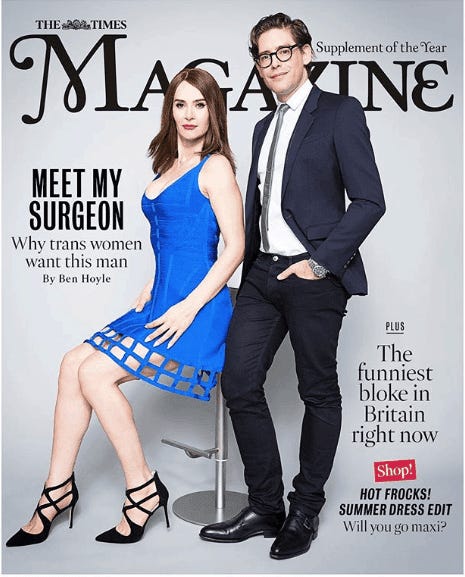
June 2025: Turkey first
Before I got to San Francisco, however, an opportunity opened up to deal with my body.
Years earlier I had gained a lot of weight and later lost it. I was left with poor skin around my abdomen that was never going to disappear through diet or exercise.
So the core procedure was a tummy tuck.
My theory at this stage was very simple:
If I am going under general anaesthetic, I want to get as much useful work done as reasonably possible.
So I added lipo 360.
And a Brazilian butt lift.
Because who doesn’t want one of those?
I was also very tempted to have breast implants done at the same time.
Right until the last few days, I was considering it.
Again, I held back because of family circumstances. I thought coming home having visibly altered absolutely everything at once was perhaps a little much.
With hindsight, I probably would have done the breasts in that operation too.
The surgery was scheduled for 6 June 2025.
I went in, stripped off, stood naked while the surgeon and his assistant drew circles and arrows over me showing where they were going to remove fat, cut skin and inject fat.
They kept pointing at different bits of me and saying:
“Not much fat.”
“Not much fat.”
“Not much fat.”
Probably the nicest insult I have ever received.
Then I went into theatre.
I was strapped down.
Anaesthetic.
And then I woke up.
Nothing hurt.
Nothing had happened.
There was a cardiologist there. The anaesthetist. Other people. Somebody translating.
They told me they had aborted the operation because my heart rate had dropped badly under the anaesthetic.
After they left, I burst into tears.
My first thought was:
That’s it. I’ve half-transitioned myself and now I’m stuck.
I thought maybe I simply could not tolerate general anaesthesia.
And within minutes I started bargaining with myself.
It’s all right.
I don’t look that bad.
I can live with this.
It could be worse.
There was an added reason I was terrified.
I had previously had Graves’ disease. My heart had misbehaved in the past and had gone into AFib a couple of times. I had failed an ECG before.
So cardiac testing scared the living daylights out of me.
They put me on a 24-hour ECG.
Then they put me on a treadmill with another ECG connected and gradually increased the speed.
I was pretty fit at the time.
They turned it up.
I said:
“Higher.”
They turned it up again.
“Higher.”
Eventually they stopped.
“That’ll do.”
“I could have gone much higher than that.”
Apparently even terror does not entirely suppress my competitive instincts.
The cardiologist eventually came back and told me my heart was healthy.
The problem was how my heart rate had responded to that particular anaesthetic approach.
They could alter the protocol.
All systems go.
The relief was enormous.
On 7 June, they performed the surgery.
When I woke up properly after the tummy tuck, I discovered something else.
Pain.
Christ alive.
It felt like somebody had shot me through the stomach.
I remember basically shouting:
“Morphine. Morphine.”
Somebody came along, gave me some, and the modern pharmaceutical industry restored order remarkably quickly.
The first three days were fairly rough.
Then it improved much faster than I expected.
About two weeks after I came home, I put on something I called my benchmark dress.
It was a fake pleather bodycon dress.
Not something I intended to wander around Cork wearing.
It existed almost as a measuring device.
I still had post-operative leggings on underneath.
I put it on, stood in front of the mirror and took a photograph.
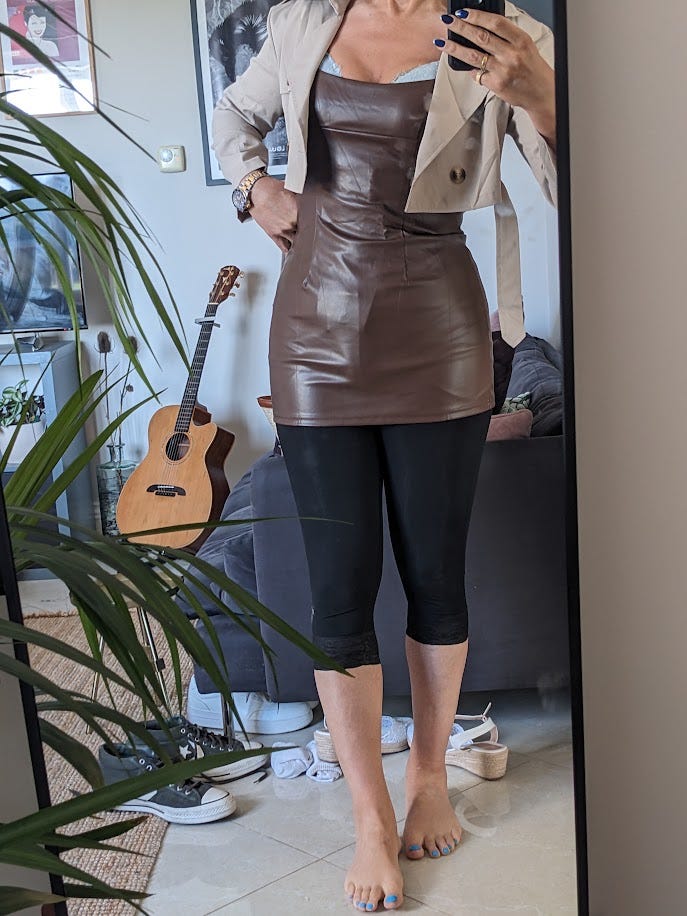
And I remember thinking:
Holy fuck. I look like a woman.
That was the moment.
Not “my waist looks better”.
Not “this surgery has worked”.
It was the first time I looked at the complete silhouette and thought:
That is unmistakably female.
The hotel in Turkey was almost worth an article of its own.
It was included in the surgical package and seemed to be populated almost entirely by men recovering from hair transplants and women recovering from mummy makeovers.
We all shuffled around with drains hanging out of us, nodding politely at each other.
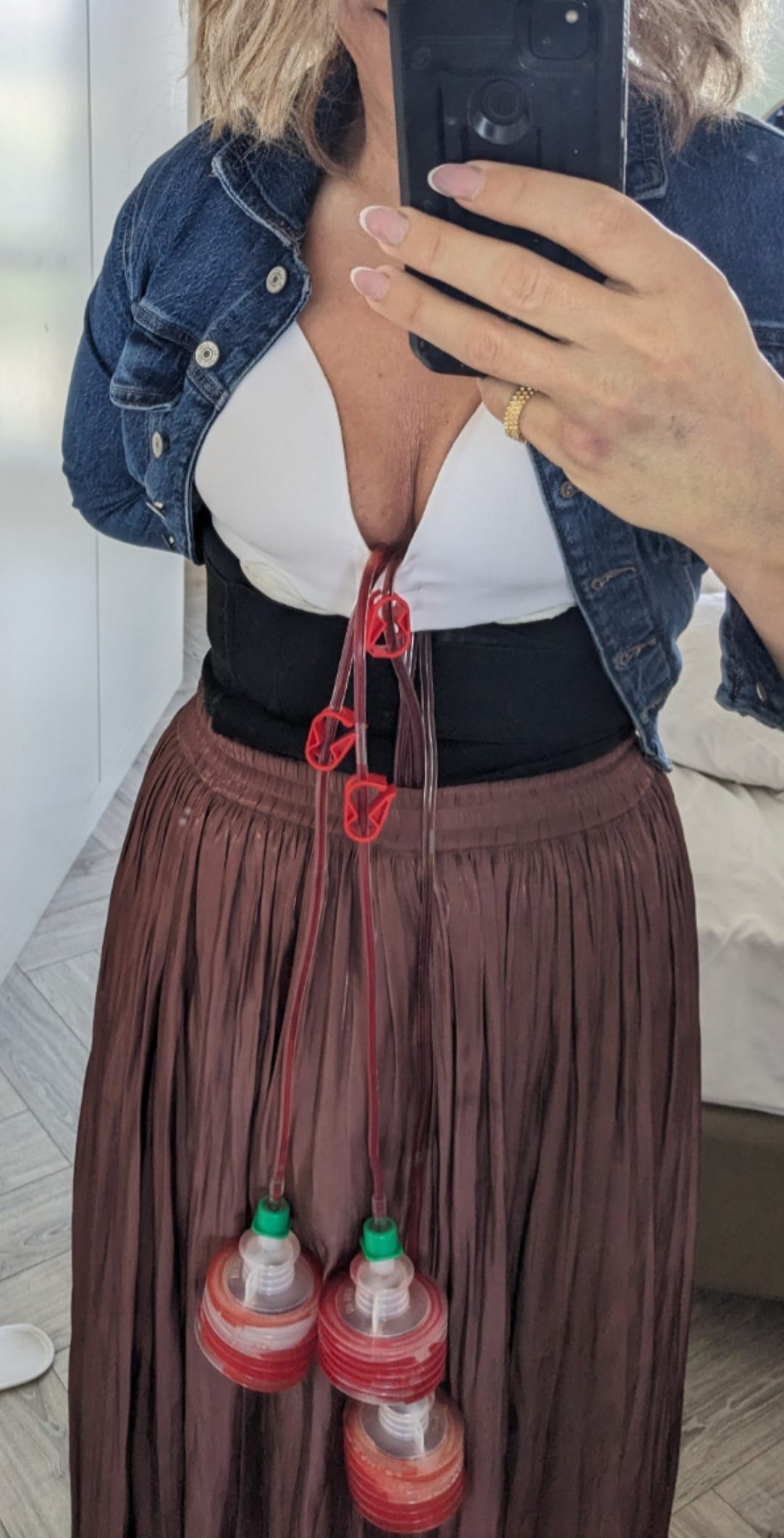
A sort of international cosmetic-surgery veterans’ association.
The whole operation was under €10,000.
For that particular group of body procedures, Turkey made sense to me because it was a huge, high-volume cosmetic-surgery market and this kind of work was routine there.
2 August: San Francisco
On 2 August I flew to San Francisco to consult Jordan Deschamps-Braly.
I stayed at the Taj Hotel beside his office.
The barman and I got talking.
“He comes in here.”
“What do you mean?”
“His name is on the bar.”
I walked over.
There was a bloody plaque with Jordan Deschamps-Braly’s name on it.
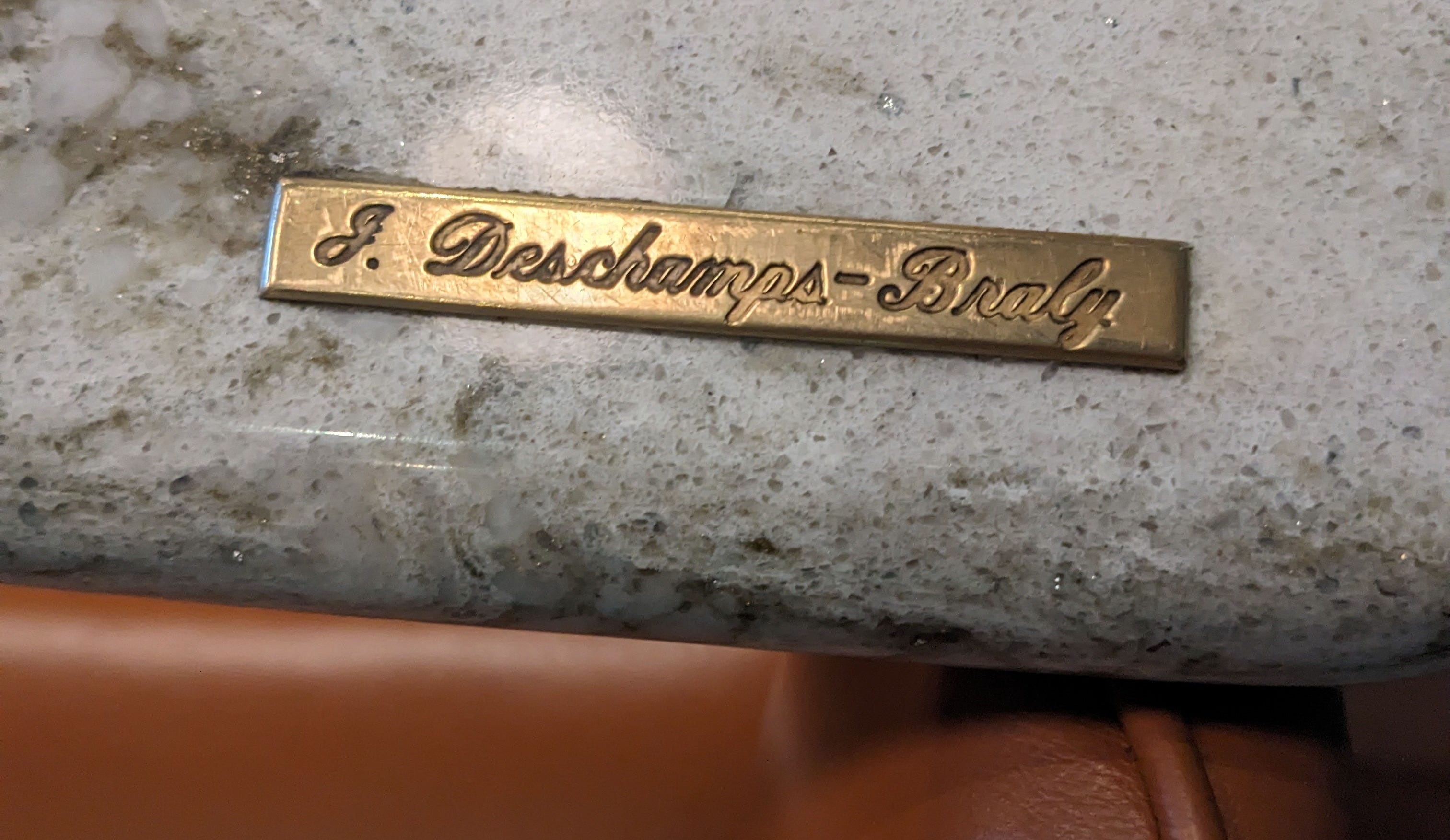
Then one day, while I was sitting there, he walked in.
The barman gave me a little wink.
So I went over.
Jordan looked at me.
“Who the hell are you?”
“I’m tomorrow’s patient. I’ll see you then.”
He was lovely.
I liked him enormously.
He had some connection with Manchester and knew an alarming number of English and Northern English expressions, which was quite funny coming from a Californian surgeon.
I was impressed.
I paid my deposit.
I was ready to proceed.
Then Thailand appeared.
Someone whose opinion I trusted in transgender medicine said to me:
“He is very good. But I don’t send my patients to him. I send them to this surgeon in Thailand.”
That threw everything up in the air.
I did not have the same volume of before-and-after photographs.
It was not about cost.
I trusted the recommendation.
There was another factor.
Other surgeons had told me the facelift and neck lift would need to be separated from the skeletal FFS work.
The surgeon in Thailand was prepared to combine them.
He was also prepared to do my breast augmentation at the same time.
For someone trying to compress the surgical phase into as few anaesthetics and recoveries as possible, that mattered.
So, at the last minute, I changed course.
7 and 8 September: seventeen hours
I flew to Thailand on 7 September.
The operation was too large to perform in a single day.
It became roughly 17 hours of surgery across two consecutive days.
Day one:
breast augmentation
lip lift
tracheal shave
open rhinoplasty
The nose was a major reconstruction.
They harvested rib cartilage, opened the whole thing and rebuilt it.
Then I woke up knowing that the following morning I was going back under.
And day two was the bigger one.
Type III forehead reconstruction
titanium plate
facial fat grafting
genioplasty
jaw work
deep-plane facelift
neck lift
I have scars running behind my ears, around them, across my forehead and down the other side.
If you joined everything together at the back, you could probably peel the skin off my entire head.
That recovery was the hardest of the lot.


Not vaginoplasty.
FFS.
Simply because of the sheer volume of surgery.
I needed ice packs constantly.
I was swollen, bruised and absolutely battered.
But psychologically I dealt with surgery surprisingly well.
I approached it in much the same way I used to approach triathlon or endurance sport.
This part is going to be horrible.
Fine.
It ends.
Get through it.
By the time I reached voice surgery months later, the whole theatre ritual had become almost familiar.
Here we go.
Anaesthetist.
Hello boys.
Surgeon.
Nice to meet you.
Let’s do this thing.
Seeing my face
I stayed in Thailand for a month after the facial surgery.
For much of that time I looked as though I had been attacked by agricultural machinery.
But even very early on, there were glimpses.
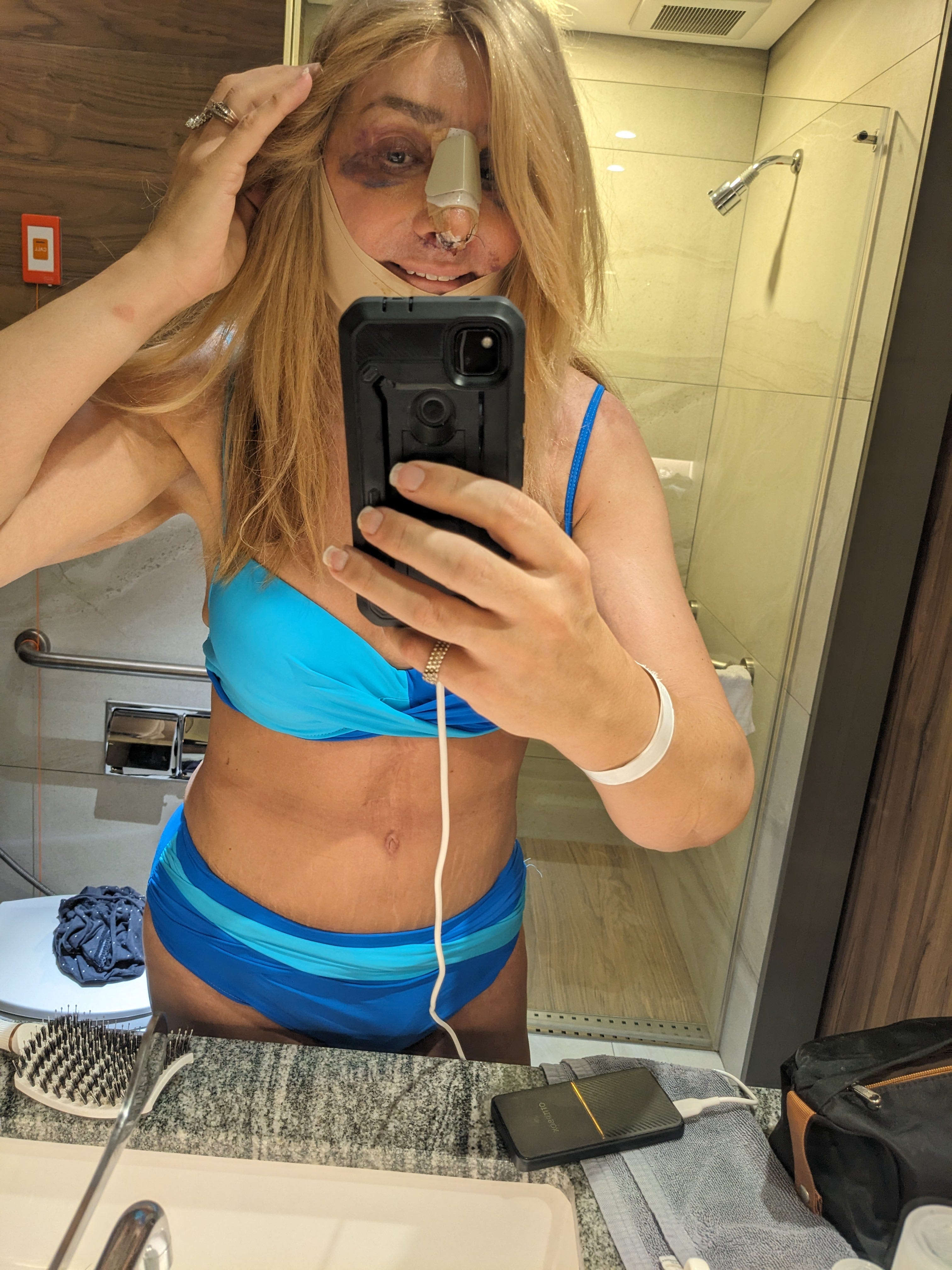
There is a photograph of me in a bikini only seven or eight days after surgery.
I was still bruised and swollen.
And even then I remember looking at it and thinking:
Jesus Christ.
I look like a woman.
Then, towards the end of my stay, the clinic offered to take me to a makeup artist.
The idea was to disguise the remaining bruising and let me see the face underneath properly.
I cannot imagine many clinics in the West offering that.
Obviously I said yes.
She did the makeup.
I looked in the mirror.
And for the first time I could really see it.
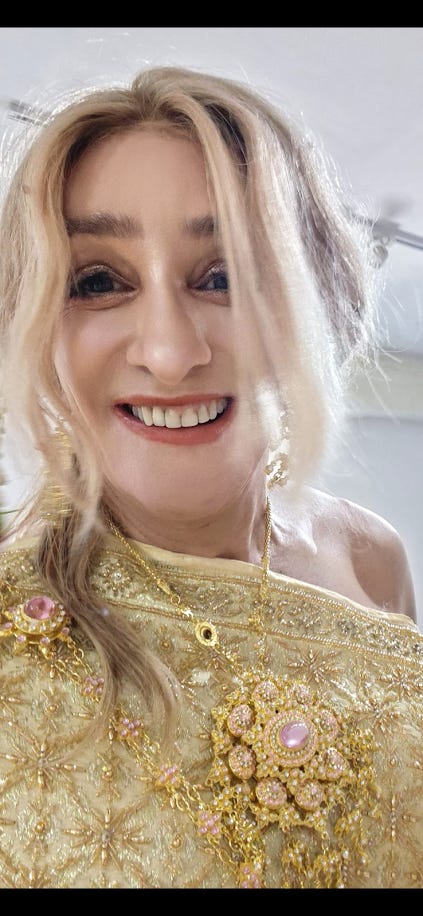
The strange thing is that psychologically I accepted the new face almost immediately.
Within a couple of weeks it simply felt like mine.
The physical settling took vastly longer.
The forehead came in relatively quickly.
The chin took months.
The skin around the jaw and neck kept changing.
And the nose took the longest of all.
The tip gradually lifted and refined itself over months.
I used to look at it and think:
I’m not sure.
Now I actually quite like it.
If I compare photographs from one month after surgery with photographs now, the difference is enormous.
At the time I thought the one-month result looked wonderful.
Now I look back and think:
Oh dear.
I had a chin like Bo’ Selecta.
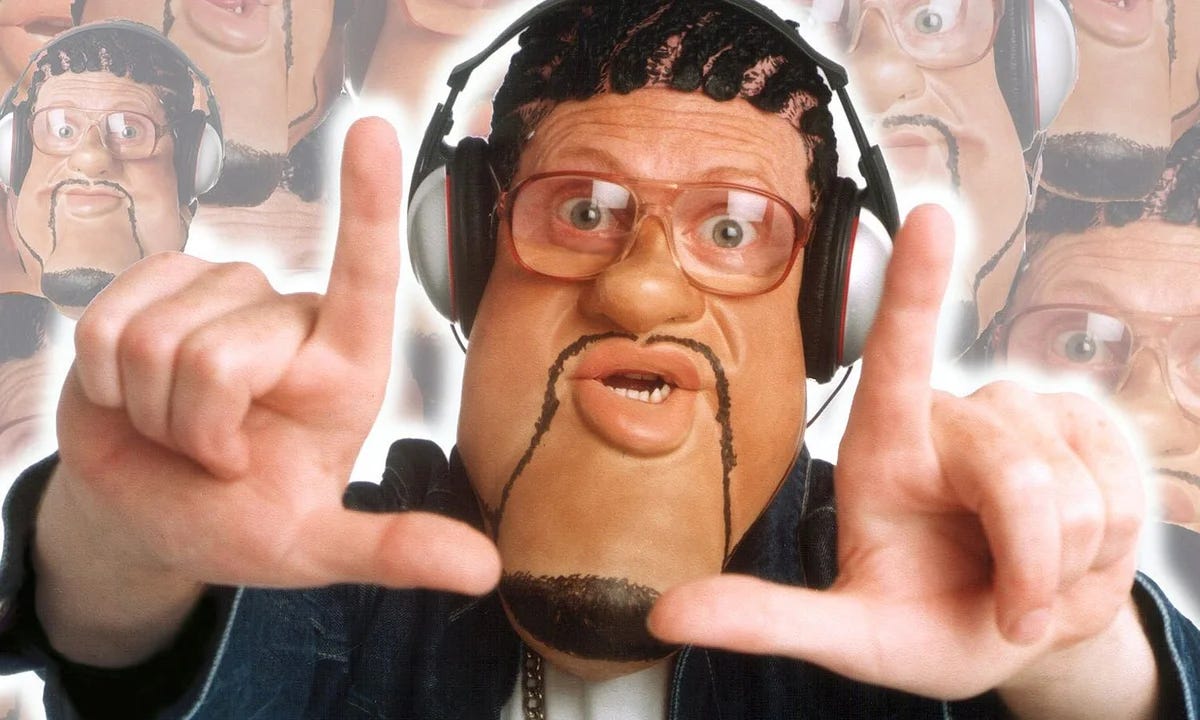
That is one of the stranger things about facial surgery.
A couple of millimetres here or there make an enormous visual difference.
At one month I now see swelling.
At one year I see my face.
And the part I love most surprised me.
My eyes.
I never particularly thought:
I hope I end up with lovely eyes.
But they are my favourite thing now.
I think they look natural.
I think they look feminine.
I like them.
I never expected that.
There are still things I would change.
I wish my nose were slightly smaller.
The surgeon explained that he could potentially have reduced it further, but that he was concerned about function.
I would rather be able to breathe, thank you.
I wish my chin were fractionally smaller.
I wish the facelift had been slightly tighter.
But these are now refinements, not catastrophes.
11 January: while you’re in there…
Four months later, on 11 January 2026, I went back to Thailand for vaginoplasty.
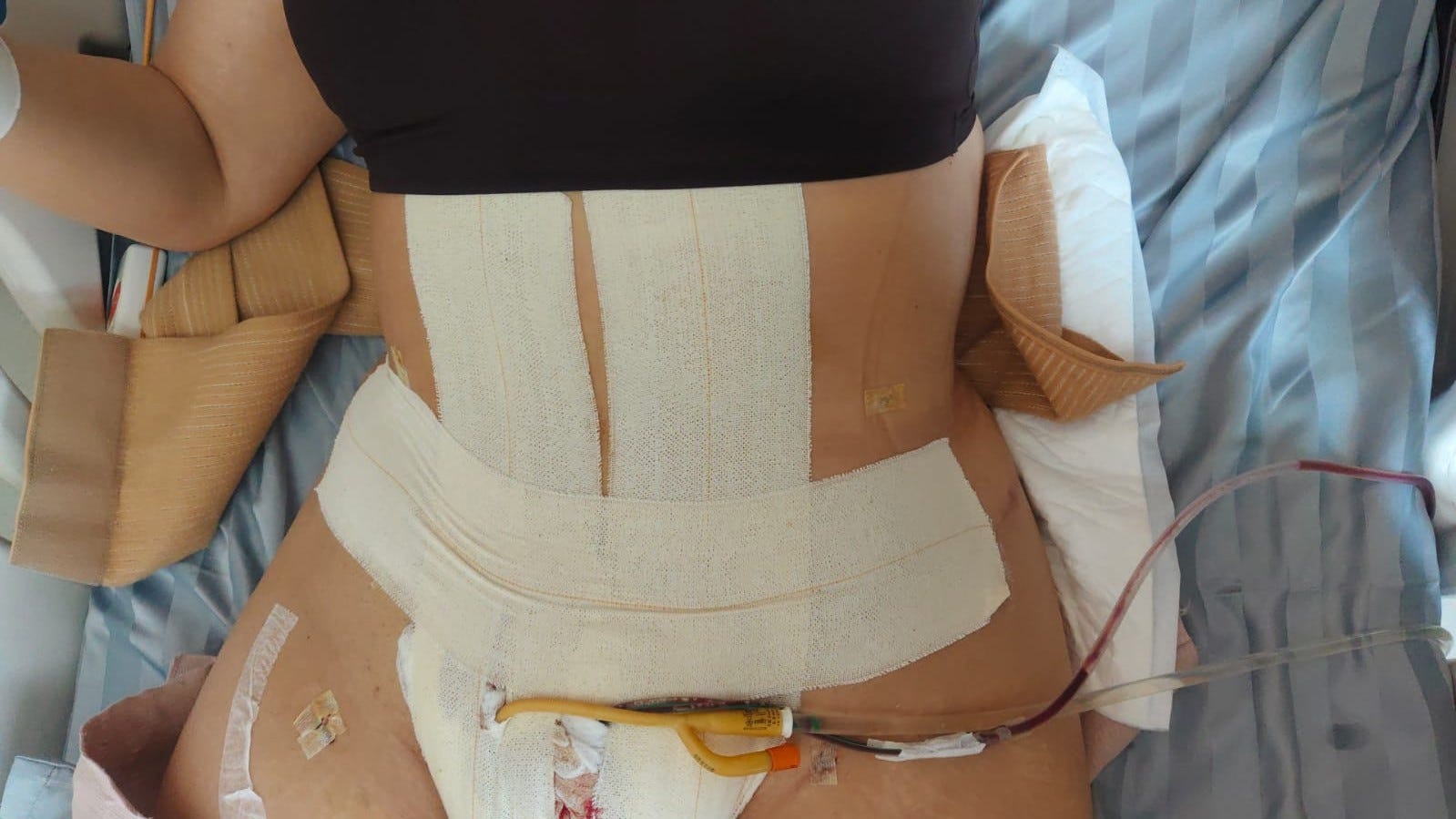
I have already written quite a lot about that:
So I am not going to reproduce the entire story here.
But I did continue my slightly deranged habit of asking:
If I am already under anaesthetic, is there anything else useful we can do?
My mid-face was still slightly hollow after the original fat grafting.
Jordan Deschamps-Braly had actually told me that facial fat grafting often required more than one round because not all of it survives.
So, while I was having vaginoplasty, I added cheek implants.
And some upper-back liposuction.
Because apparently I am incapable of booking a single-purpose anaesthetic.
I also asked about a leg lift.
The surgeon said no.
There are limits.
A leg lift and vaginoplasty put too much surgical tension and too many wounds in the same area.
So that one stayed off the list.
The vaginoplasty recovery itself was surprisingly manageable.
I had an epidural, which helped enormously.
What I did notice by then was the cumulative effect of all this surgery.
I had compressed a huge amount of physical trauma into a short period.
My exercise routine repeatedly disappeared because every time I started to recover and train properly again, another operation arrived.
I seemed to get ill more easily.
I had colds and flu more often.
I developed some horrible nerve and shoulder pain after vaginoplasty and had a few episodes of back trouble. I suspect some of that may have been connected to long periods immobilised on operating tables, although that is only my theory.
There was a physical cost to doing everything quickly.
Would I therefore conclude that I should have slowed down?
No.
That may be the lesson some people expect me to have learned, but it isn’t mine.
For me, getting through the major surgical phase quickly was still the right decision.
Makeup: the Laura Ashley years
One thing I underestimated massively was how much work goes into presenting yourself the way you want to.
Skin.
Brows.
Makeup.
Clothes.
Exercise.
Treatments.
Maintenance.
It is like painting the Forth Bridge.
You finish one end and immediately discover the other end needs doing again.
When I first started experimenting privately with makeup, I bought some cheap products online and vaguely remembered how I used to do makeup in the 1990s.
I looked like a model from a Laura Ashley catalogue.
I wasn’t completely clueless.
I had worn makeup before.
But modern makeup?
Correct foundation shades?
Not looking dated?
Not looking ridiculous?
I had work to do.
So I watched tutorials.
I experimented.
By April 2025 I would say my makeup was still a bit shit.
By July it was getting better.
Around November I booked a proper lesson.
I was supposed to be there for an hour.
I stayed for nearly three.
I offered to pay extra and she said it had been a pleasure.
She did say I already knew more than she expected, which was nice, but more importantly she taught me a lot.
Then a friend recommended another makeup artist, so I booked her too.
Again, I learned more.
That is basically how the whole thing worked.
Try something.
Get it wrong.
Improve it.
Repeat.
These days I can put on liquid eyeliner without making a complete arse of it.
I regard this as progress.
My two-mode eyebrows
My eyebrows were hilarious.
Even before I was fully out, while I was still sometimes presenting as male, they were already becoming suspiciously well shaped.
I had two eyebrow pencils.
One for female presentation.
One for male presentation.
If I was going out as myself, I would emphasise the arch.
If I was going out in male mode, I would literally colour the arch back in to make the eyebrow look less shaped.
A kind of eyebrow witness-protection programme.
The funny thing is that almost nobody noticed.
My wife occasionally did.
She would look at me and say something like:
“Jesus Christ, the state of your eyebrows.”
But somehow I mostly got away with it.
Three wardrobes
Clothes also went through phases.
I effectively have three generations of wardrobe.
The first is the pre-coming-out stuff, much of which I don’t particularly like anymore.
Then came the emergency wardrobe.
I suddenly needed enough women’s clothes to actually function, so we hit Shein hard.
Cheap dresses.
Cheap tops.
Experiments.
Some worked.
Some very much did not.
Then, gradually, my actual style developed.
I think that is inevitable.
You buy too much.
You try things.
You discover that something you loved six months earlier now makes you wonder what on earth you were thinking.
Eventually it starts to sort itself out.
I generally knew the direction I wanted to go in from the start.
Not theatrical femininity.
Not costume.
Just an attractive, fairly elegant woman in her fifties.
One problem disappears, another becomes louder
One thing I noticed repeatedly during transition was that whatever bothered me most would dominate everything.
Then I would deal with it.
And almost immediately something else would move to the top of the list.
Initially, the face was everything.
Nothing else came close.
Then the face was done.
And suddenly my attention moved elsewhere.
I would look at myself without clothes and think:
Christ.
This configuration now looks a little bit like a porn star.
There are trans women who are completely comfortable with that.
Fine.
I wasn’t.
So bottom surgery moved up the list.
Then bottom surgery was done.
And what was left?
The voice.
I don’t think the goalposts ever completely stop moving.
What changes is the urgency.
Earlier things felt like:
I need to fix this.
Now something like RibXcar feels like:
That would be nice.
Quite a difference.
The voice
Originally, I genuinely hoped I would avoid voice surgery.
I worked with Seattle Voice Lab.
I practised.
I tried.
I got frustrated.
And I became disappointed in myself.
I thought I was just bad at it.
By around March or April 2026, I had begun thinking:
I am probably going to have to operate on this.
Later it turned out that I had an unusual congenital problem in my larynx and extremely abnormal airflow characteristics.
That changed how I looked back on the whole thing.
I had spent months thinking I was failing at something that, anatomically, was going to be unusually difficult for me in the first place.
I have written separately about choosing VFSRAC and going to Yeson in Seoul:
The surgery was on 15 July 2026.
Physically, compared with everything else?
Nothing.
A walk in the park.
I was discharged the same day.
The hard part was the silence afterwards and the slow recovery.
What shocked me came later.
I played a video recently that I had recorded the day before surgery.
Oh my God.
My voice sounded so male.
I had not understood quite how male it sounded.
What should have told me was the reaction I used to get in public.
I would walk up to a counter.
Someone would greet me normally.
Then I would speak.
And I could see the tiny flicker of recognition.
Oh. You’re transgender.
When I was completely mute after surgery, that stopped happening.
Which was a fairly useful accidental experiment.
Now I am speaking again.
And increasingly, that reaction does not appear to be coming back.
Yesterday was the first day where the voice came out of my mouth almost exactly the way I had hoped it eventually would.
Softer.
Sweeter.
Not forced.
And I thought:
Wow. I think we’re getting there.
What would I actually change?
The obvious retrospective lesson would be:
You moved too quickly.
Slow down.
Take your time.
Spend years finding yourself.
Oddly, that is not my conclusion.
For me, moving quickly was one of the decisions I would make again.
There are things I would change.
I might have done the face before the body surgery because the face mattered more to me than anything else.
Although, ironically, doing the tummy tuck first may actually have helped the overall schedule because I needed recovery time before vaginoplasty anyway.
I probably would have added breast augmentation to that first Turkish operation.
I would probably have booked the voice surgery earlier.
I might have asked for the facelift to be slightly tighter.
These are details.
What strikes me more when I look back is how modest my original expectations were.
I genuinely believed that perhaps, after all this, strangers would look at me and think:
Yes, probably transgender.
But she looks all right.
That was my dream.
The outcome exceeded that dream.
I’m allowed to be pleased about that without pretending it means there is some universal formula behind it.
The thing I thought I would have to learn
Another thing I got wrong was mannerisms.
I genuinely assumed I would have to learn how to move like a woman.
How to sit.
How to gesture.
How to hold myself.
Somewhere in my head, I had created another entire training programme.
Then I started watching myself on video.
And realised:
Oh.
A lot of it is already there.
That was one of the stranger discoveries.
I had expected femininity to involve much more conscious performance than it actually did for me.
Instead, quite a lot of what I thought I would have to construct simply appeared once I stopped suppressing it.
Money
There is an important caveat to everything I have written here.
I had a financial advantage that many people do not have.
Cost did not dictate my choice of surgeon.
That obviously changes the available options enormously.
And even with that advantage, transition cost an astonishing amount of money.
I have never added it up.
I don’t want to add it up.
It isn’t only surgery.
Flights.
Hotels.
Consultations.
Clothes.
Makeup.
Laser.
Electrolysis.
Skin.
Treatments.
Everything.
It is a bloody fortune.
I would prefer not to know the number.
The other cost
The financial cost was not the most important one.
My transition cost me almost everybody in my life.
I had to start again.
Some relationships are slowly rebuilding.
Some are not.
There are people who were once extremely close to me who have never come back and may never come back.
That belongs in any honest account of what happened.
I don’t want to turn this article into an analysis of those relationships, so I will leave it there.
When transition stopped being the main project
Something changed around March this year.
Transition stopped being the main thing in my life.
Not because there was nothing left to do.
It just lost first place.
And what replaced it?
Work.
Obviously.
The crazy bitch who works fourteen hours a day came back.
Technology.
Software.
Learning.
Building.
Ideas.
Trying to understand things nobody has asked me to understand.
I basically moved from one obsession to another.
And strangely, that made me realise how much of me had stayed exactly the same.
All the things I genuinely liked about myself before transition were still there.
Technology.
Finance.
Exercise.
Learning.
Improving myself.
Building things.
The difference was that I was calmer.
Less angry at the world.
I used to spend an enormous amount of time trying to understand everything outside myself.
Politics.
People.
Systems.
The entire bloody universe.
Looking outward, perhaps partly because it stopped me looking inward.
I don’t do that nearly as much now.
I am also less interested in material accumulation.
I still have ridiculous ambition about doing things.
Achievement still matters enormously to me.
But bigger house, bigger car, bigger everything?
Not so much.
The idea of living in an enormous house now sounds exhausting.
Five bathrooms?
Why?
I’ll have one, thank you very much.
In some strange way, transition did not destroy the person I had been.
It made me a happy Stephen David Bennett.
That sentence probably sounds odd.
But it is what I mean.
Same person.
Much more peaceful.
Age
I also want to look young.
There.
Like practically every other woman, I would quite like time to stop attacking my face.
I was never under any illusion that I was going to transition in my fifties and emerge looking 25.
But I absolutely wanted to look good for my age.
Hormones changed things.
Skin treatments changed things.
The facelift changed things.
Fat grafting changed things.
The whole face changed things.
If somebody asks me what my anti-ageing secret is, I do not pretend it is green juice and positive thinking.
My standard answer is:
Seventeen hours of plastic surgery.
RibXcar
There is one more thing I am considering.
RibXcar.
I am speaking to a surgeon in Poland on 9 Octobe
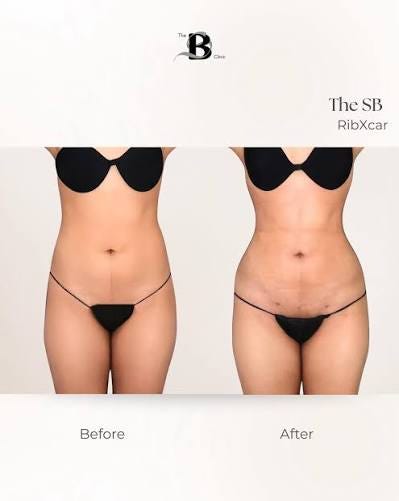
r
Do I need it?
No.
That is the difference.
The face felt urgent.
Bottom surgery became urgent.
The voice felt urgent.
Rib surgery does not.
It sits in a completely different category.
Nice to have.
I just want to look fucking snatched.
That, more than anything, is probably how I know I am approaching the end.
I may have another facelift when I am in my early sixties.
The first one was done alongside enormous skeletal changes, so there was always going to be an element of judgement about how aggressively to tighten everything before all the swelling had settled and the bones had found their final position.
If I have another one later, I would not really count that as transition.
That is just ordinary vanity.
Gravity can still fuck off.
One year later
Yesterday was the first anniversary of the second and biggest day of my facial surgery.
One year.
And a huge amount has happened since then.
My face has finally settled.
My voice is beginning to arrive.
The enormous items on the Kanban board have mostly disappeared.
My work has taken over my brain again.
I am about to appear on Heroines of My Life, which still feels faintly surreal given that I once looked at women on sites like that and wondered whether I could ever get anywhere close.
And yet there is one thing that has not happened as quickly as I thought it would.
Last week I recorded another video.
In it, I said something like:
I cannot fucking believe how often the word transgender still appears in my day.
Still.
In conversations.
In my thoughts.
In things I read.
In things I write.
In the way I analyse myself.
I thought that by now it would have faded further into the background.
It hasn’t.
Not yet.
And I cannot wait for it to.
Not because I am ashamed of being transgender.
Not because I want to rewrite my history.
I just don’t want it to remain the organising principle of my life.
Maybe transition doesn’t end with the final operation.
Maybe it doesn’t end when your face settles.
Maybe it doesn’t end when your voice changes.
Maybe it ends on some utterly unremarkable Tuesday when you suddenly realise:
I haven’t thought about being transgender for a day.
I think I would like that.
Until then, there is still some electrolysis.
A voice to finish rehabilitating.
Possibly some ribs to rearrange.
And, finally, rather more life than transition to get on with.
“Transition” to what? A somewhat feminine looking sexless eunuch?
Though, why? Inquiring minds and all that.
You had your inspirations, guess what? You are one of mine. I'll never do 90% of your surgeries (can't afford it for one thing). But I love your thought process. I want to write up my path now.